
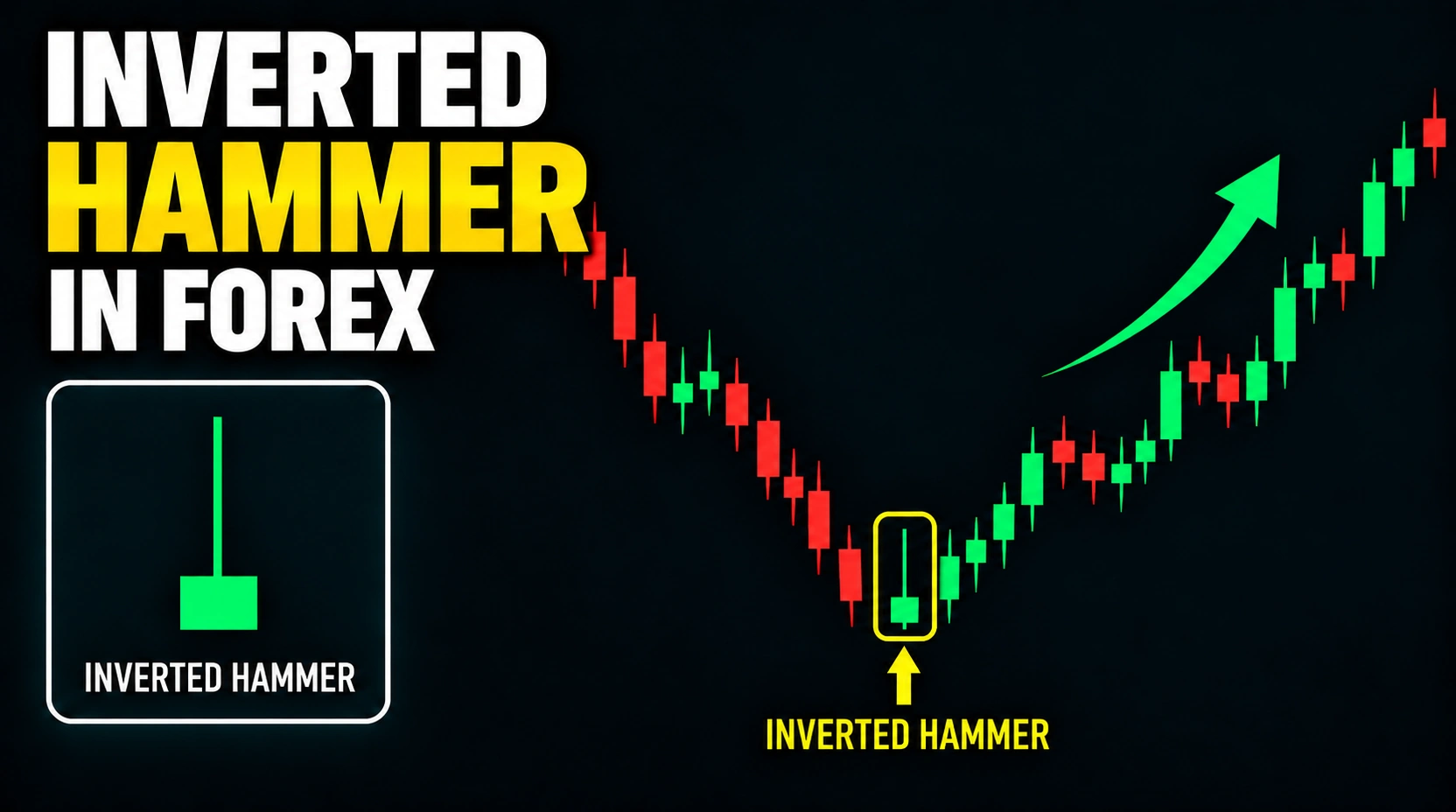
What Is An Inverted Hammer Forex Candle?
An inverted hammer forex candle is a candlestick with a small body near the lower part of the candle range and a long upper wick. It usually has little or no lower wick and is most often reviewed after selling pressure, a decline, or a lower-price test.
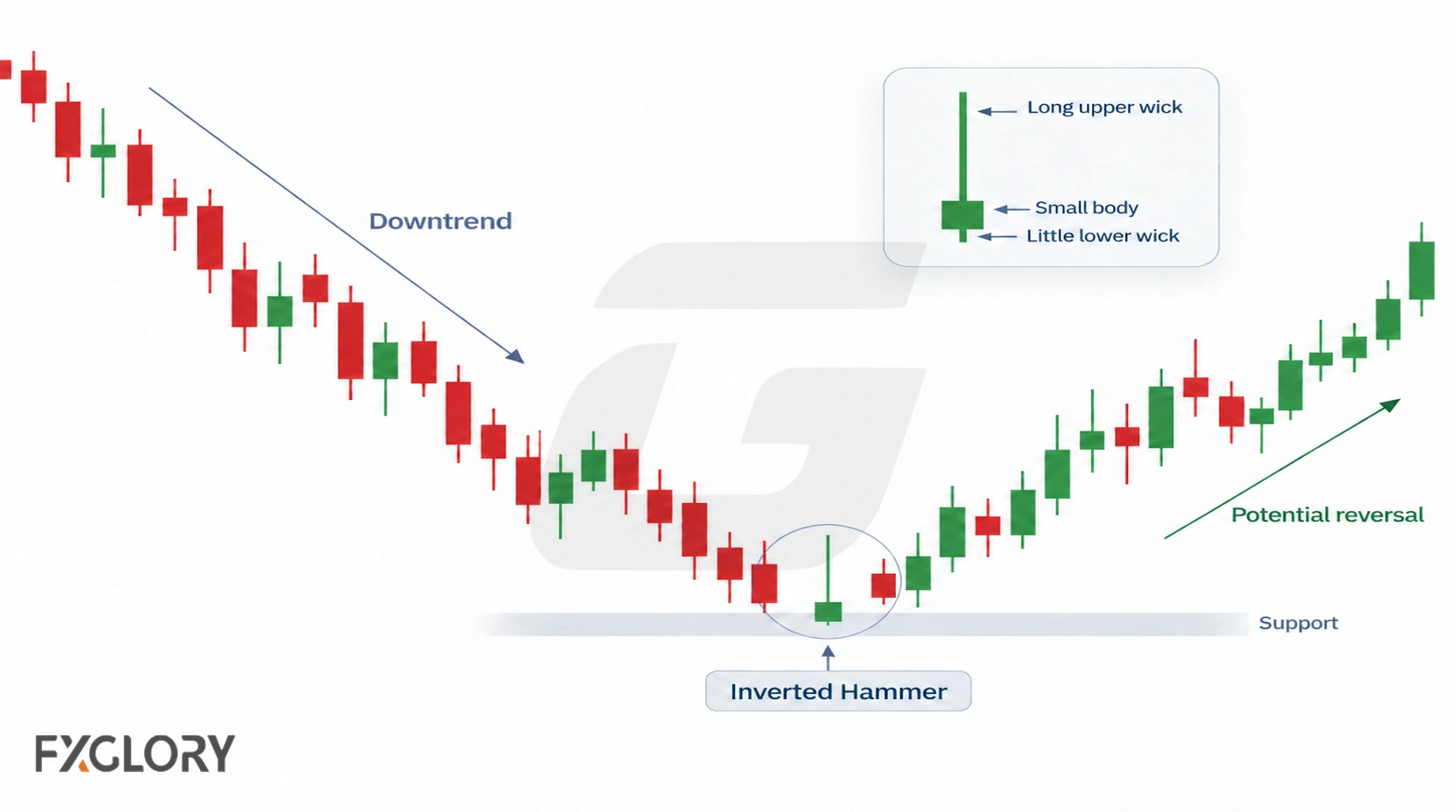
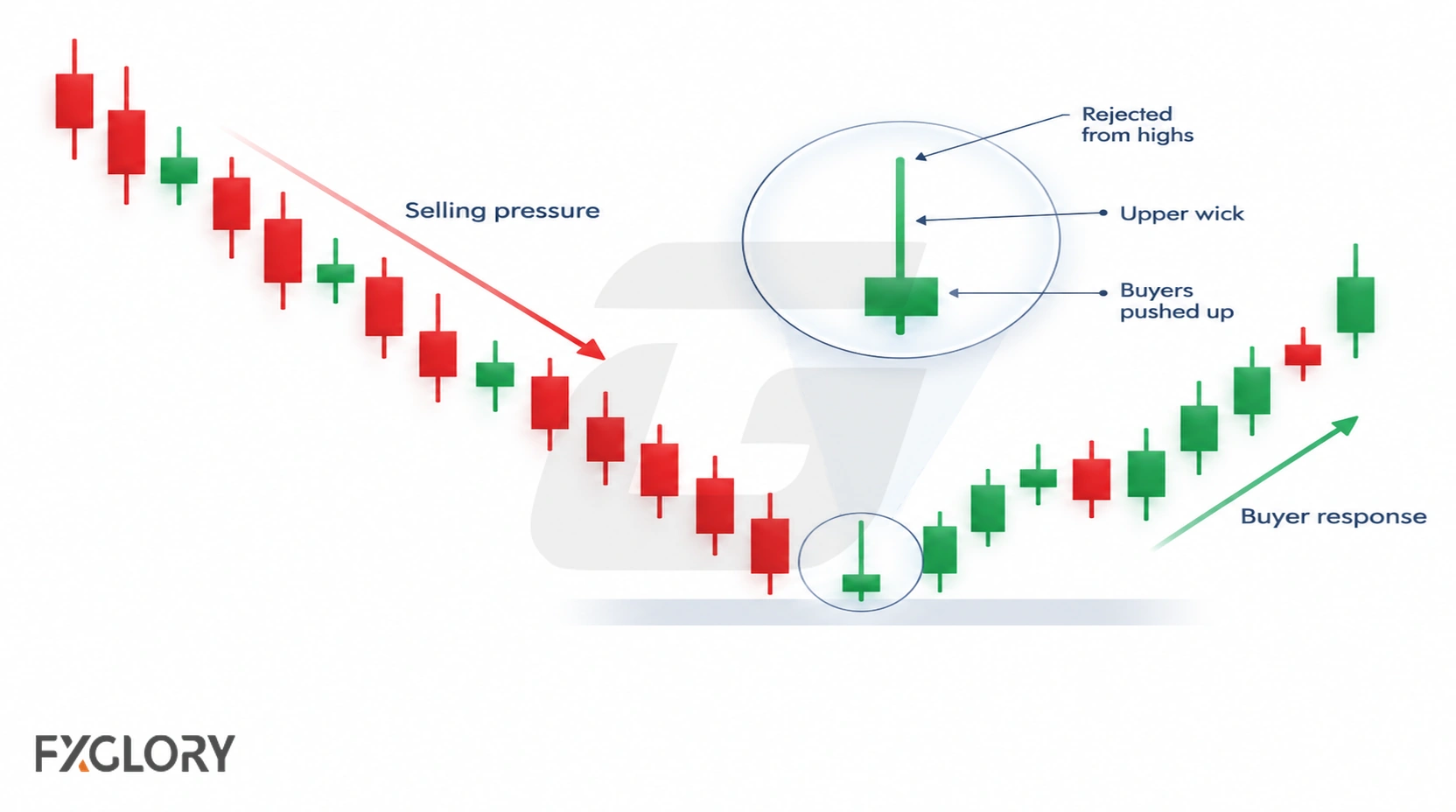
The inverted hammer shows that price moved higher during the candle but did not close near the high. This can suggest that buyers tested higher prices after a period of selling pressure, but the close did not prove full control by buyers.
An inverted hammer does not confirm that price will reverse. It is a one-candle clue about a possible change in pressure. The useful question is whether the prior move, chart location, candle structure, and follow-up movement make the formation worth reviewing.
If you need the basic candle parts first, review the open, close, body, and wick relationship. An inverted hammer uses those same parts, but its message depends mainly on the small body near the bottom, the long upper wick, and the prior selling context.
Inverted Hammer Candle Anatomy
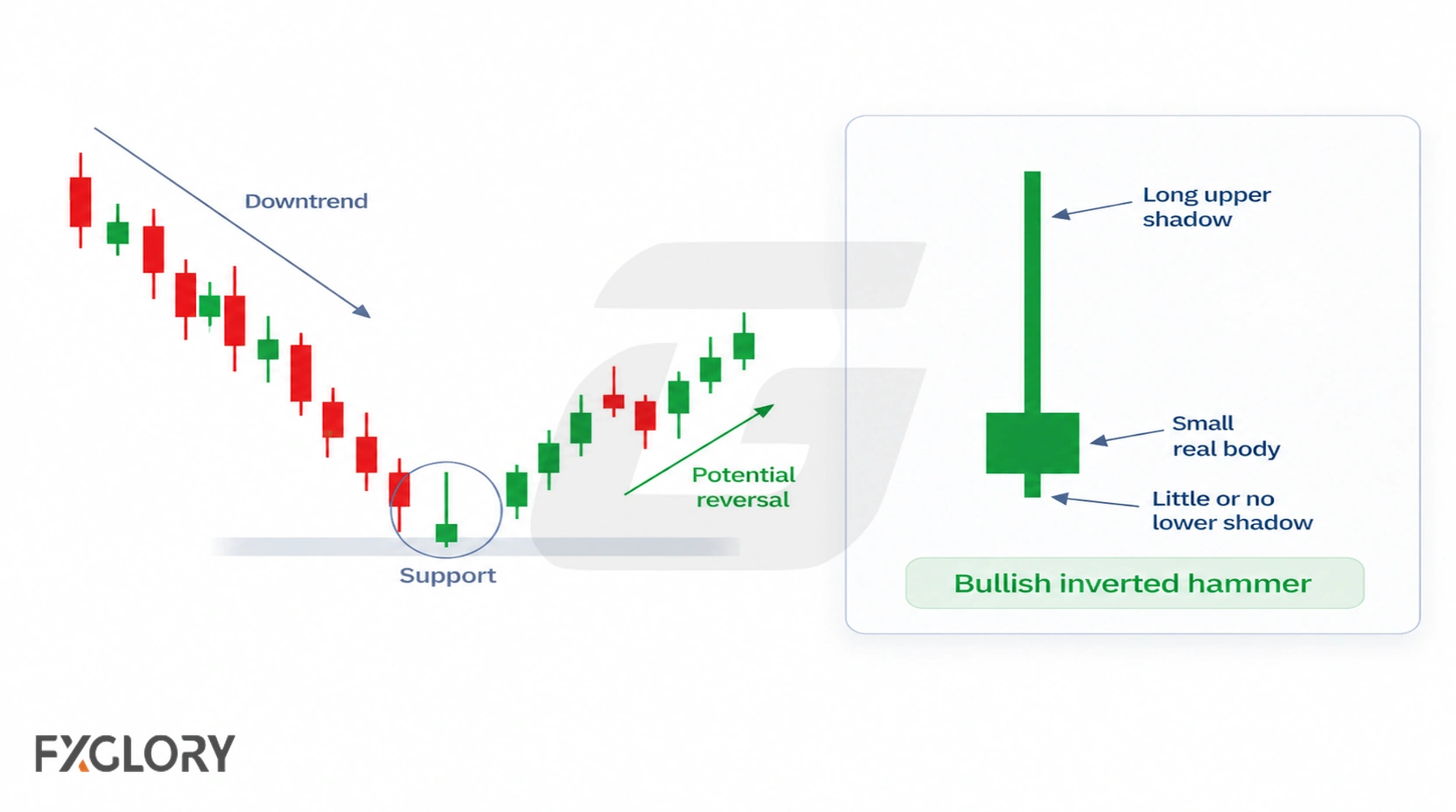
The anatomy of an inverted hammer has three main parts: a small body near the lower part of the candle, a long upper wick, and little or no lower wick. The body can close bullish or bearish, but body color is usually less important than structure and context.
| Inverted Hammer Part | What It Shows | Reading Caution |
|---|---|---|
| Small body near the bottom | The candle opened and closed near the lower part of its range. | A small body alone does not make an inverted hammer. |
| Long upper wick | Price moved higher during the candle but did not close near the high. | The wick should be clearly longer than the body. |
| Little or no lower wick | Price did not spend much range below the body. | A large lower wick can weaken the inverted hammer shape. |
| Close location | Price finished near the lower part of the candle range. | The close should be reviewed with what price does afterward. |
| Full candle range | The distance between the candle high and low. | A very wide candle may reflect news or unstable volatility. |
A clean inverted hammer usually has an upper wick that is much longer than the body. A common visual rule is that the upper wick should be about twice the body length or more. This helps identify the shape, but it does not make the candle useful by itself.
Why Prior Selling Pressure Matters
An inverted hammer needs something to push back against. That is why prior selling pressure matters. If the candle appears without a decline, pullback, lower-price test, or visible selling pressure, the inverted hammer label becomes weaker.
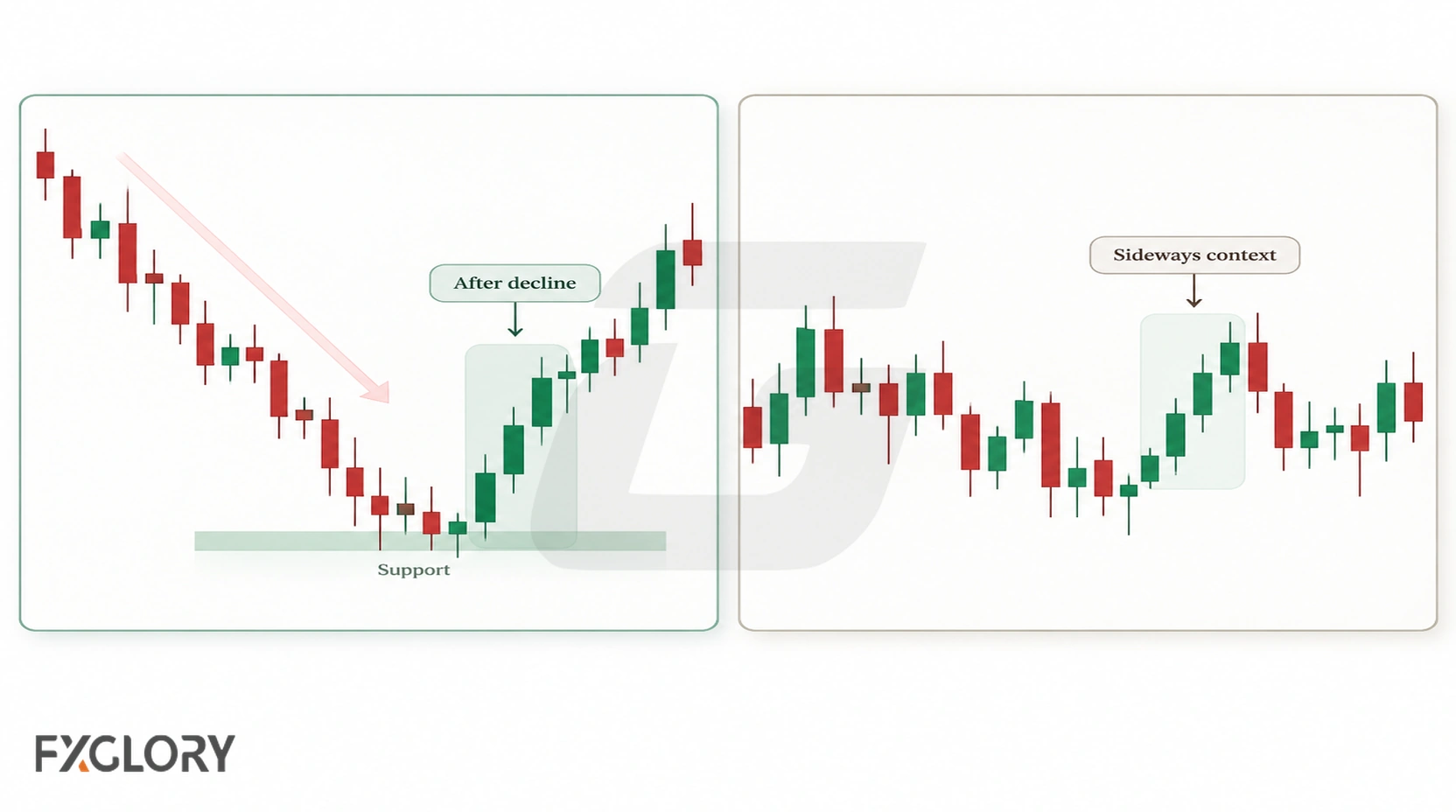
After a decline, the long upper wick shows that price tested higher levels during the candle. The small body near the bottom shows that the candle still closed away from the high. This creates a mixed message: buyers were active enough to push price higher, but they did not hold the upper part of the range into the close.
That mixed message is why an inverted hammer should not be treated as a complete bullish answer. It is better read as a possible pressure-change clue after selling pressure, especially if it appears near support, a swing low, a range low, or a failed downside continuation area.
Bullish And Bearish Inverted Hammers
An inverted hammer can have a bullish or bearish body. A bullish inverted hammer closes slightly above its open. A bearish inverted hammer closes slightly below its open. In both cases, the body remains small and near the lower part of the candle range.
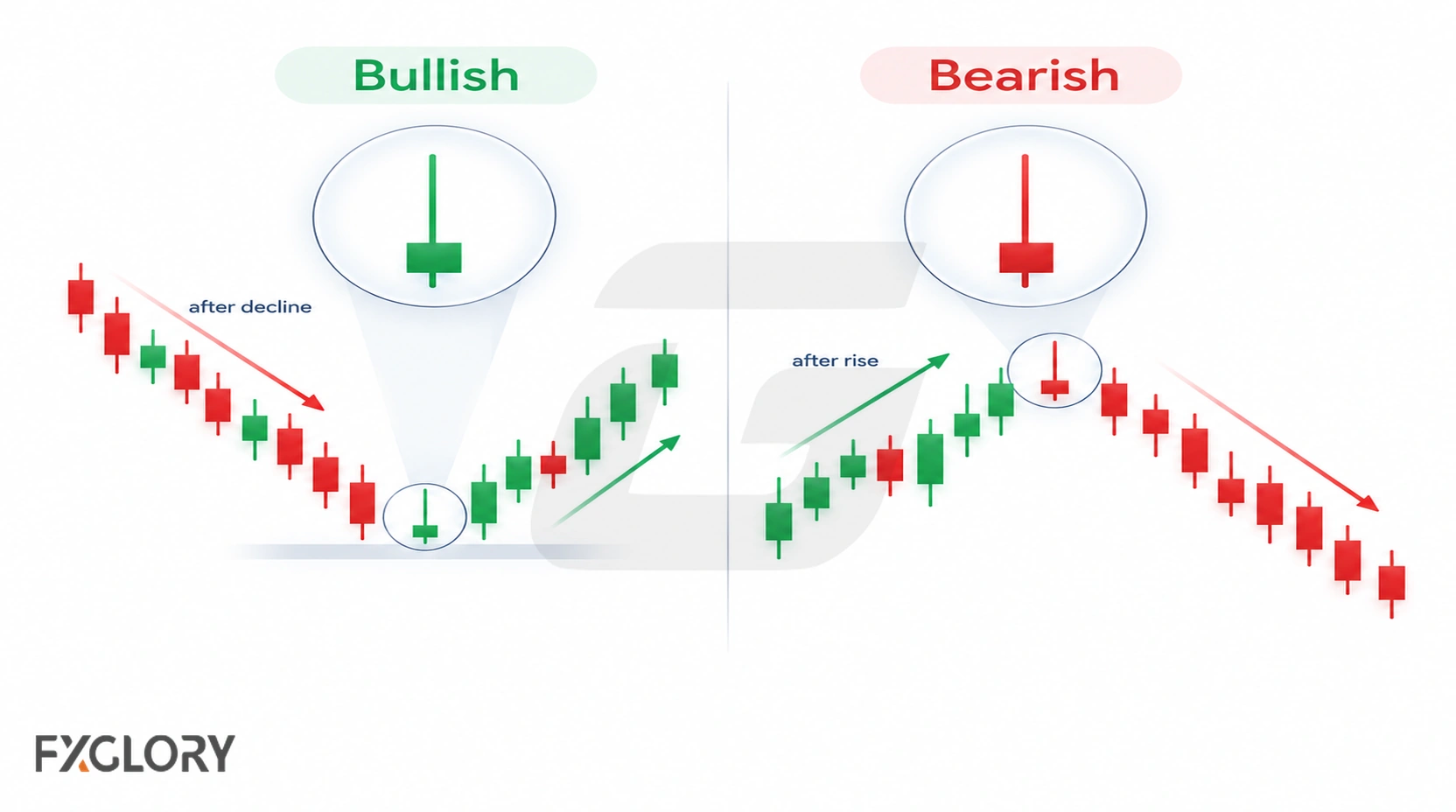
The body color can add a small detail, but it should not become the main reading. The more important features are the long upper wick, small lower-positioned body, prior selling pressure, chart location, and what price does afterward.
| Body Type | What It Means | Reading Caution |
|---|---|---|
| Bullish body | The candle closed slightly above its open. | Still does not confirm a bullish reversal by itself. |
| Bearish body | The candle closed slightly below its open. | Can still be an inverted hammer if the structure and context fit. |
| Very tiny body | The open and close are nearly equal. | The candle may overlap with doji-style hesitation. |
Inverted Hammer vs Shooting Star
The inverted hammer and shooting star are easy to confuse because they can look almost identical. Both can have a small body near the lower part of the candle range, a long upper wick, and little or no lower wick.
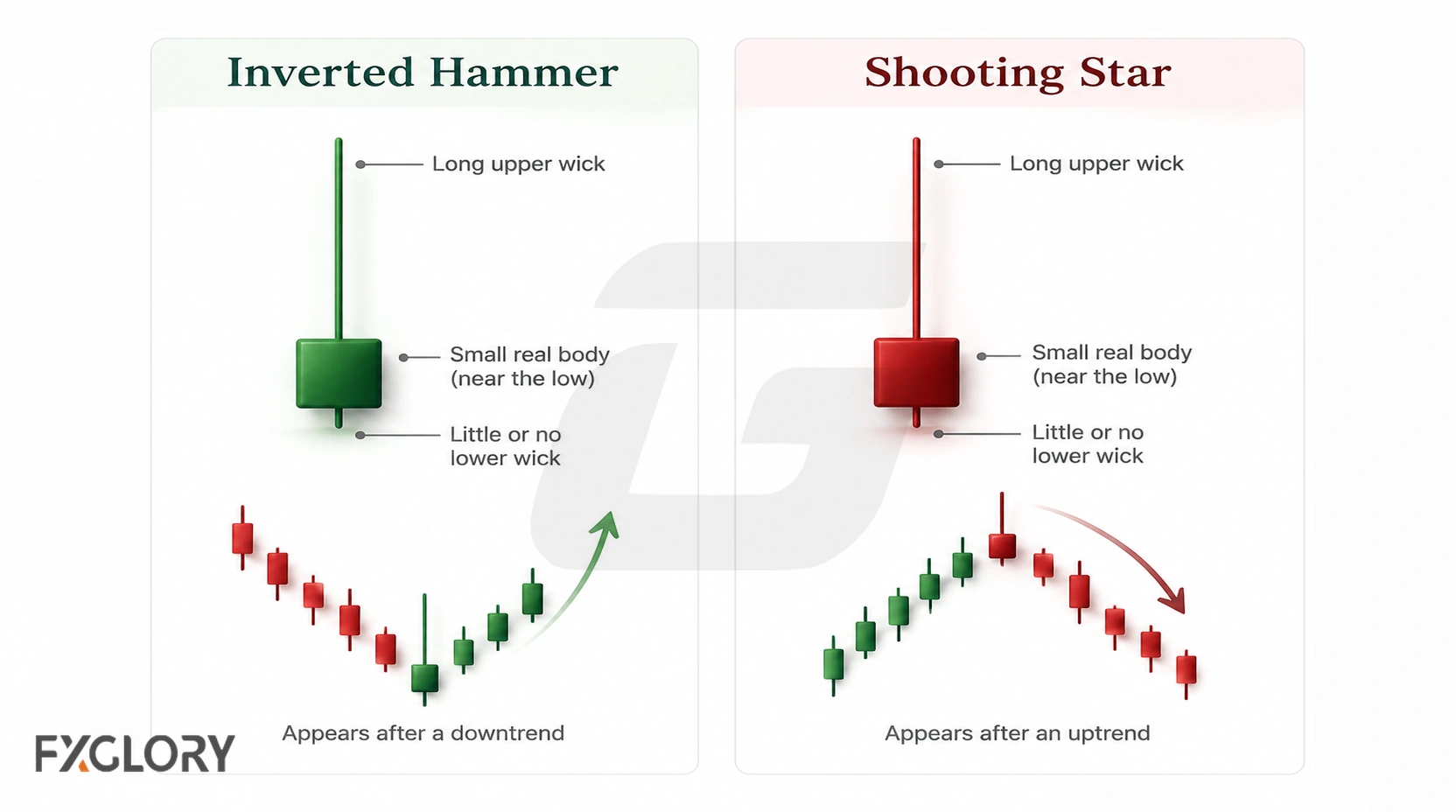
The main difference is prior chart context. An inverted hammer is usually reviewed after selling pressure or a decline. A shooting star is usually reviewed after buying pressure or a rise. The same shape can therefore carry a different reading depending on what happened before it.
| Candle | Main Shape | Usually Reviewed After | Main Reading Difference |
|---|---|---|---|
| Inverted hammer | Small body near bottom with long upper wick. | Selling pressure, decline, or lower-price test. | Higher-price test after selling pressure. |
| Shooting star | Small body near bottom with long upper wick. | Buying pressure, rise, or higher-price test. | Upper-wick rejection after buying pressure. |
For the upper-wick candle that appears after buying pressure, use the shooting star guide. The shape may look similar, but the location changes the reading.
Inverted Hammer vs Similar Forex Candles
An inverted hammer can overlap visually with several candles. Comparing them helps avoid forcing the wrong label onto the chart.
| Candle | Main Structure | Main Difference From Inverted Hammer |
|---|---|---|
| Hammer | Small body near the top with a long lower wick. | Hammer has the long wick below the body, not above it. |
| Pin bar | Long dominant wick and smaller body. | Pin bar is a broader long-wick rejection idea, not only this specific context. |
| Doji | Open and close are equal or almost equal. | Doji focuses on open-close balance, not specifically an upper-wick test after selling pressure. |
| Spinning top | Small visible body with upper and lower wicks. | Spinning top shows two-sided hesitation rather than a cleaner upper-wick structure. |
For deeper comparison, review the lower-wick hammer structure, long-wick rejection candles, open-close balance candles, and two-sided hesitation candles.
Where Inverted Hammer Candles Matter More
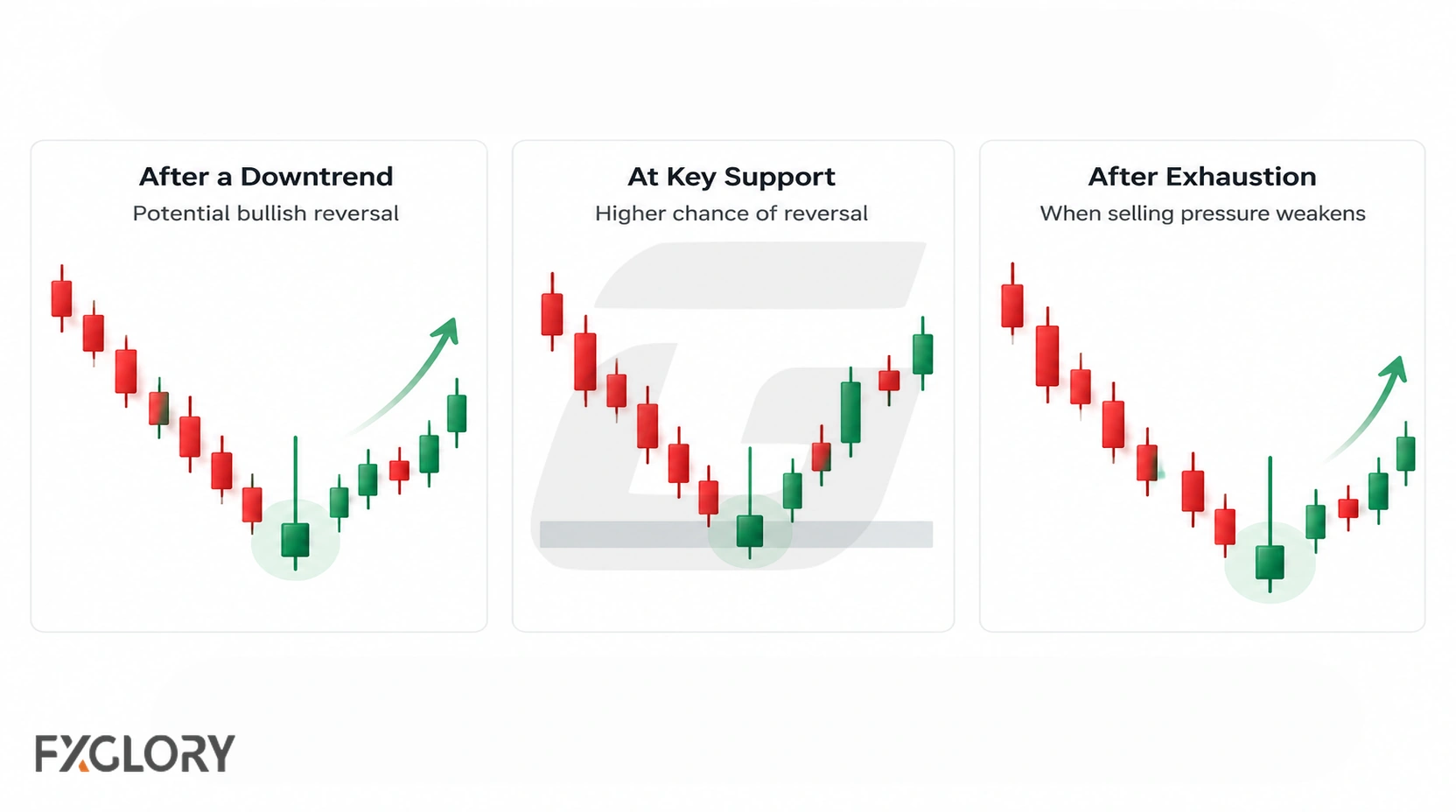
An inverted hammer becomes easier to review when it appears in a place where a higher-price test after selling pressure matters. Without a useful chart location, the candle may only be normal price noise.
After A Decline
After a decline, an inverted hammer can show that price tested higher levels during the candle after earlier selling pressure. This does not confirm a turn, but it can show that the candle did not continue lower with the same clarity.
Near Support
An inverted hammer near support can be easier to review because the candle appears around a lower-price area that already matters on the chart. The support area gives the upper-wick test a clearer location.
Near A Swing Low
A swing low gives the inverted hammer a reference point. If price has recently tested a lower area and then forms an inverted hammer, the candle can be compared with that prior low.
At A Range Low
Inside a range, an inverted hammer near the lower boundary can be more meaningful than one in the center of the range. The range low gives context to the prior selling pressure and higher-price test.
After A Failed Downside Continuation
An inverted hammer can appear when price attempts to continue lower but then tests higher levels during the candle. This can show that the downside move lost some clarity during that candle, but follow-up movement still decides whether the idea remains relevant.
For observation, a trader can compare inverted-hammer-like candles on live market pages such as GBP/USD around visible swing lows or gold during wider candle ranges. These pages are useful for chart review, not as standalone trading reasons.
A candle in the middle of a range has less location-specific significance, while an unusually wide wick after news should be reviewed alongside spread, liquidity and candle range.
Inverted Hammer Strength Filter: Stronger vs Weaker Readings
An inverted hammer does not have the same value in every chart condition. The table below helps separate clearer inverted hammer readings from weaker ones.
| Inverted Hammer Factor | Clearer Reading | Weaker Reading |
|---|---|---|
| Prior movement | The candle appears after selling pressure, a decline, or a lower-price test. | The candle appears without a clear prior decline or selling context. |
| Upper wick | The upper wick is clearly longer than the body. | The upper wick is short or only slightly larger than the body. |
| Body position | The body sits near the lower part of the candle range. | The body sits too close to the middle of the candle. |
| Lower wick | The lower wick is small or absent. | A large lower wick makes the structure less clean. |
| Chart location | The candle forms near support, a swing low, a range low, or after a lower-price test. | The candle forms in the middle of random movement. |
| Market conditions | Spread and volatility conditions are stable enough for chart review. | The candle forms during abnormal news movement, rollover, or thin liquidity. |
| Follow-up movement | Later price movement keeps the inverted hammer area relevant. | Price immediately makes the inverted hammer irrelevant. |
How To Read An Inverted Hammer Candle In Forex
A simple workflow helps keep inverted hammer reading disciplined. The goal is to describe what the candle shows before giving the structure more meaning than it deserves.
- Check the timeframe: Decide whether the candle reflects a short-term reaction or a broader candle period.
- Review the prior move: Look for selling pressure, a decline, a pullback, or a lower-price test before the candle.
- Read the body: Confirm that the body is small and near the lower part of the range.
- Read the upper wick: Check whether the upper wick clearly dominates the candle.
- Check the lower wick: Review whether the lower wick is small enough for the structure to remain clean.
- Review the chart location: Look for support, swing lows, range lows, failed downside continuation, or other meaningful areas.
- Review market conditions: Consider volatility, spread, liquidity, rollover, and scheduled news events.
- Watch follow-up movement: Review whether price keeps the inverted hammer area relevant or cancels the reading.
The completed candle can be identified as an inverted hammer candidate from its shape and preceding context. A trader may separately define bullish confirmation, such as a subsequent completed candle closing above the inverted hammer high. An intrabar move above that high, a completed close, a successful retest and further upside movement are different observations, not interchangeable requirements. Confirmation is not a trade entry or a guarantee: any proposed trade also needs its own invalidation level, stop placement, position size and transaction-cost assessment.
Some traders compare inverted hammers with technical indicators for additional context. For example, RSI can add momentum context, ATR can add volatility context, and Bollinger Bands can help review range and expansion conditions. These tools can support candle review, but they do not remove trading risk.
Some stock-focused explanations rely on session gaps when discussing inverted hammers. In forex chart reading, the safer focus is candle-by-candle structure on the selected timeframe: prior selling pressure, body position, upper-wick size, chart location, and what price does afterward.
Weak Candidates and Failed Reversals
An upper-wick candle without preceding selling pressure, with a central body, or with a substantial lower wick may not meet the inverted hammer description. An unfinished candle is only a developing candidate; its final shape is known at the close. News spikes or thin liquidity can further complicate interpretation.
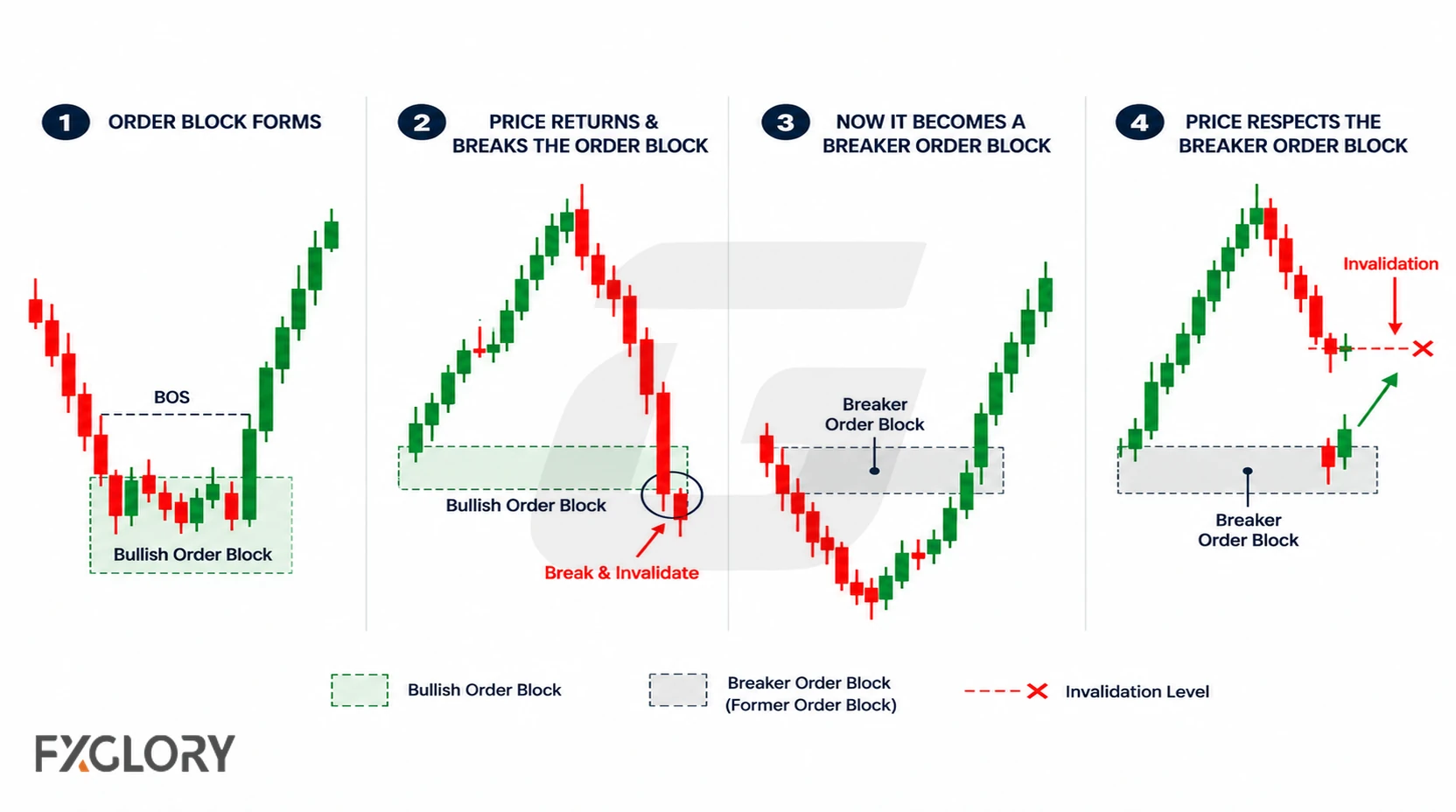
By contrast, a completed inverted hammer can satisfy the visual criteria yet fail to lead to a bullish reversal. If a selected bullish confirmation condition occurs and price subsequently moves lower, that is a failed confirmed setup under that definition—not evidence that the original candle never formed. A trade-plan invalidation or stop is a separate decision from identifying the candle.
Common Mistakes With Inverted Hammer Candles In Forex
Inverted hammers are easy to recognize visually, but they are also easy to misread. Most mistakes come from labeling the candle by shape without checking the chart before and after it.
- Reading the candle as confirmed reversal: An inverted hammer can show a higher-price test after selling pressure, but it does not confirm a turn by itself.
- Overlooking spread, liquidity, and news risk: Long upper wicks may appear during unstable conditions that are difficult to interpret in real time.
- Replacing risk planning with candle confidence: An inverted hammer should not replace position sizing, risk limits, or a clear area where the reading becomes weak.