

What Does Investing In Forex Mean?
Investing in forex means taking exposure to the exchange rate between two currencies. A retail trader is not buying ownership in a company or fund; the position is based on how one currency moves relative to another.
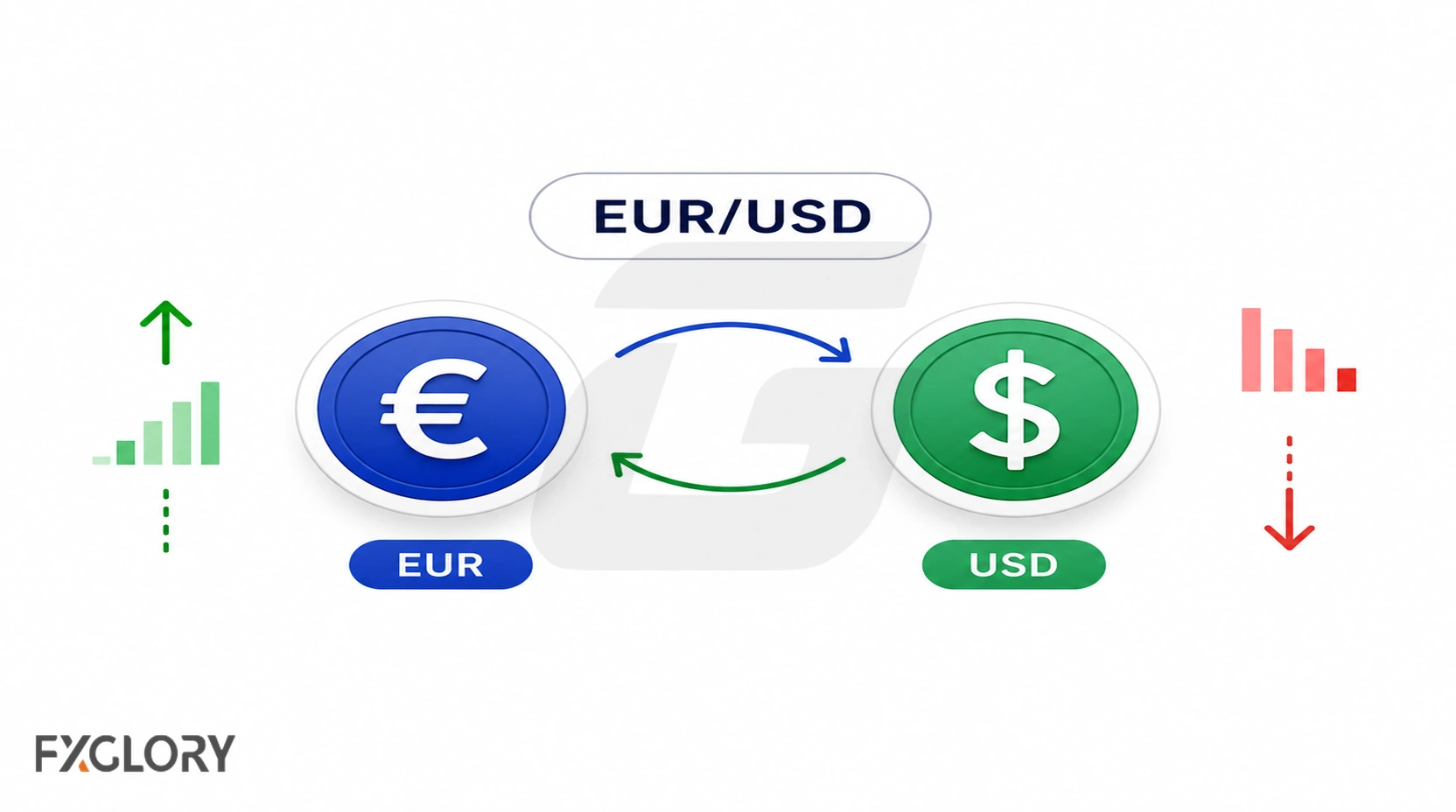
For example, buying EUR/USD means taking a view that the euro will strengthen relative to the U.S. dollar; selling EUR/USD expresses the opposite view. The trade result depends on the exchange-rate movement after trading costs and on when the position is closed.
For the terminology and mechanics that support this topic, start with the Forex Basics for Beginners hub.
Is Forex Really Investing Or Is It Trading?
Most retail forex activity is active trading or speculation. The trader selects a currency pair, direction, position size, risk limit, and exit logic, then manages the position as the exchange rate changes.
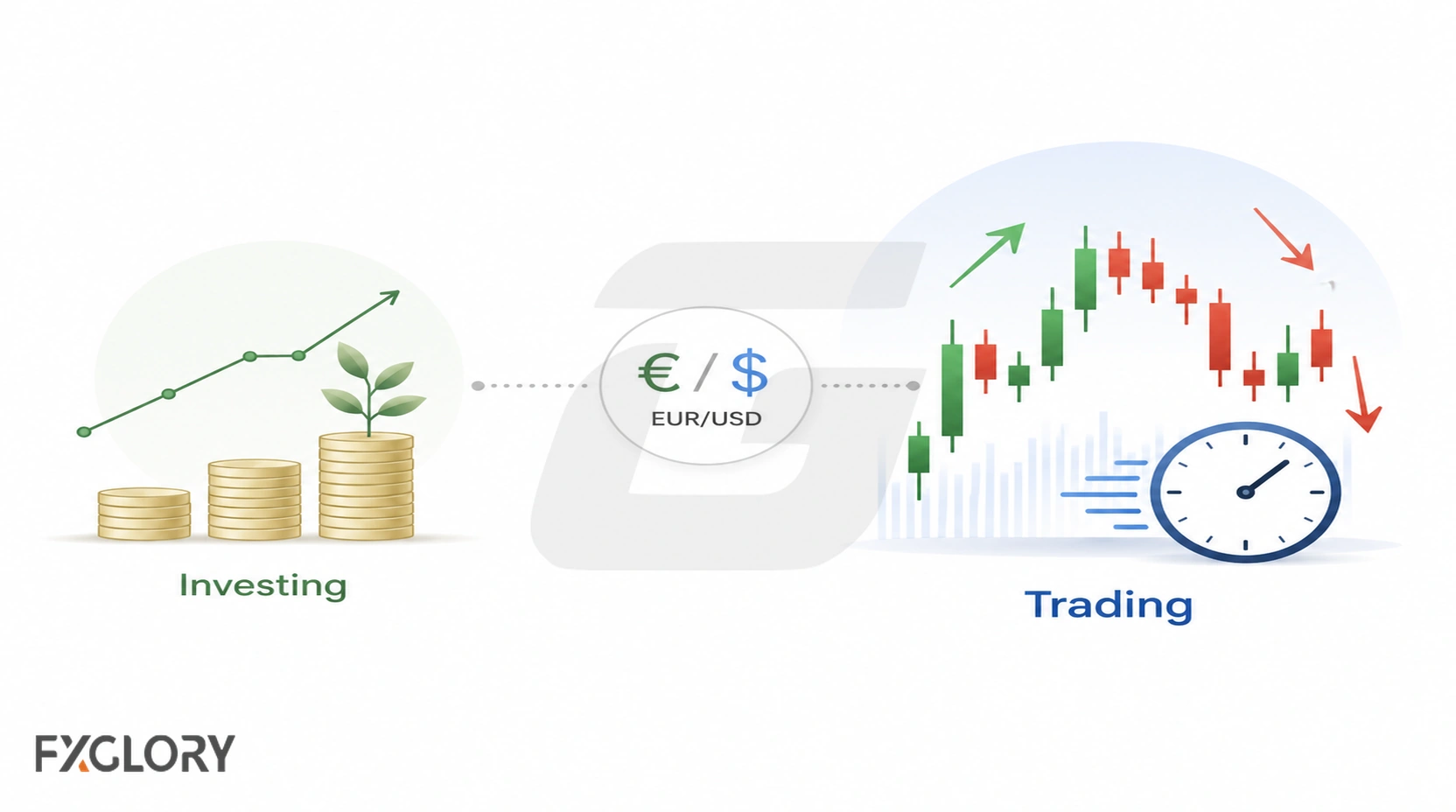
The word investing is still used because money is committed to a market view, but a forex position does not provide company ownership or diversified portfolio exposure by itself. Calling the position an investment also does not make it lower risk or more predictable.
Forex Compared With Traditional Investing
- Ownership: A stock may represent ownership in a company. A forex position represents exposure to a currency pair.
- Return source: Forex results mainly come from exchange-rate movement after costs rather than business growth or dividends.
- Management: Retail forex positions usually require active decisions about entries, exits, risk, and review.
- Risk drivers: Position size, leverage, spread, stop distance, and price movement can all affect the account outcome.
For a broader asset comparison, see stocks vs forex.
Three Ways People Use Forex Exposure
The purpose of the currency exposure matters because speculation, hedging, and practice are different activities.
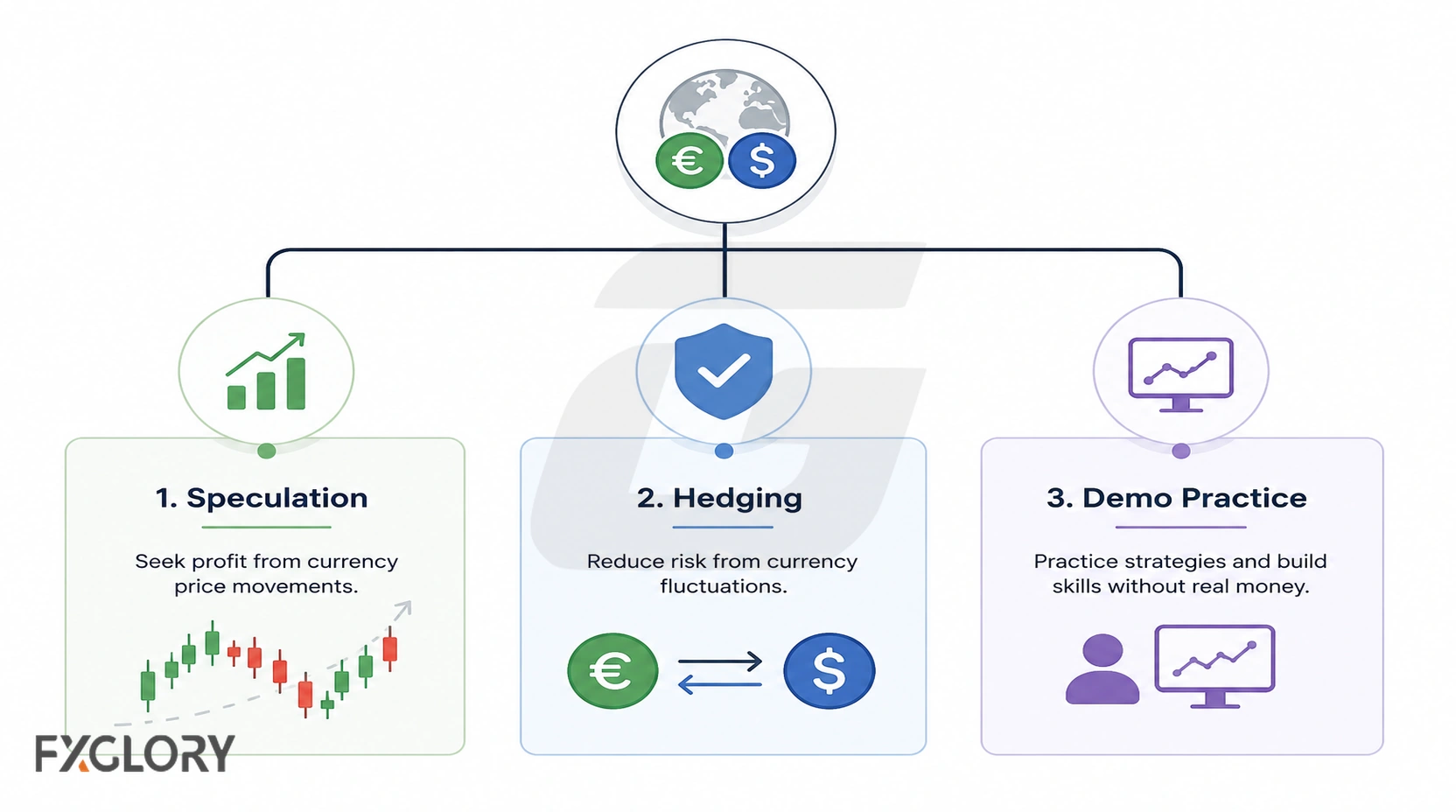
1. Speculating On Currency Movement
A trader buys or sells a pair because they expect the exchange rate to move in a favorable direction. The market view still needs a defined risk limit and exit logic before it becomes a live trade.
2. Hedging Currency Risk
Some market participants use currency exposure to manage risk from international payments, foreign revenue, travel, or business costs. The objective is risk management rather than simply seeking profit from short-term price movement.
3. Practicing Before Live Trading
A demo account can help a beginner learn how quotes, spread, position size, orders, and price movement interact without using real capital. Demo practice is useful for testing a process, but it does not guarantee the same results in live conditions.
Should Beginners Invest In Forex?
Beginners should generally treat forex as a market to learn before considering live currency exposure. Access to a small trading account does not remove the need to understand costs, leverage, position size, and the amount that could be lost.
Forex is also a poor match for expectations of guaranteed returns or passive income. A live position requires active decisions and can lose money even when the original market idea appears reasonable.
- Live trading may be worth evaluating when: the trader understands the pair, can define the trade reason and invalidation point, can size the position to a known loss limit, and can follow written rules.
- Live trading should wait when: leverage, costs, position size, or the maximum acceptable loss cannot be explained before entry.
Account size should be considered together with position size and risk. See how much do you need to start trading forex and how to trade forex with $100 for those specific scenarios.
The Forex Investment Readiness Framework
Before a forex idea becomes a live position, the trader should be able to describe the decision in concrete terms rather than relying on a general market opinion.
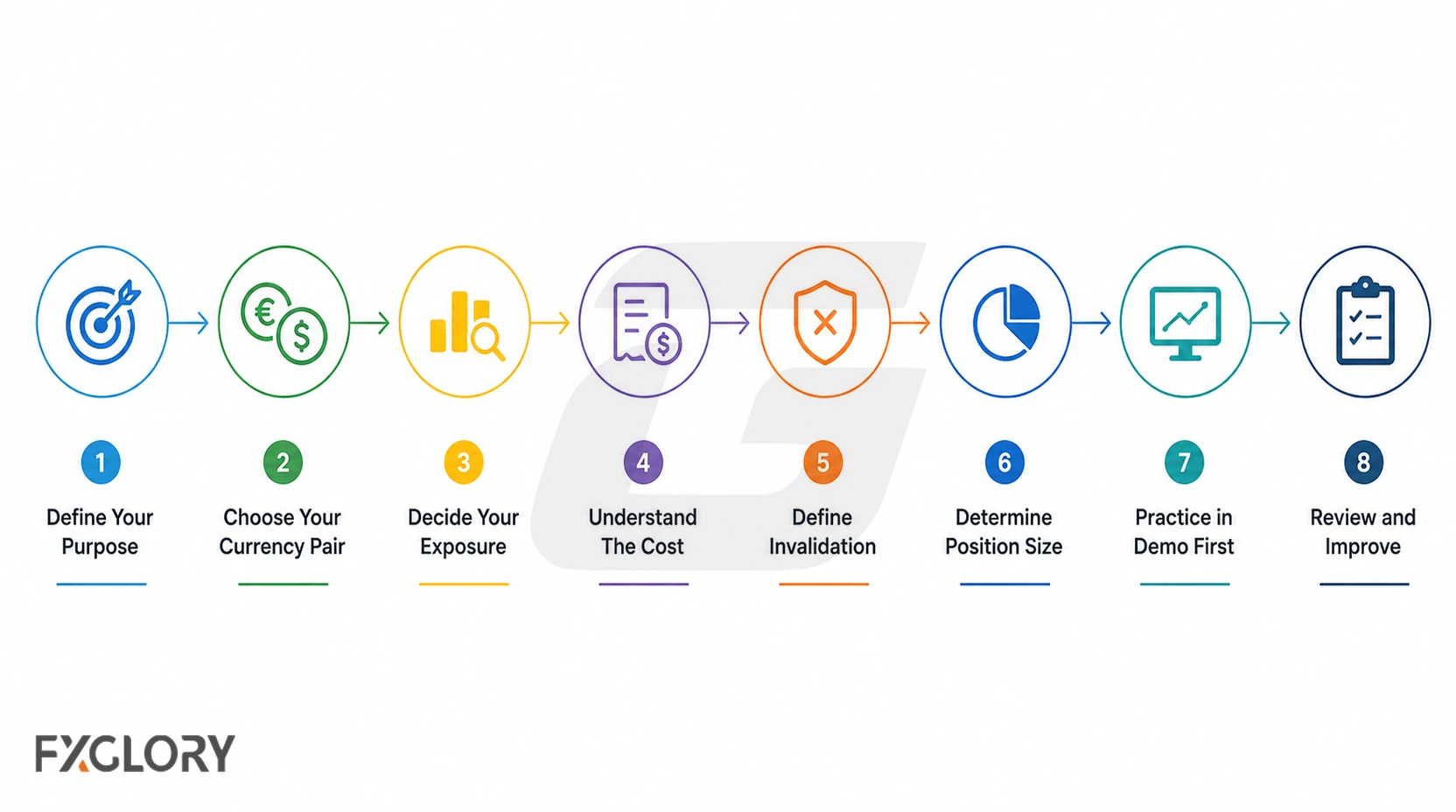
The underlying mechanics also need to be clear. A trader should be able to read the quote, understand pip-based movement, choose a suitable lot size, and recognize the bid-and-ask difference.
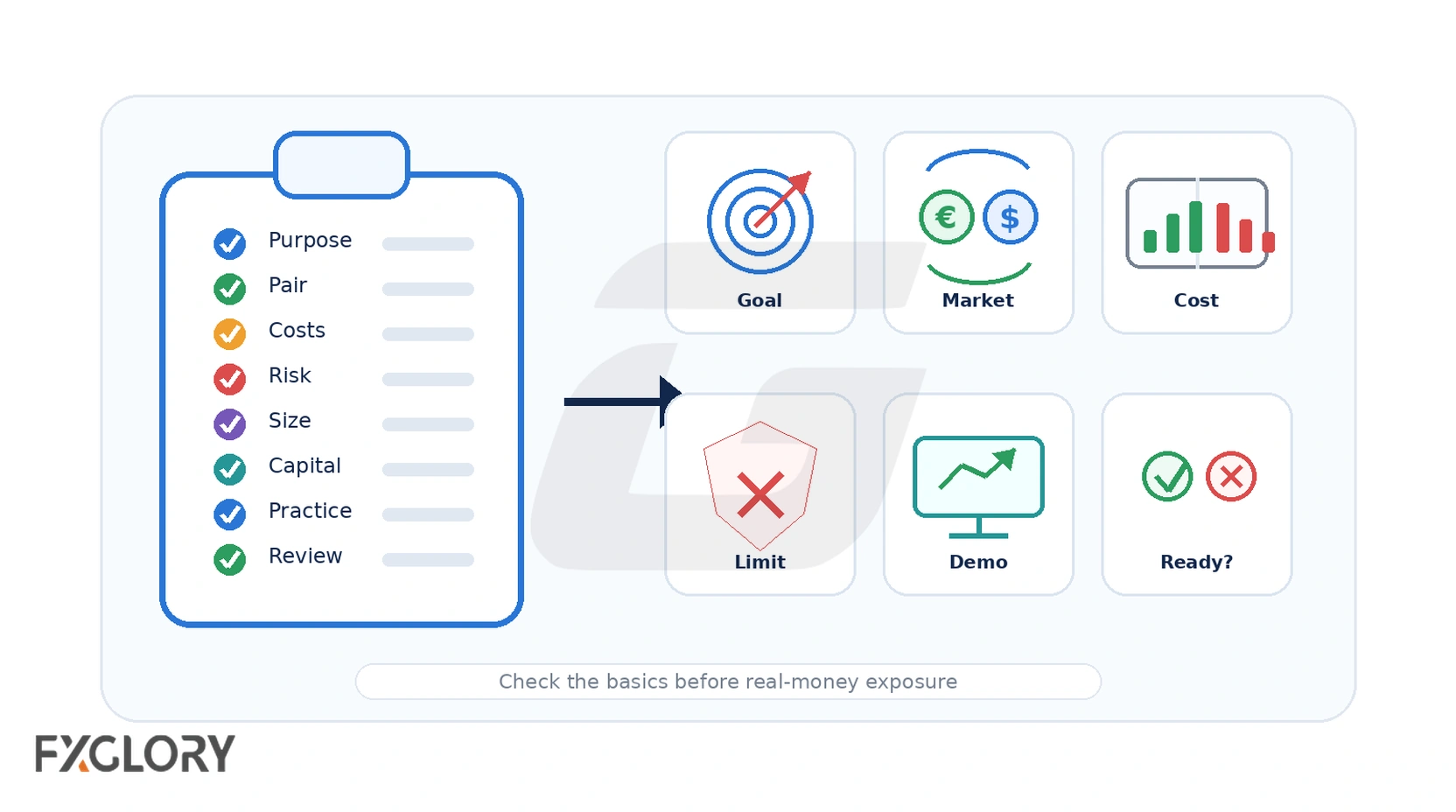
- Purpose: Is the activity speculation, hedging, or practice?
- Pair and direction: Which currency is being bought, which is being sold, and why this pair?
- Cost: What spread, possible slippage, and overnight swap could affect the result?
- Invalidation: What market development would make the original idea no longer valid?
- Position size: What trade size keeps the planned monetary loss within the account limit?
- Leverage and margin: How much exposure will the position create relative to the capital and margin available?
- Practice: Has the process been tested in demo conditions before real capital is used?
- Review: Will the decision and outcome be recorded so the process can be evaluated afterward?
If any of these items is unclear, the idea is not ready for live execution. Once they are defined, they can be turned into written rules with the forex trading plan template.
Forex Investment Opportunities Without Hype
In forex, an opportunity is a market condition worth evaluating, not a promised return. Currency-pair movement may be influenced by interest-rate expectations, central-bank communication, inflation data, employment figures, risk sentiment, and relative demand for the two currencies.
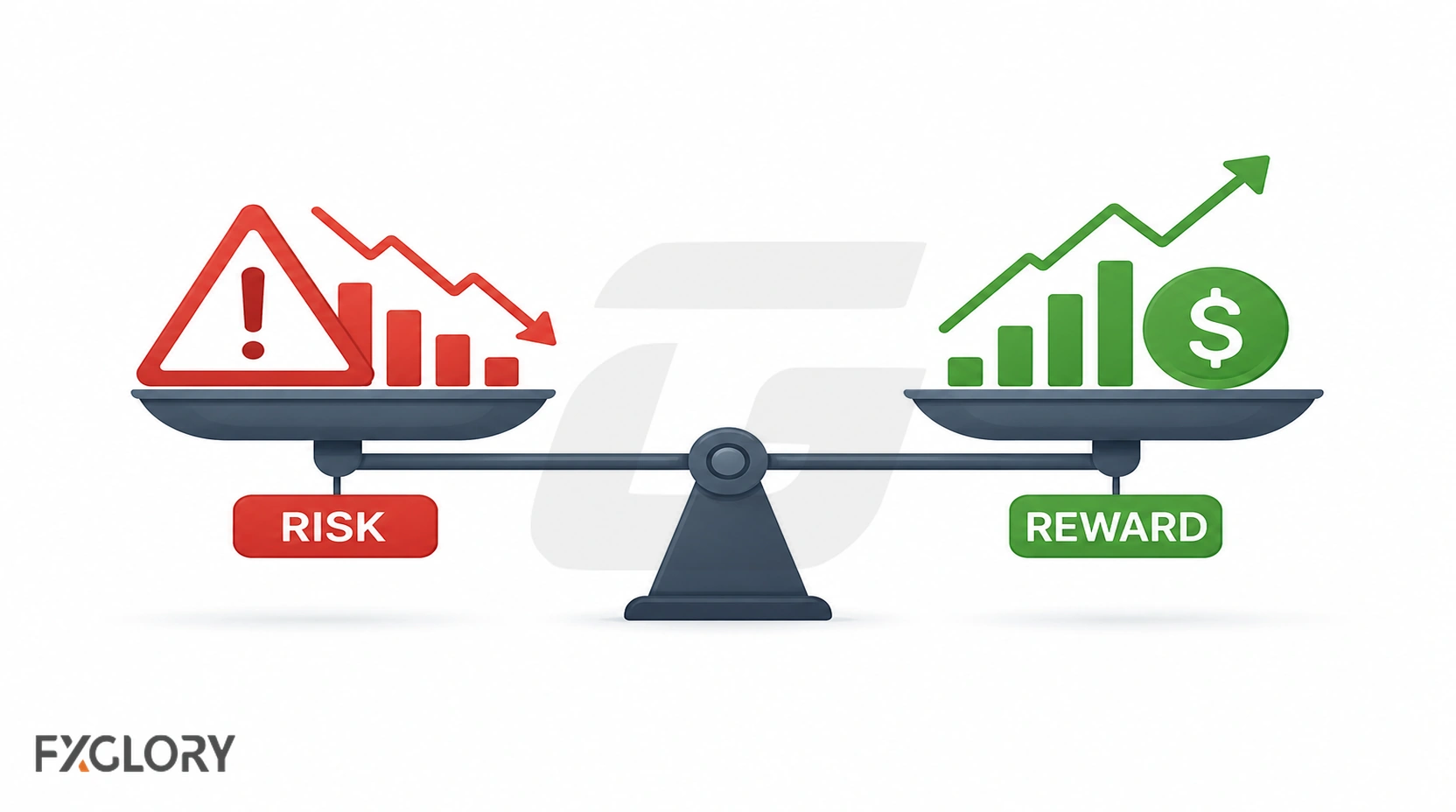
Liquidity also matters because it can affect spread, execution, and slippage. Major pairs often attract more trading activity than many minor or exotic pairs, but the actual trading conditions should still be checked. For background, see what is liquidity in forex.
A major pair such as EUR/USD can be useful for study because quotes, spread, pip movement, and position size can be reviewed in one familiar example. Familiarity does not make the pair risk-free.
Risks And Account Checks Before Funding Forex Exposure
Market risk and account conditions are separate parts of the decision. A trader can be wrong about price direction, and the outcome can also be affected by margin requirements, leverage, spread, swap, slippage, or funding terms.
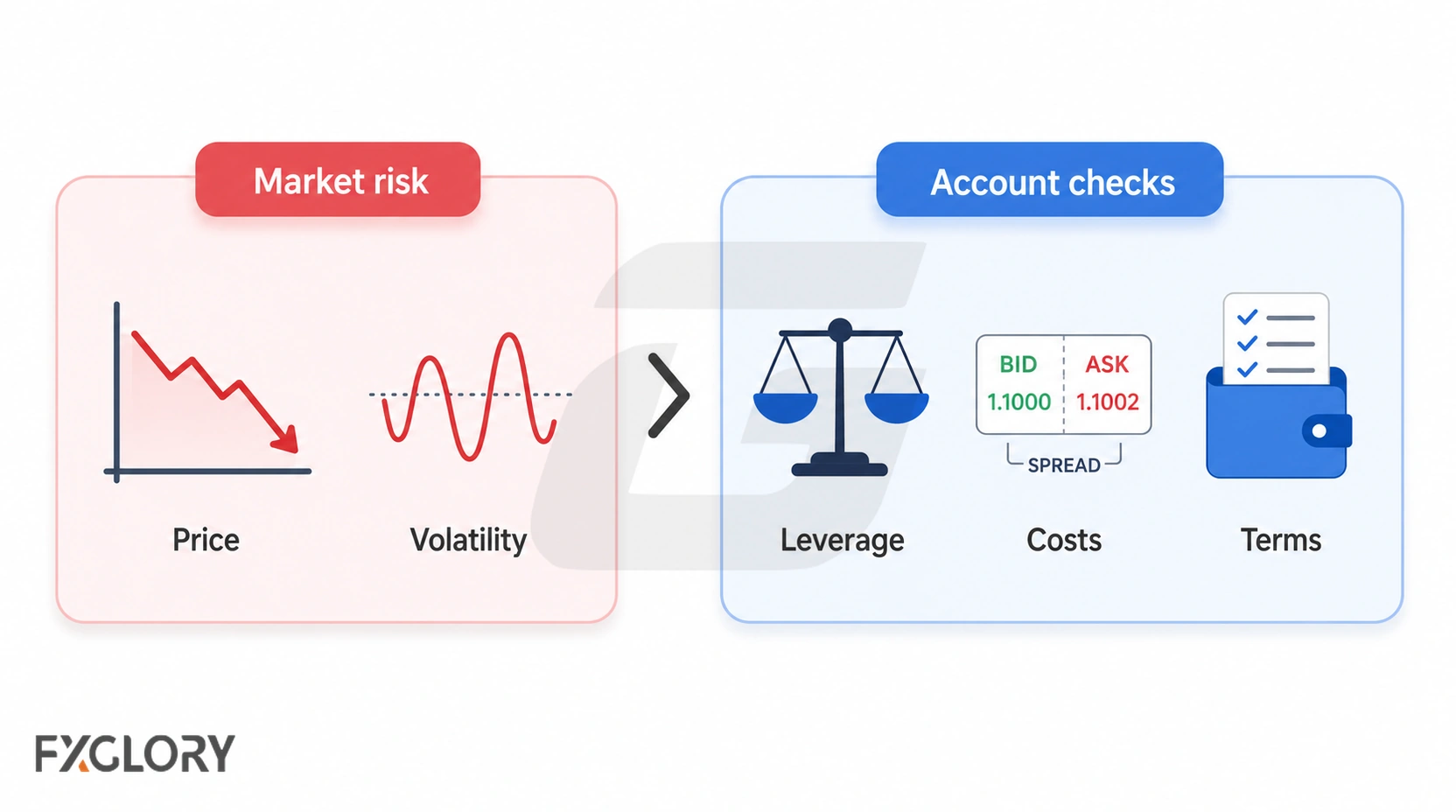
- Account terms: Understand margin, available leverage, swap, and stop-out conditions before trading.
- Funding rules: Review deposit methods, withdrawal rules, possible fees, and processing expectations.
- Execution conditions: Understand spread, possible slippage, and how fast markets can affect order fills.
- Leverage and exposure: Higher available leverage can allow a larger position to be controlled with less margin. A larger position relative to account equity increases the account impact of a given price move. Review what is leverage in forex trading.
- Volatility: Fast price movement can affect entries, exits, and stop execution. Review what is volatility in forex.
- Swap: Holding a position overnight may create a debit or credit depending on the instrument and account conditions. Review what is swap in forex.
Example: Evaluating EUR/USD As A Forex Investment Idea
Suppose a beginner expects the euro to strengthen against the U.S. dollar. That view identifies a possible EUR/USD direction, but it is not yet a complete trade plan.
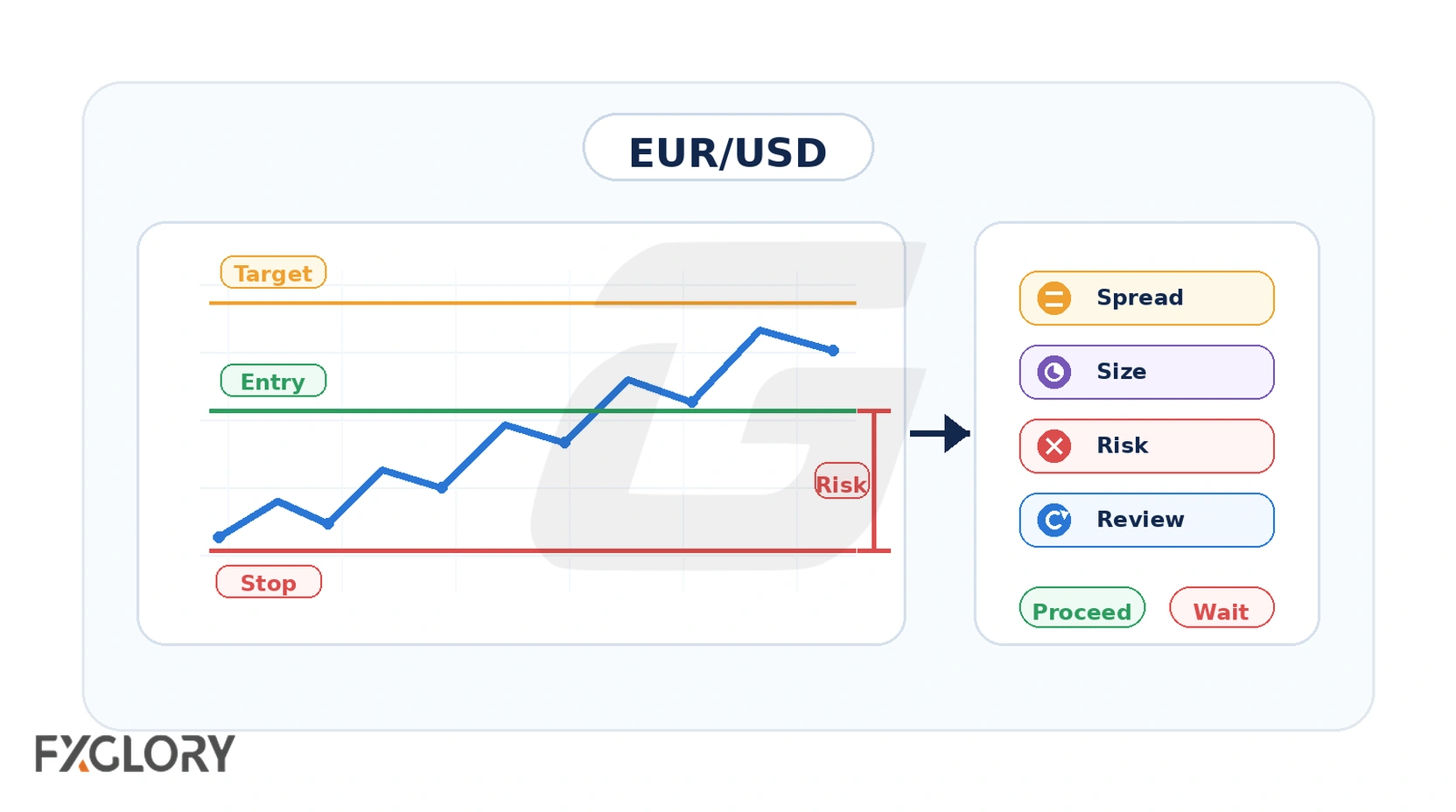
The trader first decides whether the idea is for practice or live speculation, then defines what would invalidate the view and estimates the trading cost. The position size is chosen from the acceptable monetary loss rather than from the amount of leverage available.
If the required position would put too much of the account at risk, the trader can reduce the size, wait for a different setup, or keep the idea in demo. For pip-based risk measurement, see how to calculate pips on forex.