How Much Money Do You Need to Start Trading Forex?

Learn the difference between minimum deposit and realistic trading capital, plus how lot size, leverage, costs, and risk per trade affect how much you may need.
 
Written byHenry Green
Published
Last updated

Key Take Aways

  • Broker minimum deposit is not the same as useful trading capital.
  • Some educational examples use $50-$100 for small live practice and $500-$1,000+ for more risk-managed learning, depending on broker rules and lot size.
  • $10 or $100 should usually be treated as learning capital, not income capital.
  • The right starting amount depends on lot size, pip value, stop-loss distance, leverage, spread, account currency, and risk per trade.
  • Lower margin does not mean lower risk; lot size, pip value, stop distance, and total exposure still drive trade impact.
  • Forex trading capital is risk capital, not rent money, emergency savings, debt-payment money, or essential living funds.
Risk note: Forex trading involves risk and can result in losses. Starting with more money does not guarantee success, and starting with less money does not remove risk. Margin and leverage can magnify losses, so starting capital should be treated as risk capital. Only use money you can afford to lose, not money needed for rent, bills, debt, food, emergency savings, or other essential expenses. This page is educational content, not financial advice.

Quick Answer: How Much Do You Need to Start Trading Forex?

15-second answer: Some brokers may allow very small deposits such as $10-$100, but useful beginner trading capital is often higher. Educational examples often use $500-$1,000+ because it gives more room for micro lots, stop losses, trading costs, and losing streaks.

The most important distinction is this:

The minimum to start is not the same as the amount needed to trade properly.

A broker minimum deposit may let you open an account. Useful trading capital is the amount that lets you place trades without forcing oversized leverage, reckless lot sizes, or unrealistic income expectations.

This guide connects starting capital to lot size, pip value, leverage, spread, stop-loss risk, and trading costs.

If you searched “how much do you need to start trading forex” or “how much money do you need to start trading forex”, the honest answer is: you need enough to match your goal. A small account can teach execution and discipline. A larger account gives more flexibility. No account size guarantees profit.

Reality check: The minimum to start forex trading is not the minimum to earn income. Starting capital and income-level capital are very different.
Goal Rough Educational Starting Range Reality Check
Demo learning $0 live capital Learn platform and strategy without live risk.
Tiny live test $10-$100 Testing and emotions, not meaningful income.
Beginner practice $500-$1,000 More room for micro lots and risk control.
More flexibility $2,000-$5,000+ More sizing room, still no guarantee.
Income expectations Much higher Usually unrealistic from a small beginner account.

What Is the Minimum Amount to Start Forex Trading?

The minimum amount to start forex trading depends on broker rules, account type, minimum deposit, minimum lot size, leverage, margin requirement, and the pair being traded. A broker may allow a low deposit, but the amount needed to place and manage trades responsibly can be higher.

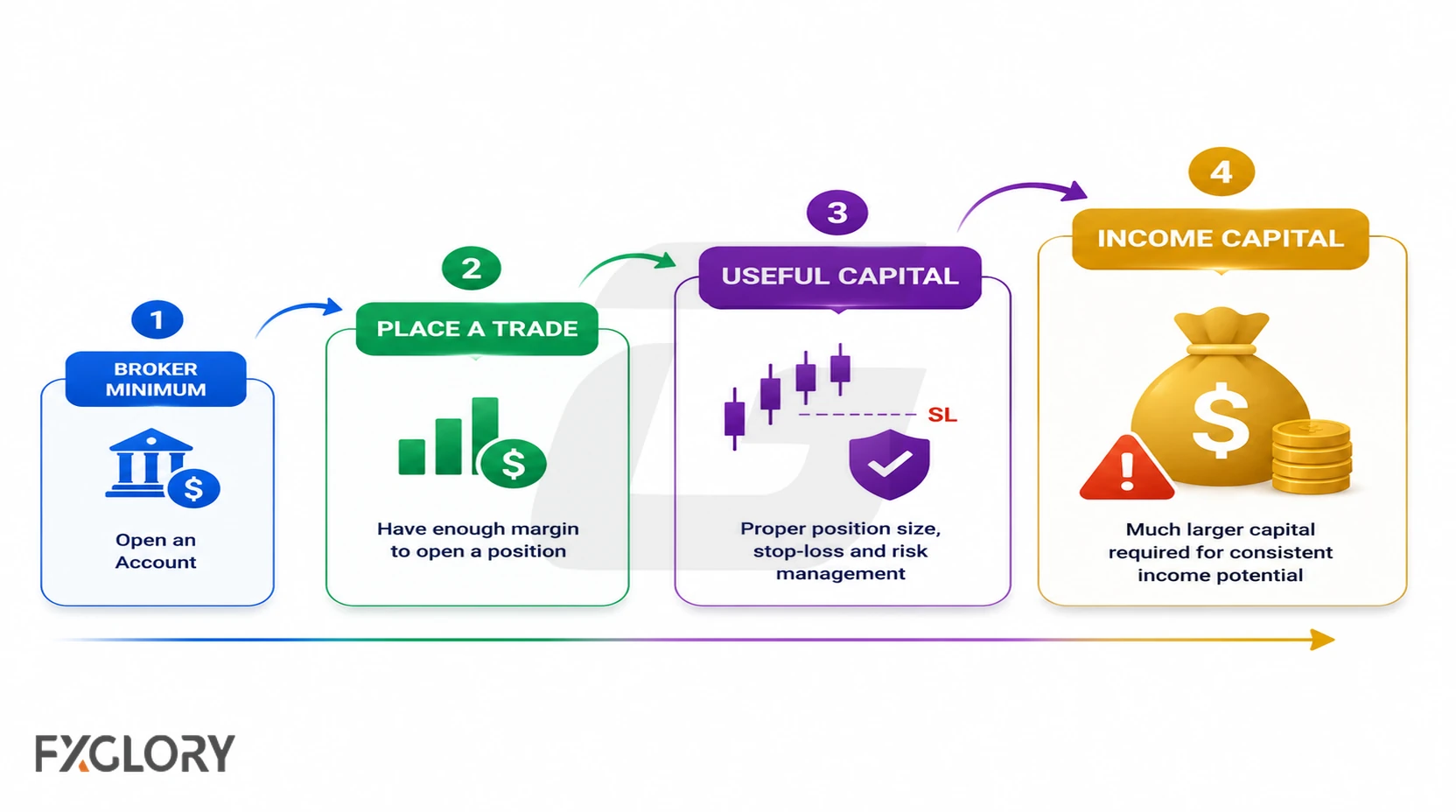
There are four different capital thresholds beginners should separate:

  • Broker minimum deposit: The smallest amount needed to open or fund an account. It may be low, but it does not prove the account is large enough to trade well.
  • Minimum to place a trade: The amount needed to meet margin and minimum position-size rules. This depends on broker rules, leverage, lot size, and the pair traded.
  • Useful trading capital: Capital that allows proper position sizing and risk control. This is more important than the minimum deposit.
  • Income-level capital: Much larger capital needed if the trader expects meaningful monthly income. Small accounts usually cannot produce large income without extreme risk.

Broker minimums, minimum trade sizes, leverage limits, margin rules, and account types vary. Always check the exact account terms before treating any example amount as usable.

Minimum investment in forex trading: why risk capital is more accurate

Many beginners search for the minimum investment in forex or forex trading minimum investment. But forex trading capital is not a passive investment that you simply deposit and leave alone. It is risk capital used for speculative trades.

That means the money should be separate from emergency savings, debt payments, rent, bills, food, and other essential needs. A larger account does not guarantee profit, and a smaller account does not make trading safe.

How much money do you need to trade forex safely?

No amount of money makes forex trading completely safe. A safer starting amount is one that supports the smallest allowed lot size, stop-loss distance, spread costs, and several losses without forcing the trader to risk essential money.

The safer question is not only “what is the minimum amount to trade forex?” It is:

How much capital lets me trade small enough to follow my risk rules?

Starting Capital by Goal

The right starting amount depends on what you want the account to do. A learning account, a practice account, and an income-focused account are not the same thing.

Goal Educational Starting Range Realistic Use
Demo learning $0 live capital Learn the platform, order types, charts, and strategy basics without real money.
Small live practice $50-$100 Practice execution, emotions, spreads, and discipline with very small size.
Beginner risk-managed trading $500-$1,000 Use micro lots, small risk per trade, and more realistic stop-loss planning.
More flexible learning $2,000-$5,000+ More room for position sizing, losing streaks, and different stop distances.
More serious learning / possible supplemental returns $10,000+ More meaningful dollar movement, but still requires skill, consistency, and controlled risk.
Full-time income attempt Usually far beyond beginner capital Depends on living costs, returns, risk, consistency, withdrawals, and market conditions.

These are educational ranges, not personal recommendations. The same amount can be too much for one trader and too little for another depending on skill, risk tolerance, leverage, lot size, broker rules, and financial situation.

How Much to Start Forex Trading: $10, $100, $500, $1,000 and $5,000

Beginners often ask whether a specific amount is enough. The answer depends on whether the goal is testing, learning, risk-managed practice, or meaningful income.

Can you start forex trading with $10?

Some brokers may allow very small deposits, and some may support cent accounts, nano lots, or very small trade increments. But $10 is usually only testing capital. It may help you click through the platform, place tiny trades if the broker supports very small lot sizes, and understand basic execution.

However, $10 is usually not meaningful for risk-managed trading. Spread, minimum trade size, and costs can matter heavily, and even a tiny loss can be a large percentage of the account.

Can you start forex trading with $100?

$100 may be enough for small live practice if the broker supports very small lot sizes. But the account has little room for mistakes, and spread can make very tight risk management harder.

At 1% risk, a $100 account means only $1 risk per trade. Depending on the lot size, pip value, spread, and stop-loss distance, that can be difficult to manage. If a trader risks $5 on a $100 account, that is already 5% of the account. If a 30-pip stop risks about $3, that is already 3% of the account.

Is $500 enough to start forex trading?

$500 is more practical than $50 or $100 for learning because it gives more room for micro-lot trading and small risk per trade. At 1% risk, $500 means about $5 risk per trade.

That still requires discipline. A $500 account can be damaged quickly if the trader uses oversized lots, high leverage, or revenge trading.

Is $1,000 enough to start trading forex?

$1,000 can give beginners more flexibility with micro lots, stop losses, and losing streaks. At 1% risk, $1,000 means about $10 risk per trade.

This can be a more realistic learning base than a very small account, but it is still learning capital, not proof that the trader can scale income.

Do you need $5,000 or more?

$5,000 or more can give more room for position sizing and risk management. At 1% risk, $5,000 allows about $50 risk per trade, which gives more flexibility with stop-loss distance and position size.

However, a larger account does not automatically make someone profitable. Poor risk control can damage a large account just as quickly as a small one.

Risk-Based Formula: Calculate the Account Size You Need

Instead of picking a random starting amount, work backward from risk. Before using the formula, identify the planned dollar risk, risk percentage, stop-loss distance, pip value, and broker minimum lot size.

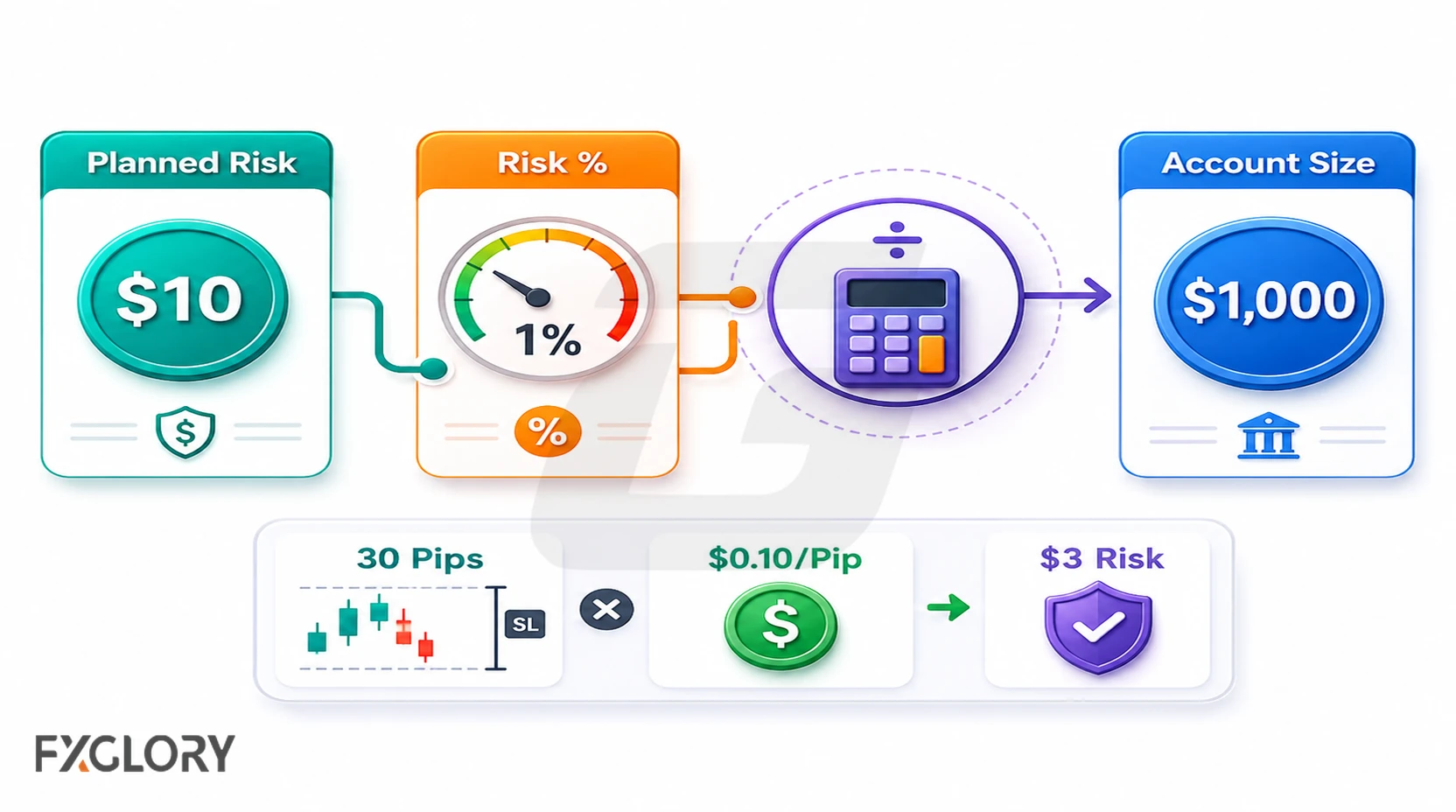
Formula: Minimum account size = planned dollar risk per trade ÷ risk percentage

Risk percentage is not a safety guarantee. It is only a sizing framework. The examples below use 1% for education only; traders may use lower, higher, or no fixed percentage depending on risk tolerance, strategy, rules, and experience.

Example: if you want to risk $10 per trade and that should equal 1% of your account, the estimated account size is:

$10 ÷ 0.01 = $1,000

Planned Risk Per Trade Example Risk % of Account Approx. Account Size Needed
$5 1% $500
$10 1% $1,000
$25 1% $2,500
$50 1% $5,000

This formula does not make trading safe. It only helps connect account size to risk. You still need to calculate pip value, stop-loss distance, spread, and trade size.

Formula: Trade risk = stop-loss pips × pip value for the full position

For example, if your stop loss is 30 pips and your pip value is $0.10 per pip, the estimated trade risk is 30 × $0.10 = $3 before spread, slippage, swaps, or other costs.

Lot Size, Pip Value and Leverage: Why Account Size Matters

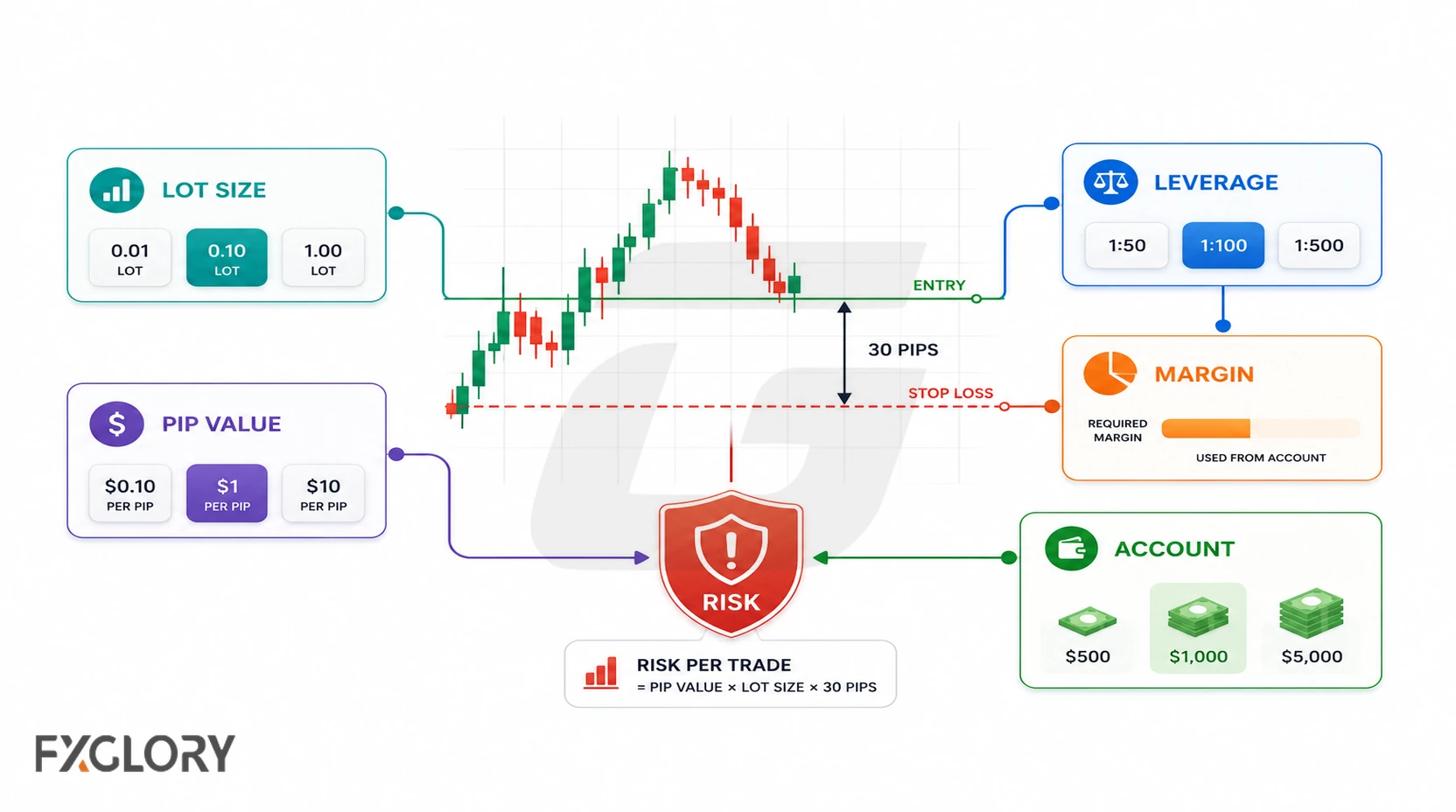
Account size matters because it affects what lot size, pip value, stop-loss distance, and leverage level you can use without taking too much risk.

For many major pairs in a USD account, simplified educational pip values are often around:

  • Standard lot: about $10 per pip.
  • Mini lot: about $1 per pip.
  • Micro lot: about $0.10 per pip.

Actual pip value can vary by pair, account currency, position size, and exchange rate. Exact lot availability also depends on the broker's minimum lot size. For detailed calculations, see how to calculate pips in forex.

Account Size Common Learning Lot Size Approx. Pip Value Example 30-Pip Stop Example
$100 Micro or smaller where supported About $0.10/pip or less About $3 risk or less before costs; $3 is already 3% of a $100 account
$500 Micro or smaller where supported About $0.10/pip About $3 risk before costs
$1,000 Micro lots with more room About $0.10-$0.20/pip About $3-$6 risk before costs
$5,000 More flexible sizing Varies by lot size Can risk more in dollars while keeping percentage risk controlled

For a full explanation of position units, see what is lot size in forex.

How leverage changes the minimum amount needed

Leverage can reduce the margin required to open a position, but it does not remove trade risk. A smaller margin requirement can make a trade possible with less capital, but the position can still lose money if price moves against it.

Formula: Required margin = position size ÷ leverage

Position Size Approx. Capital/Margin at No Leverage / 1:1 Approx. Margin at 1:10 Leverage Approx. Margin at 1:100 Leverage
$10,000 About $10,000 About $1,000 About $100
$50,000 About $50,000 About $5,000 About $500

The margin requirement changes, but the same position can still create the same pip-based loss. For example, a $10,000 position losing 30 pips has the same pip loss whether the required margin was about $10,000, $1,000, or $100. Lower margin does not mean lower risk.

For choosing leverage more carefully, see best leverage for forex. For a no-leverage approach, see can you trade forex without leverage.

Costs and Income Expectations for Small Accounts

The amount needed to start forex trading is not only the deposit. Trading costs and account costs can affect a small account quickly. On a small account, spread and commission can represent a larger percentage of the account and can make frequent trading harder.

  • Spread: The difference between bid and ask price.
  • Commission: Some account types may charge commission per trade.
  • Swaps or overnight fees: Positions held overnight may have financing costs or credits.
  • Slippage: Actual execution price may differ from the expected price.
  • Currency conversion: Account currency and trading pair may create conversion effects.
  • Platform, tools, or data: Some traders may pay for tools, indicators, signals, or data services.
  • Withdrawal or payment fees: Funding and withdrawal methods may have costs.
  • Opportunity cost: Capital tied in trading cannot be used elsewhere.

For spread and execution basics, see bid and ask price in forex.

Can you make money with a small forex account?

It is possible to make money with a small forex account, but the dollar amounts are usually small unless the trader takes high risk. That is why small accounts should usually be treated as learning accounts, not income accounts.

The percentages below are used only to show math; they are not targets, forecasts, or typical results. The table is a hypothetical monthly math example, not expected returns. Many traders lose money, and even positive months can be inconsistent.

Account Size 2% Monthly Math Example 5% Monthly Math Example Reality Check
$100 $2 $5 Learning only.
$500 $10 $25 Small practice account.
$1,000 $20 $50 Better learning base, not income replacement.
$5,000 $100 $250 More flexibility, still no guarantee.
$10,000 $200 $500 Larger dollar examples, but losses are still possible.

With small accounts, withdrawing profits can slow growth, while leaving profits in the account keeps money exposed to trading risk. The key lesson is simple: small accounts require realistic expectations.

Trying to turn a tiny account into meaningful income often pushes beginners toward overleverage, oversized trades, or revenge trading. For deeper profit expectation guidance, see can you really make money trading forex.

Small Account Traps Beginners Should Avoid

Small accounts are not bad. They can be useful for learning. The problem is when a trader expects large income from small capital and starts forcing risk.

  • Overleveraging: Using high leverage to make the account feel bigger.
  • Risking too much per trade: Risking 10%, 20%, or more because 1% feels too small.
  • Revenge trading: Increasing size after a loss to recover quickly.
  • Taking too many trades: Trying to grow the account faster through frequency.
  • Copying another trader's lot size: Another trader's lot size may not fit your account size, stop-loss distance, or risk limit.
  • Ignoring spread: Trading costs can matter more on small accounts.
  • Switching strategies constantly: Small gains can make a valid process feel too slow.
  • Using essential money: Trading with money needed for real-life obligations creates emotional pressure.
  • Expecting income too early: A small account may teach skill, but it usually cannot produce meaningful income without high risk.
Small-account rule: A small account is best used to learn process, execution, and discipline. It should not be used as a shortcut to income.

How to Decide Your Own Starting Amount

Use this workflow before deciding how much money to start forex trading with:

  1. Define the goal: Are you learning, practicing live execution, or trying to trade more seriously?
  2. Check broker rules: Minimum deposit, minimum lot size, leverage, margin, and account type matter.
  3. Choose a risk limit: Decide how much of the account can be risked per trade.
  4. Choose a stop-loss distance: Estimate the number of pips you may risk on a trade.
  5. Calculate pip value: Match lot size to your risk limit.
  6. Estimate account size needed: Use planned dollar risk divided by risk percentage.
  7. Include costs: Spread, commission, swaps, slippage, and conversion can affect results.
  8. Plan for losing streaks: The account should survive normal losses without emotional decision-making.
  9. Use only risk capital: Do not trade money needed for essential life expenses.

A good starting amount is not the amount that lets you dream about profit. It is the amount that lets you practice a risk-controlled process without financial pressure.

You can use the EUR/USD live price page to estimate how much margin or capital a 1,000-unit, 10,000-unit, or 100,000-unit position might require.

Common Funding Mistakes When Starting Forex

Many beginners do not lose because their first deposit is small. They lose because their expectations, funding choices, and risk process are not aligned with the account size.

  • Thinking broker minimum means realistic capital: A low deposit may open an account but still be too small for proper trading.
  • Ignoring broker minimum trade size: A small deposit is less useful if the smallest trade size is still too large for the account.
  • Not budgeting for spread and costs: Costs can eat into small accounts quickly.
  • Risking essential money: Trading with rent, bills, debt-payment money, or emergency savings is dangerous.
  • Skipping demo practice: Beginners should understand the platform before risking live money.
  • Not planning for losses: Losing streaks are part of trading, and the account size must account for them.
  • Funding from emotion: Depositing more after losses without fixing the trading process can make losses worse.
  • Confusing deposit size with skill: A bigger account gives more room, but it does not create a profitable process.

Quick Recap: How Much Money Do You Need to Start Trading Forex?

You can technically start trading forex with a small amount if the broker allows it. But the better question is how much capital gives you enough room to manage risk, use realistic lot sizes, survive losses, and avoid overleveraging.

A tiny account such as $10 or $100 may help with testing and learning. Educational examples often treat $500-$1,000 as more practical for beginner risk-managed learning. Larger accounts may give more flexibility, but they do not guarantee profit.

The minimum amount to start forex trading is not the same as the amount needed to earn income. The forex trading minimum amount should be judged by risk, not just broker deposit. Work backward from risk per trade, pip value, lot size, leverage, costs, and your actual goal.

Final rule: Fund the account based on risk and learning goals, not income dreams. Forex trading capital should be money you can afford to lose.

Frequently Asked Questions

How much do you need to start trading forex?

You can technically start trading forex with a small amount if the broker allows it, but realistic starting capital depends on lot size, leverage, stop-loss distance, spread, risk per trade, and your goal. Some beginners use small live practice accounts around $50-$100, while $500-$1,000+ can give more room for risk-managed learning.

How much money do you need to start trading forex?

The amount of money needed to start trading forex depends on whether the goal is learning, small live practice, or more serious risk-managed trading. A tiny deposit may open an account, but useful capital should allow proper position sizing, costs, and controlled risk.

What is the minimum amount to start forex trading?

The minimum amount to start forex trading, minimum amount to trade forex, and forex trading minimum amount all depend on broker minimum deposit, minimum trade size, leverage, margin requirement, account type, and local rules. The broker minimum may be low, but it may not be enough to trade with proper risk management.

Is the broker minimum deposit enough to trade forex?

Not always. A broker minimum deposit may be enough to open or fund an account, but useful trading capital should also cover minimum trade size, margin, spread, stop-loss risk, and losing streaks.

Can I start forex trading with $10?

$10 may be enough to test a platform with some brokers if very small trade sizes, nano lots, or cent-style accounts are supported, but it is usually too small for meaningful risk-managed trading. It should be treated as testing or learning capital, not income capital.

Can I start forex trading with $100?

$100 can be used by some beginners for small live practice if the broker supports small lot sizes, but the account has very little room for losses. At 1% risk, $100 means only $1 risk per trade, which may be difficult depending on lot size, spread, and stop distance.

Is $500 enough to start forex trading?

$500 can be more practical than $50 or $100 for beginner learning because it gives more room for micro-lot trading and controlled risk. At 1% risk, $500 equals about $5 risk per trade.

Is $1,000 enough to start trading forex?

$1,000 can give beginners more flexibility than a very small account, especially when using micro lots and strict risk limits. At 1% risk, $1,000 equals about $10 risk per trade, but it is still learning capital, not proof that trading income can be scaled.

How much money do I need to trade forex safely?

No amount makes forex trading completely safe. A safer starting amount is one that lets the trader use small positions, define risk per trade, survive losing streaks, and avoid using essential money.

What is the forex trading minimum investment?

The forex trading minimum investment depends on broker rules, minimum lot size, leverage, margin, and risk tolerance. It is better to treat forex trading capital as risk capital, not a passive investment.

Can I make money with a small forex account?

It is possible to make money with a small forex account, but the dollar amounts are usually small unless the trader takes high risk. Trying to force income from a small account often increases risk, so small accounts are better used for learning, execution practice, and discipline building.

How much should beginners risk per trade?

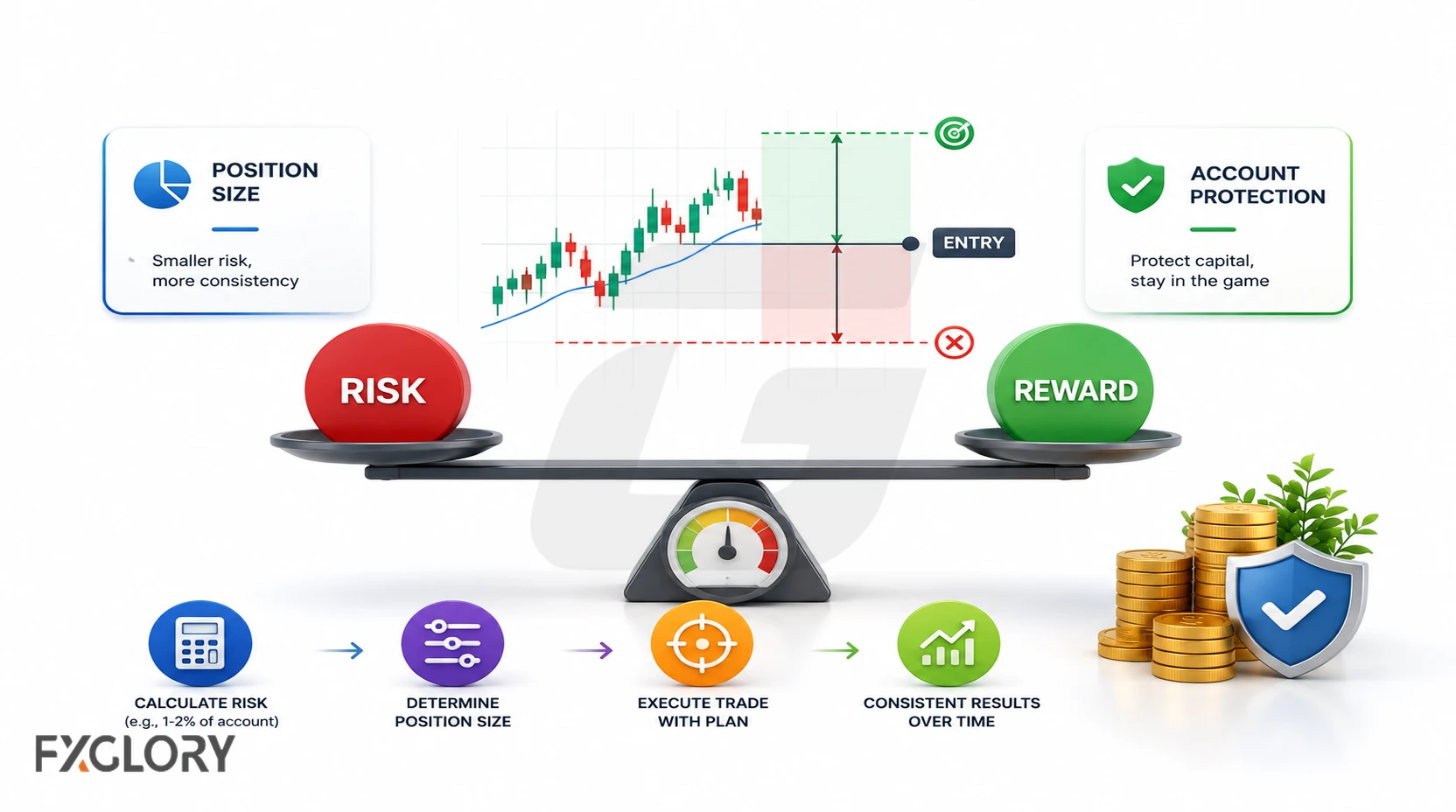
Many educational risk frameworks use small percentages such as 1% or less per trade, especially for beginners. The exact amount depends on account size, experience, stop-loss distance, pip value, and risk tolerance.

Related Contents

How to Trade ForexSee how account funding, position size, stop loss, leverage, and review fit into a complete trading workflow.
What Is Lot Size in Forex?Understand how standard, mini, micro, and smaller lot sizes affect pip value and risk.
How to Calculate Pips in ForexCalculate pip value and stop-loss risk before choosing your starting account size.
Best Leverage for ForexLearn how leverage changes margin and why higher leverage can pressure small accounts.
Can You Trade Forex Without Leverage?See how much capital may be needed when trading at or near 1:1 exposure.
Can You Really Make Money Trading Forex?Set realistic expectations about income, profit, account size, and risk.

Practice Before Trading Live

Use a free demo account to test your strategy, risk rules, and execution process before placing a real-money trade.

Open a Free Demo Account