
What Is a Pip in Forex Trading?
A pip is a standard unit used to measure price movement in a forex currency pair. Traders use pips to describe how far a pair moved, how wide a spread is, and how far a stop loss or target sits from an entry.
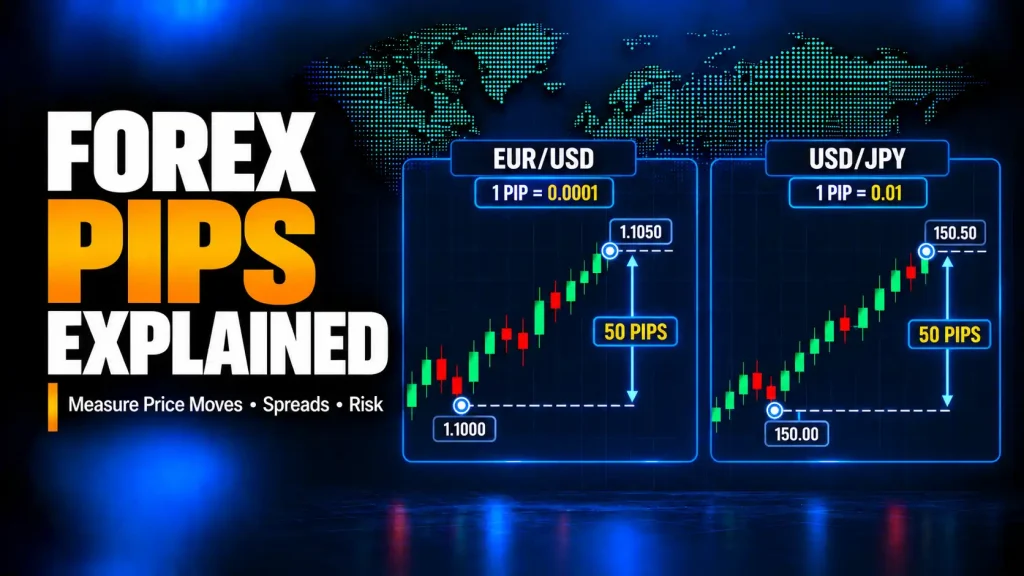
For most non-JPY pairs, the standard pip size is 0.0001. For many JPY pairs, the standard pip size is 0.01.
Quick Answer: How Pips Work
To use pips correctly, first identify the pair's standard pip size, then measure the price difference in those units. Once the pip movement is known, pip value can be used to estimate the monetary effect for a specific position size.
What Are Pips Used For?
Pips give traders a consistent way to compare price movement across quotes with several decimal places.
- Price movement: Measure how far a pair moved up or down.
- Spread: Express the distance between bid and ask.
- Stop loss: Measure the distance between entry and the planned exit if the trade moves against the position.
- Target: Measure the distance between entry and a planned profit level.
- Trade review: Compare favorable and unfavorable movement before converting it into money terms.
What Does Pip Stand For in Forex?
Pip is commonly expanded as percentage in point. In practical trading, however, the acronym matters less than the function: pips provide a standard way to describe small changes in exchange rates.
Where Is the Pip in a Forex Quote?
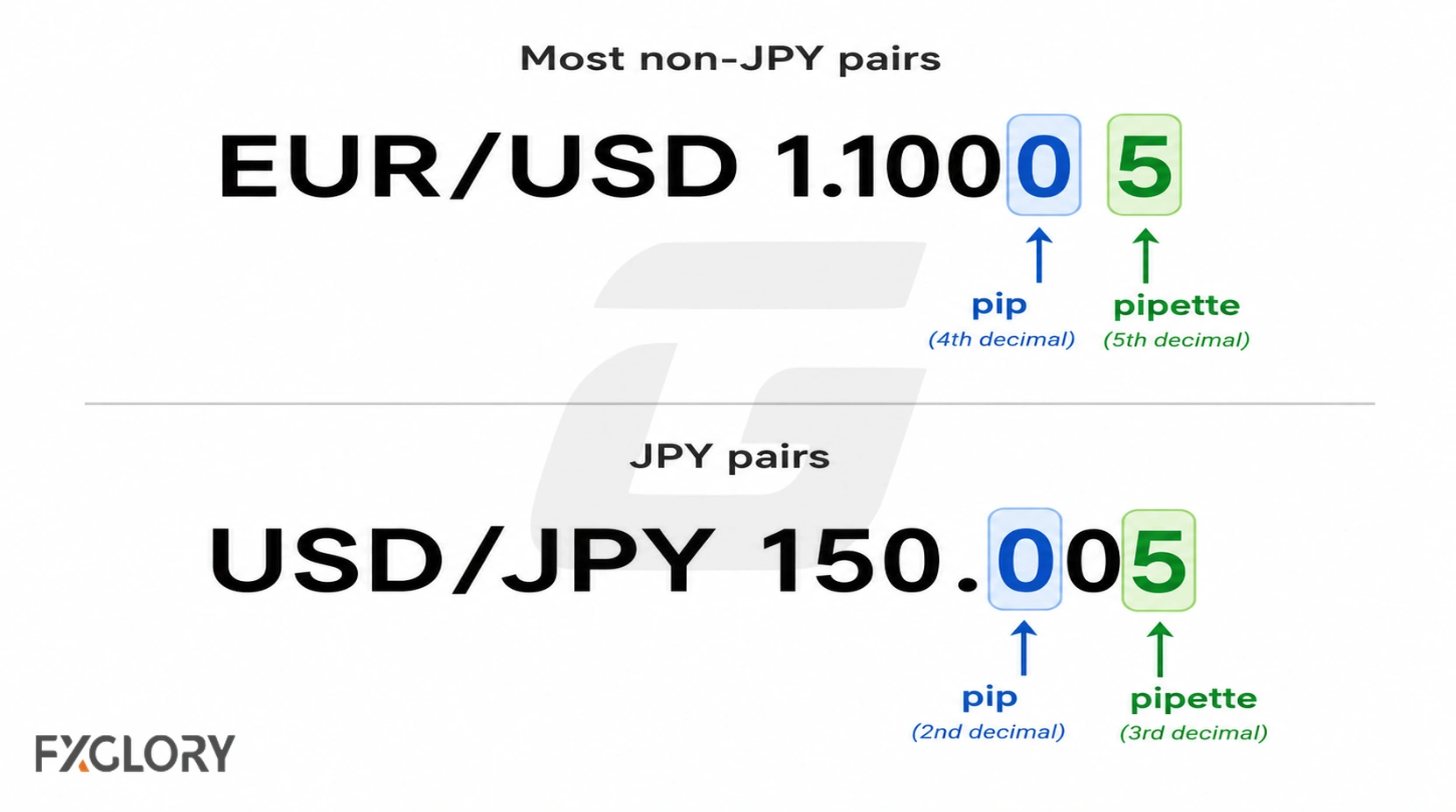
A pip has a size, while the quote shows the digit position used to count it. On most non-JPY pairs, a one-pip move is 0.0001, so the pip corresponds to the fourth decimal digit in a standard four-decimal quote. On many JPY pairs, a one-pip move is 0.01, so the pip corresponds to the second decimal digit.
| Pair Type | Standard Pip Size | Typical Pip Position | 1-Pip Example |
|---|---|---|---|
| Most non-JPY pairs | 0.0001 | Fourth decimal digit | 1.1000 to 1.1001 |
| Many JPY pairs | 0.01 | Second decimal digit | 150.00 to 150.01 |
Pip Example Using EUR/USD
Suppose EUR/USD moves from 1.1000 to 1.1050. The price difference is 0.0050. With a standard pip size of 0.0001, the move is:
If the position was long, the move was favorable before costs and execution effects. If the position was short, the same move was unfavorable.
Pip Example Using USD/JPY
Suppose USD/JPY moves from 150.00 to 150.50. The price difference is 0.50. With a standard pip size of 0.01, the move is:
The result is also 50 pips, but the pip size is different from EUR/USD.
Pips vs Pipettes in Forex
A pipette is one-tenth of a pip. Many platforms use fractional-pip pricing, so the quote includes one extra digit beyond the standard pip position.
| Pair Type | 1 Pip | 1 Pipette |
|---|---|---|
| Most non-JPY pairs | 0.0001 | 0.00001 |
| Many JPY pairs | 0.01 | 0.001 |
For example, in a five-decimal EUR/USD quote such as 1.10005, the final digit represents a fractional pip rather than a full pip.
How to Count Pips
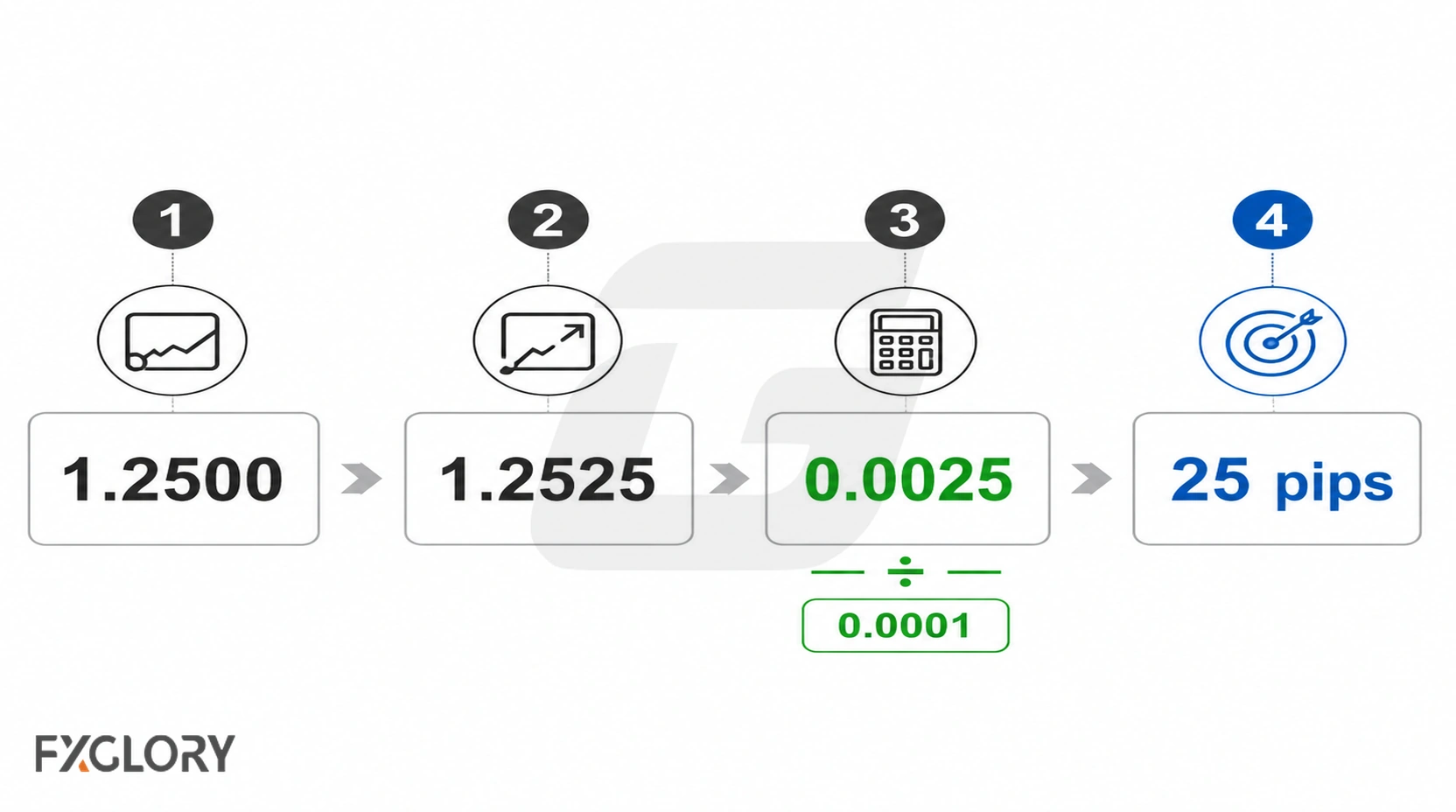
The calculation is straightforward once the standard pip size is known.
- Identify the pair: Determine the standard pip size used for that quote.
- Find the price difference: Subtract the starting price from the ending price.
- Divide by the pip size: Convert the price difference into pips.
- Interpret the direction: Decide whether the move was favorable or unfavorable for the trade.
Pip vs Pip Value
A pip measures price distance. Pip value expresses the monetary value of one pip for a specific position.
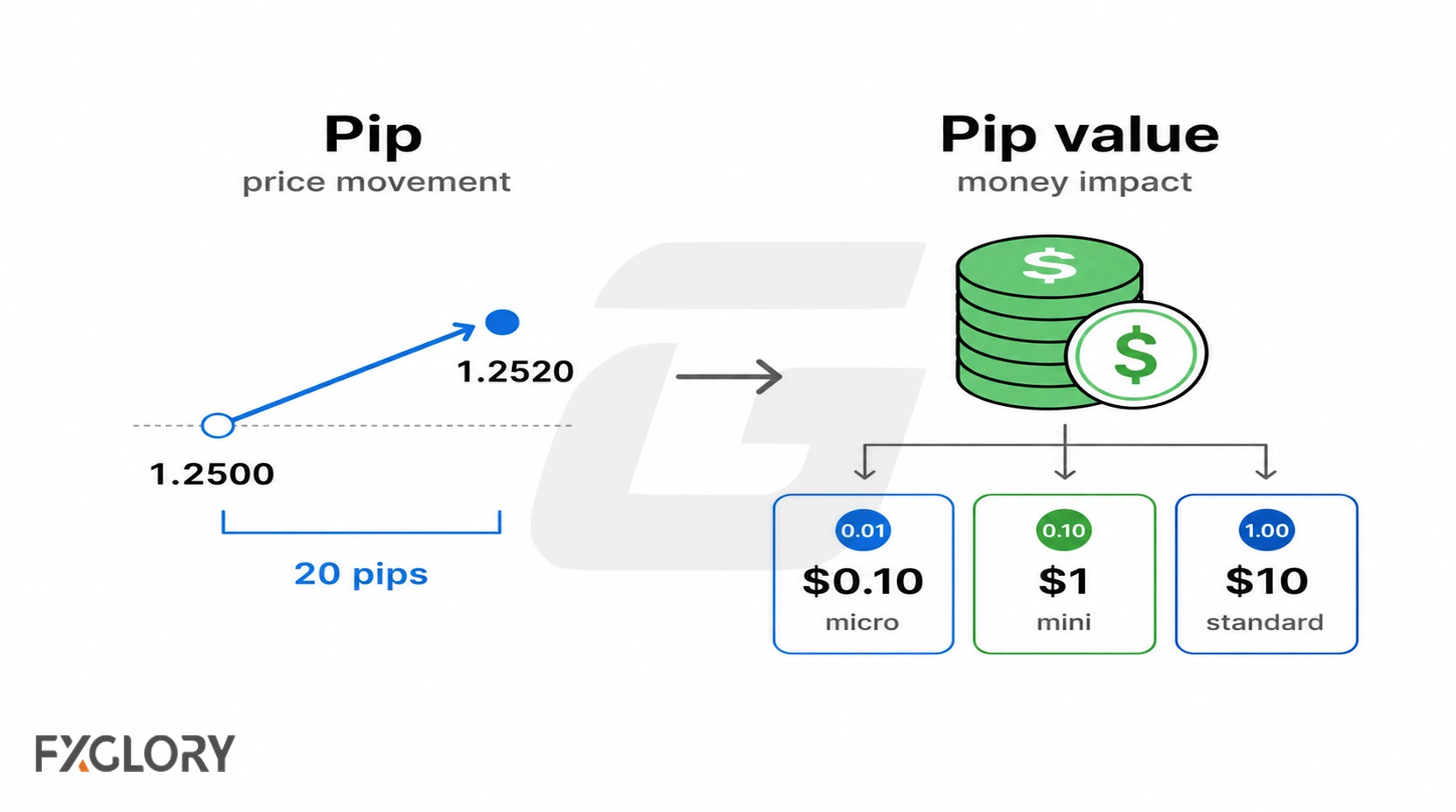
A 20-pip move therefore does not tell you the profit or loss by itself. The account impact depends on the pip value for that trade.
How to Calculate Pip Value
The basic relationship is:
If the result is not already in the account currency, an additional currency conversion is required.
Example using EUR/USD and a 100,000-unit position:
- Pip size: 0.0001
- Position size: 100,000 units
- Calculation: 0.0001 × 100,000 = 10
- Result: 10 USD per pip when USD is the quote currency and the result is being expressed in USD
For other pairs or account currencies, the monetary pip value may require conversion using the relevant exchange rate.
Pip Value and Lot Size
Position size determines how much money each pip movement represents. Using a larger lot size increases the monetary impact of the same price movement.
| Lot Type | Common Unit Size | Approximate Pip Value on EUR/USD |
|---|---|---|
| Standard lot | 100,000 units | About $10 per pip |
| Mini lot | 10,000 units | About $1 per pip |
| Micro lot | 1,000 units | About $0.10 per pip |
These figures are specific simplified examples for EUR/USD when the result is expressed in U.S. dollars. Other pairs and account currencies can produce different pip values.
To understand position sizing in more detail, read what is a lot size in forex.
Worked Example: Pips, Pip Value, and Trade Risk
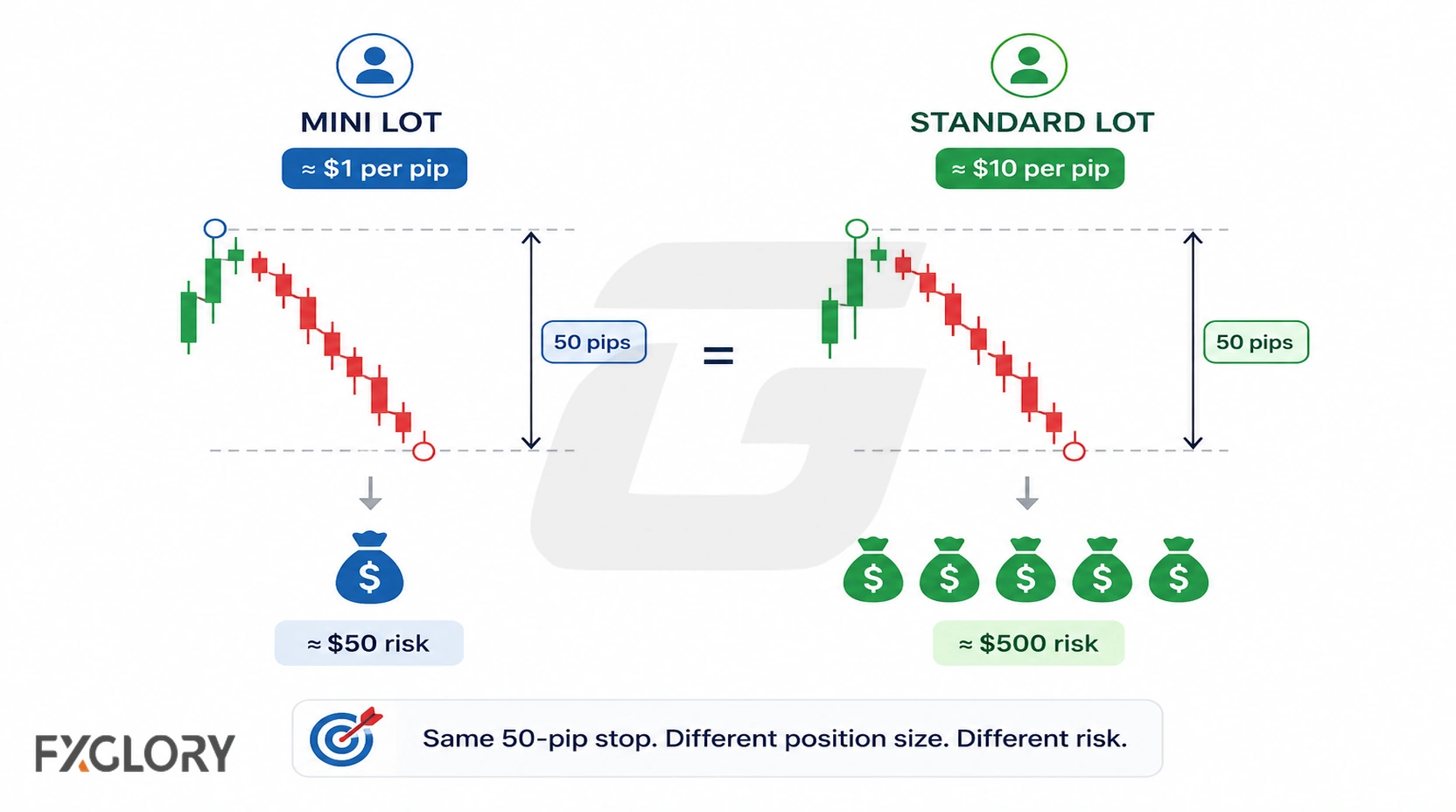
Suppose a EUR/USD trade has a 50-pip stop and a mini-lot position with an estimated pip value of about $1 per pip.
If the same 50-pip stop were used with a standard lot at about $10 per pip, the estimated monetary risk would be about $500 before costs. The price distance did not change; the position size did.
How Pips Relate to Spread
The spread is the difference between the bid and ask prices and is often expressed in pips or fractional pips.
For example, a bid of 1.1000 and an ask of 1.1002 represent a 2-pip spread when the standard pip size is 0.0001.
Spread affects the effective trading result because a position must overcome the bid/ask difference before showing a net gain, subject to the platform's execution conditions.
For a focused explanation, see bid and ask price in forex and how to read forex quotes.
How Leverage Relates to Pips
Leverage does not change pip value directly. Pip value changes when the position size changes.
Leverage matters because it can reduce the margin required to open a larger position. If the trader uses that capacity to increase position size, each pip can then have a larger monetary effect on the account.
For more context, see what is leverage in forex trading.
Common Beginner Mistakes With Pips
- Confusing pips with money: Pip movement and monetary value are separate concepts.
- Using the wrong pip size: Many JPY pairs use 0.01 rather than 0.0001.
- Counting a pipette as a full pip: Fractional-pip quotes include an extra digit beyond the standard pip position.
- Ignoring spread: Bid/ask differences affect the effective result of a trade.
- Focusing only on possible pips gained: Planned loss distance should be measured as carefully as the target.
- Using too much position size: Larger positions increase the monetary effect of each pip.
- Assuming pip value is universal: Monetary pip value depends on the specific position and currency setup.