Quick Answer: Who Are The Top Forex Traders?
The most famous forex traders and currency-focused macro traders often named in top forex trader lists include George Soros, Stanley Druckenmiller, Bill Lipschutz, Andy Krieger, Bruce Kovner, Paul Tudor Jones, Michael Marcus, and John R. Taylor Jr. In retail forex education, Kathy Lien and Raghee Horner are also widely recognized names.
There is no official, verified, universal ranking of the best forex traders in the world. Some lists rank by fame, some by estimated wealth, some by one famous currency trade, and some by broader trading influence. The useful question is not only “who is the best?” It is “what can a retail trader responsibly learn without copying exceptional institutional outcomes?”
If you are new to the role, start with what a forex trader is responsible for before the order. If you are still building the basics, use the beginner path before comparing yourself with famous traders.
How This Page Defines “Top Forex Trader”
A clean list needs clear criteria. “Top” can mean famous, wealthy, historically important, professionally respected, educationally influential, or successful over a long period. Those are not the same thing.
This page uses a cautious definition. A trader is included because they are commonly cited for major currency trades, macro trading careers, forex-market influence, or currency education. That does not mean every name is a pure forex-only trader, and it does not mean retail traders can copy their trades.
| Criterion | Why It Matters | What It Does Not Prove |
|---|---|---|
| Historic currency trade | Shows direct forex or currency-market relevance. | It does not prove repeatable retail results. |
| Long macro career | Shows process beyond one trade. | It may include equities, bonds, commodities, or funds beyond forex. |
| Risk discipline | Shows how losses and exposure were managed. | It does not remove the risk of future losses. |
| Currency-market influence | Shows why the name appears in forex history. | It does not make the trader a retail role model. |
| Educational influence | Explains why analysts and educators matter to retail traders. | It is not the same as being the richest trader. |
| Verification caution | Separates serious records from social-media claims. | It does not make private results fully transparent. |
Top Forex Traders At A Glance: Commonly Cited Top 10 Names
This is not a wealth ranking. It is a practical overview of famous names, why they are cited, and what retail traders should and should not take from them.
| Trader | Why They Are Known | Useful Lesson | Caution |
|---|---|---|---|
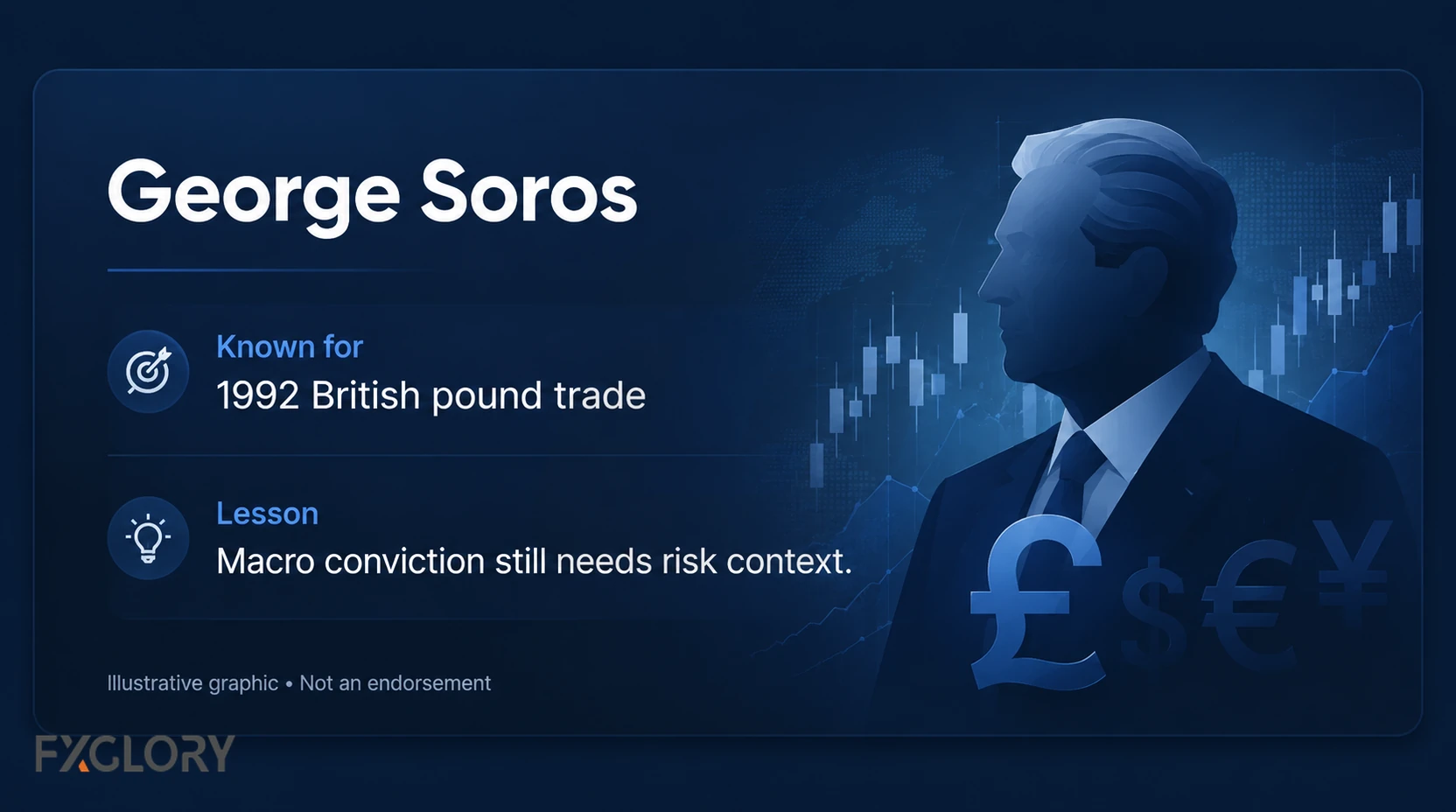
| George Soros | 1992 British pound short and macro trading fame. | Macro conviction still needs risk context. | Do not copy institutional scale or one famous trade. |
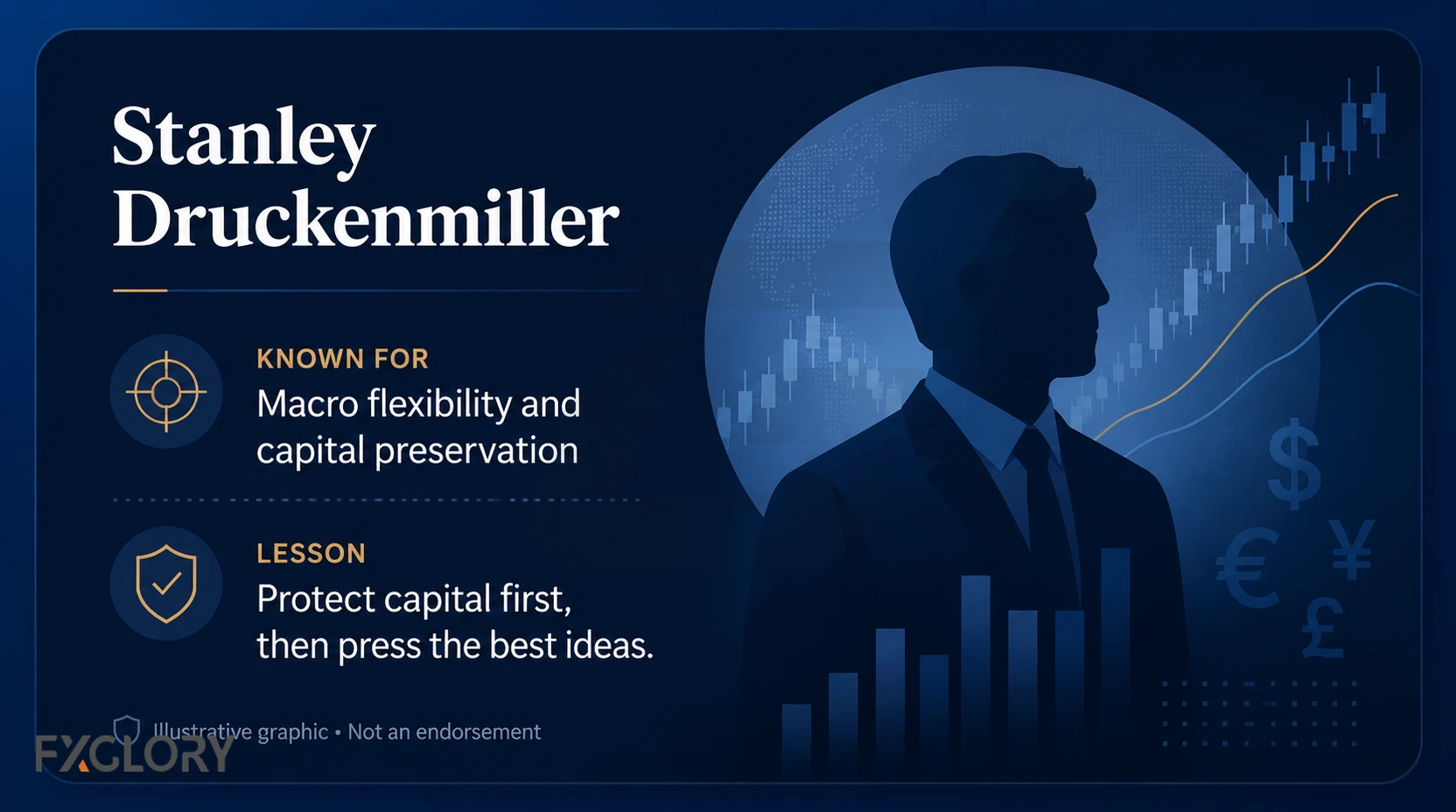
| Stanley Druckenmiller | Macro trading career and work with Soros. | Capital preservation and flexible thinking matter. | Not a retail forex-only template. |
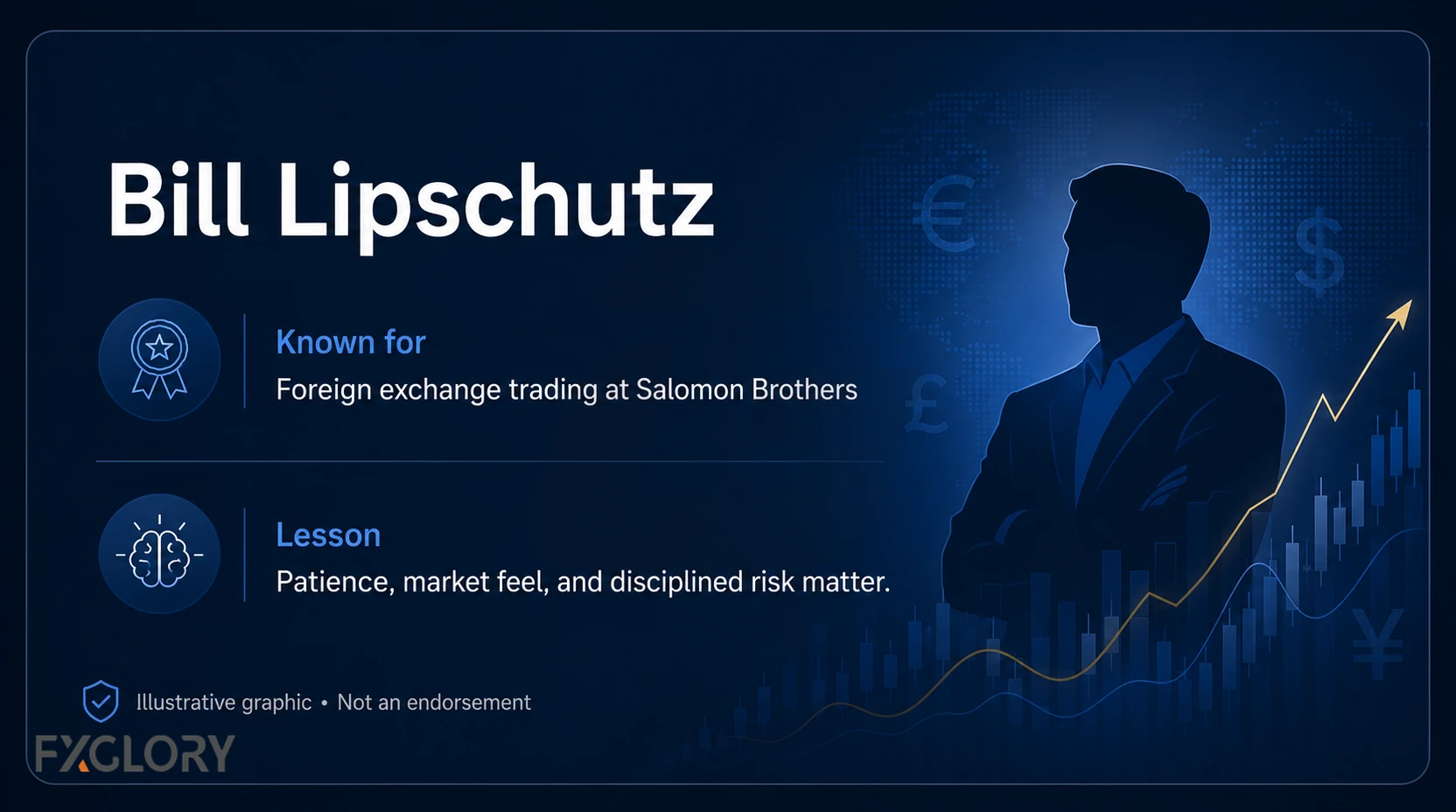
| Bill Lipschutz | Foreign exchange trading at Salomon Brothers. | Psychology, position sizing, and risk control are central. | Do not reduce his career to a single origin story. |
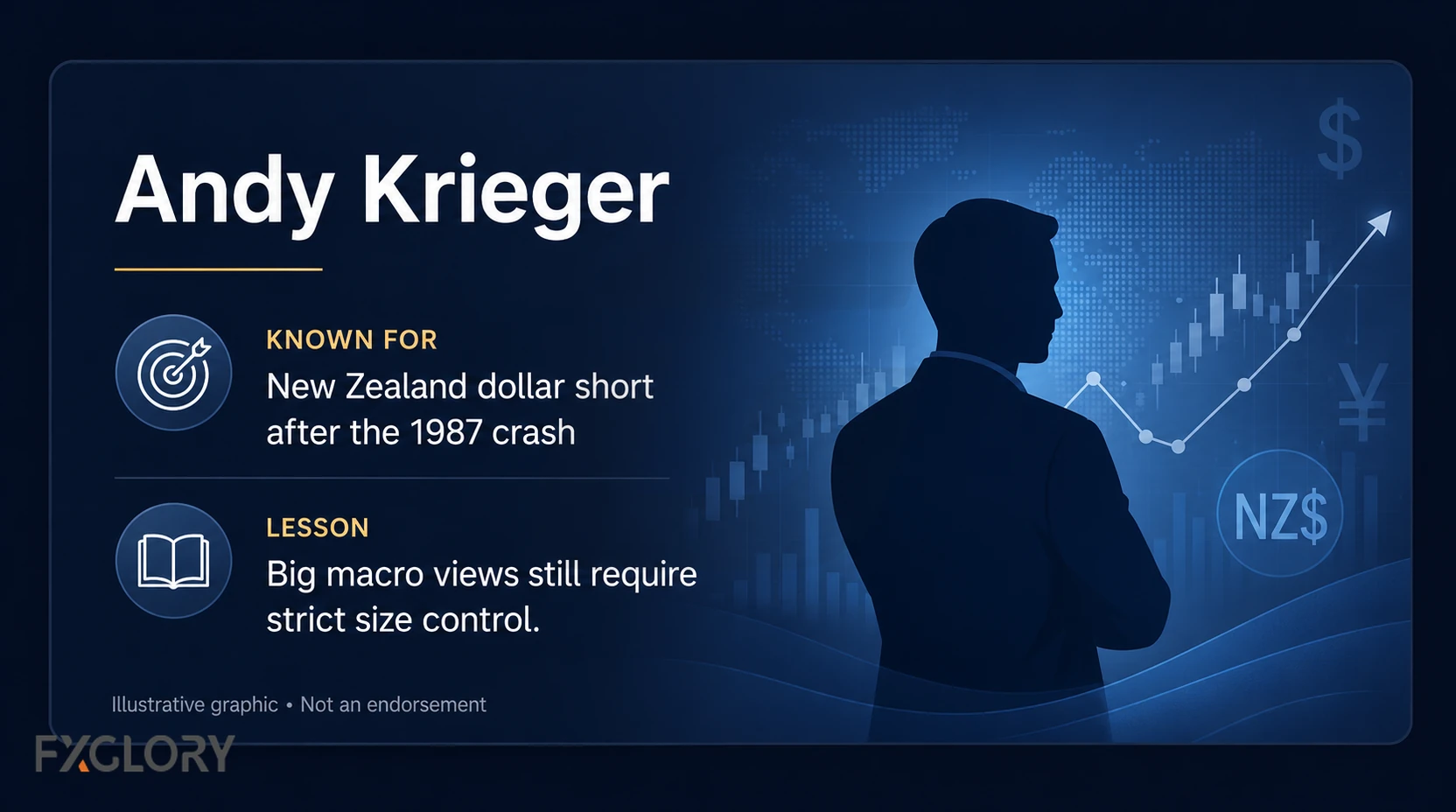
| Andy Krieger | Famous New Zealand dollar short after the 1987 crash. | Currency dislocations can attract aggressive macro trades. | His leverage and institutional context are not retail examples. |
| Bruce Kovner | Macro trading and Caxton Associates. | Respect for risk and trend behavior. | Broader macro trader, not only forex. |
| Paul Tudor Jones | Macro and trend trading reputation. | Defense and risk control matter in volatile markets. | Known across markets, not only spot forex. |
| Michael Marcus | Commodities Corporation trading career. | Mentorship, patience, and risk discipline. | Multi-asset trader, not a pure forex profile. |
| John R. Taylor Jr. | Currency-management and FX Concepts relevance. | Systematic currency thinking and research matter. | Less beginner-recognized than Soros or Lipschutz. |
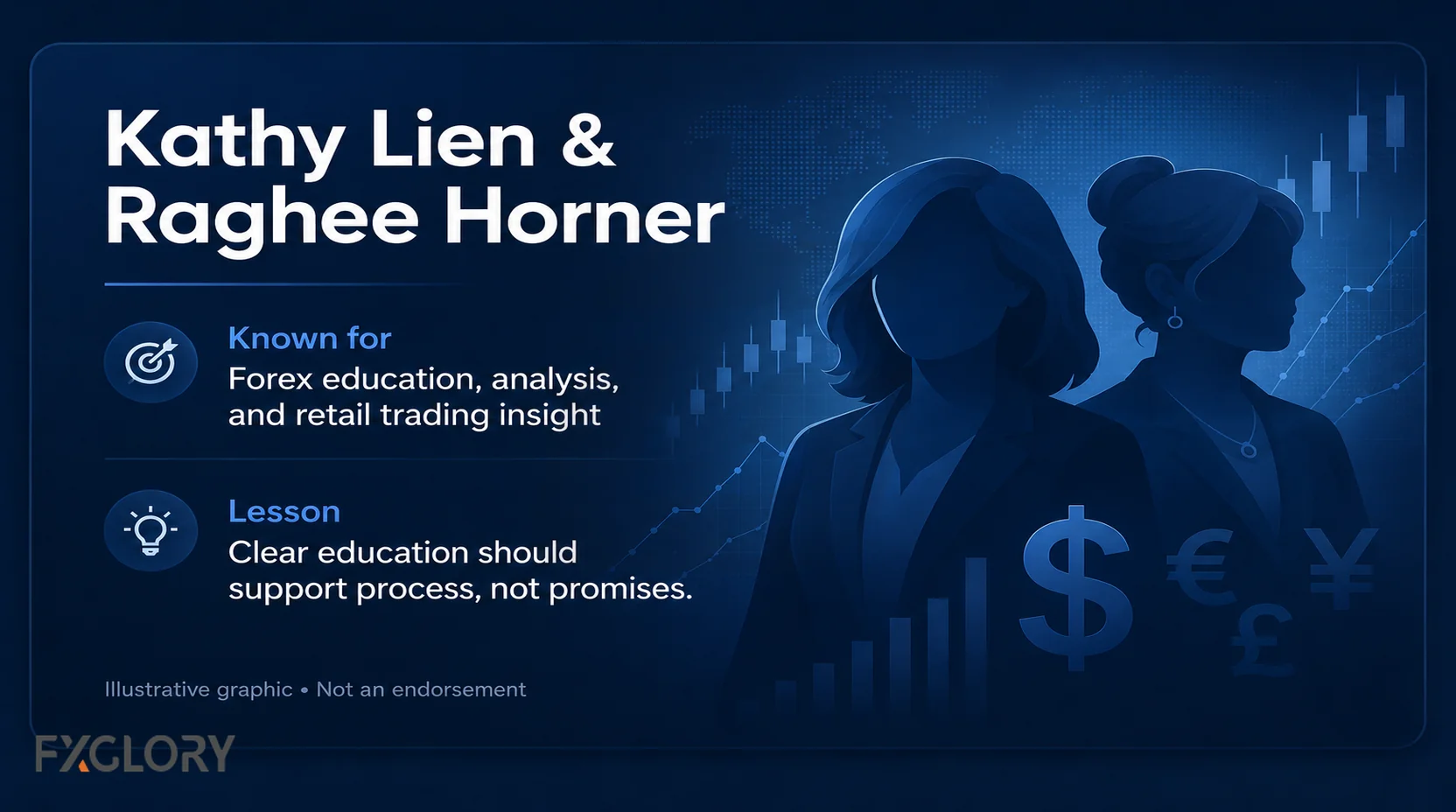
| Kathy Lien | Forex education, currency analysis, and retail-market teaching. | Explaining currency drivers clearly matters. | Education influence is different from richest-trader ranking. |
| Raghee Horner | Retail trading education and forex-market teaching. | Process, simplicity, and discipline matter. | Better suited for a deeper female-trader profile page. |
George Soros
George Soros is the name most often associated with the phrase “best forex trader in the world” because of the 1992 British pound trade during the events around Black Wednesday. His reputation is linked to macro analysis, currency-market pressure, and a historic trade that became one of the most discussed forex examples.
The useful lesson is not that a retail trader should look for one giant trade. The useful lesson is that macro themes, policy pressure, market structure, position sizing, and timing can matter. The danger is hero worship. Soros operated with institutional resources, experience, capital, and context that a retail trader does not have.
Stanley Druckenmiller
Stanley Druckenmiller is often listed with Soros because of his macro trading career and his role at Quantum Fund around the 1992 British pound trade. He is usually studied for flexibility, macro awareness, and the importance of protecting capital when the market view changes.
The lesson for retail traders is process, not position size. A trader must be willing to change their view when evidence changes. That is different from jumping between ideas emotionally. Flexible thinking still needs written risk rules.
Bill Lipschutz
Bill Lipschutz is widely known for foreign exchange trading at Salomon Brothers and for the psychological side of trading: market feel, risk control, and the difficulty of staying disciplined under pressure.
His profile is useful because it reminds traders that forex is not only chart reading. Position sizing, sentiment, liquidity, timing, and emotional control all matter. This connects directly to the emotional discipline behind risk control.
Andy Krieger
Andy Krieger is commonly cited for an aggressive short position against the New Zealand dollar after the 1987 market crash. His story appears in many forex trader lists because it shows how a currency can become the focus of a large macro trade after a market dislocation.
The retail caution is obvious: the scale, leverage, and institutional context of that type of trade are not normal retail conditions. Studying the story can help with understanding currency stress and conviction, but it should not encourage oversized trades.
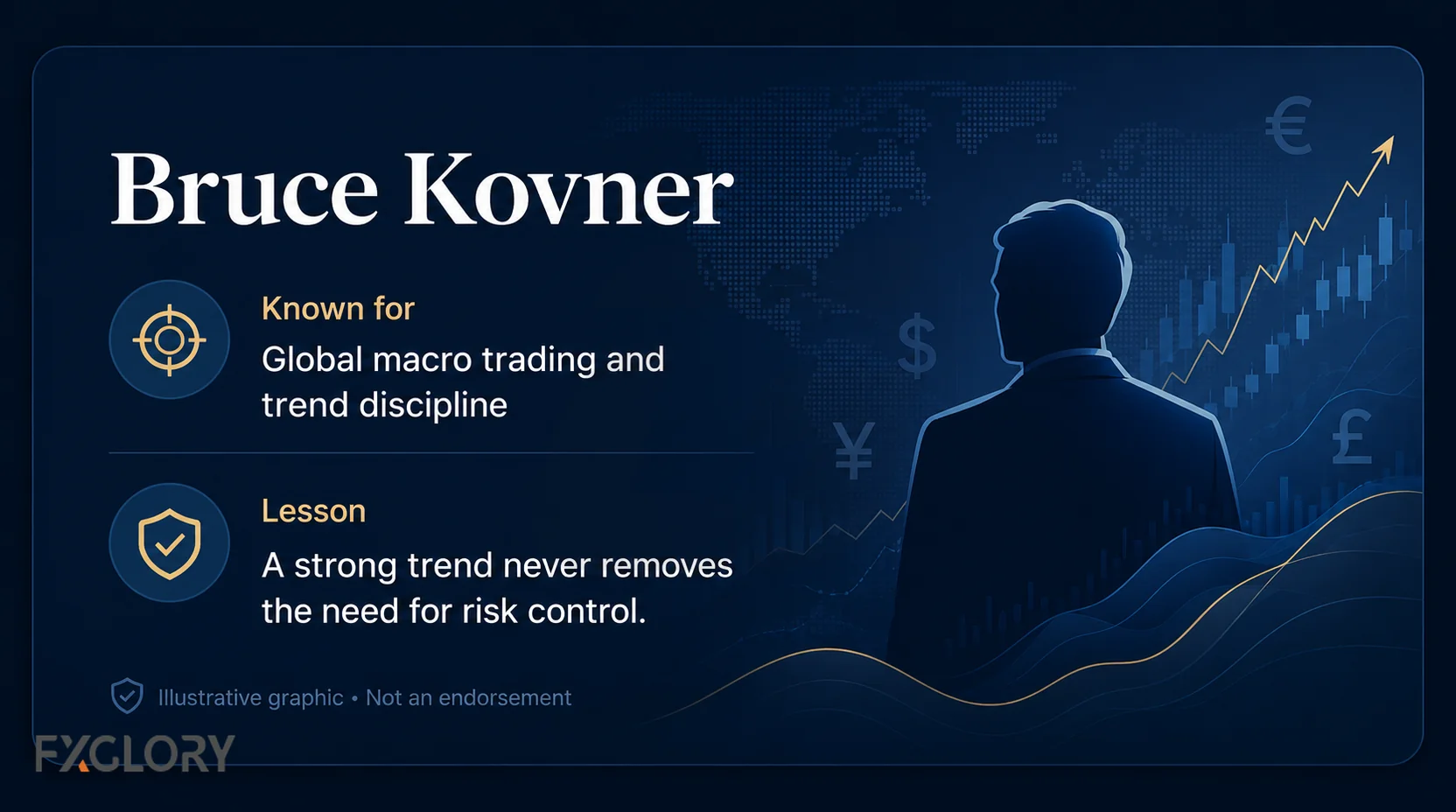
Bruce Kovner
Bruce Kovner is known as a macro trader and founder of Caxton Associates. He is often included in forex and macro lists because currency markets can be part of broader global macro trading.
The lesson is respect for risk. A macro view can still be wrong, early, or poorly sized. Retail traders should connect any macro idea to a defined risk point rather than treating the story as proof that a big view deserves a big position.
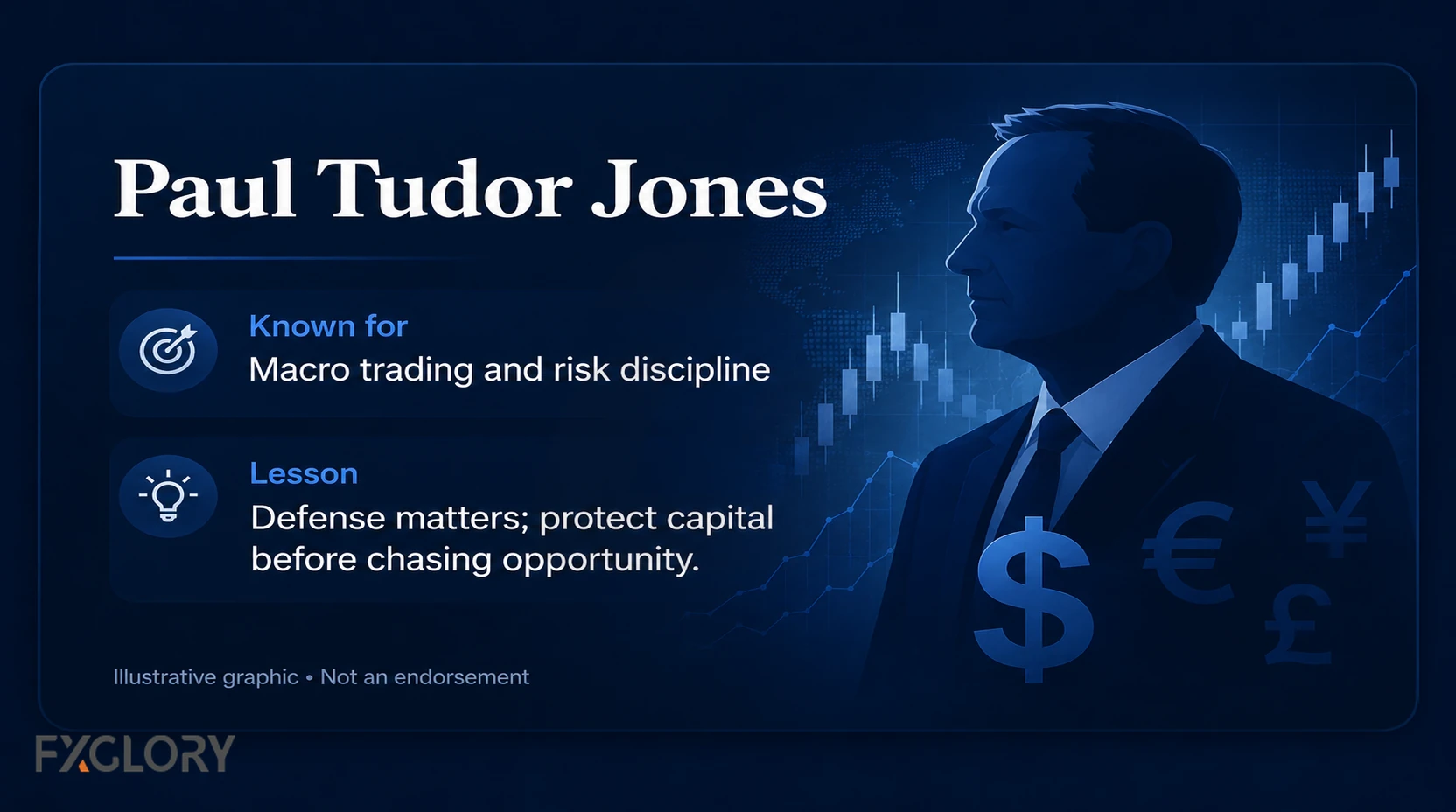
Paul Tudor Jones
Paul Tudor Jones is a major macro and trend-following figure often included in broader trading lists. He is not a forex-only trader, but he is relevant because currency markets are often part of global macro thinking.
The useful lesson is defense. Famous traders are often remembered for big wins, but survival depends on limiting damage when the view is wrong. For retail traders, that means risk rules before trade size, not admiration after the fact.
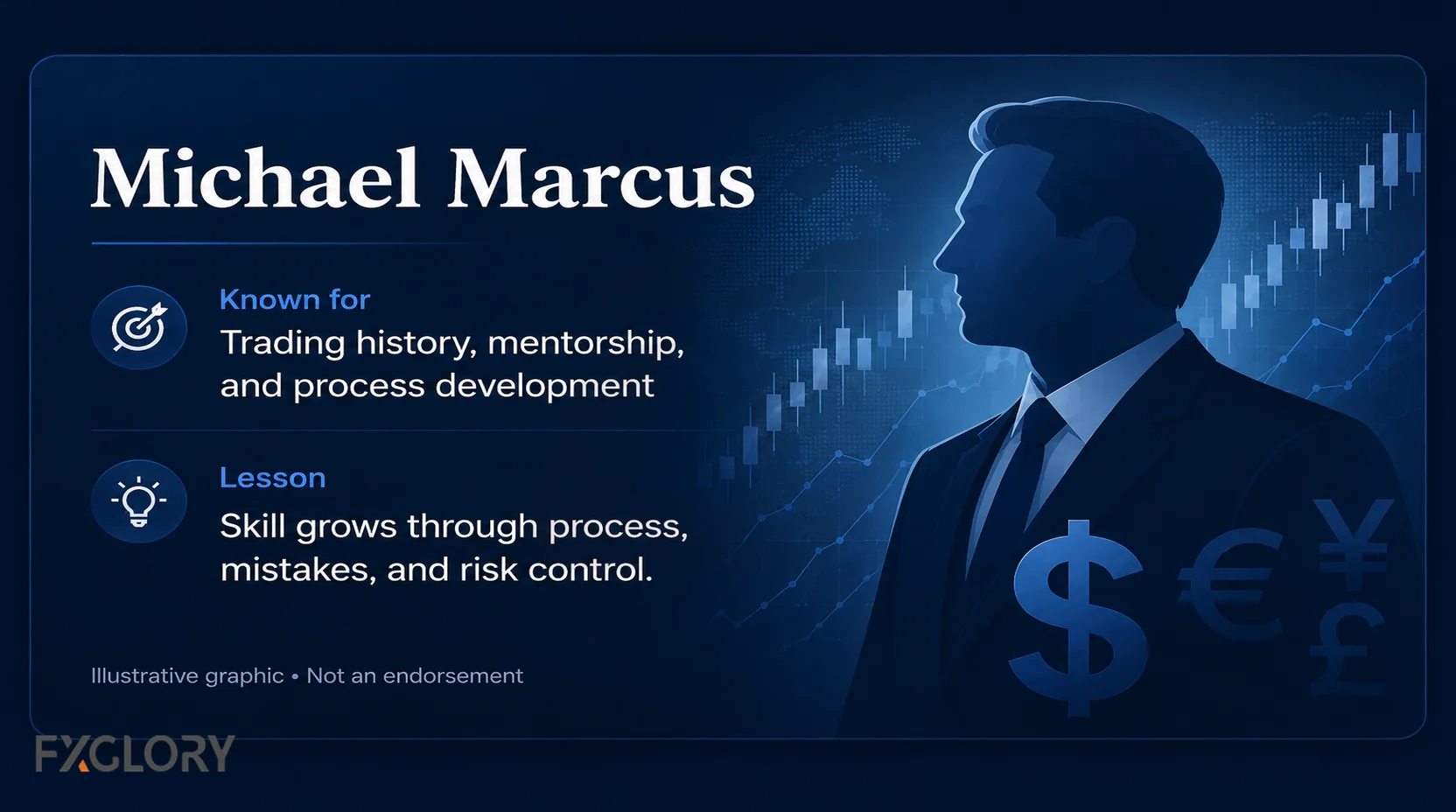
Michael Marcus
Michael Marcus is often discussed through his Commodities Corporation career and his place in trading history. He is not a pure forex-only name, but many lists include him because of his broader macro and futures-market relevance.
The useful lesson is that trading skill develops through process, mentorship, mistakes, and risk control. The wrong lesson is to treat any success story as proof that large returns are normal or easy.
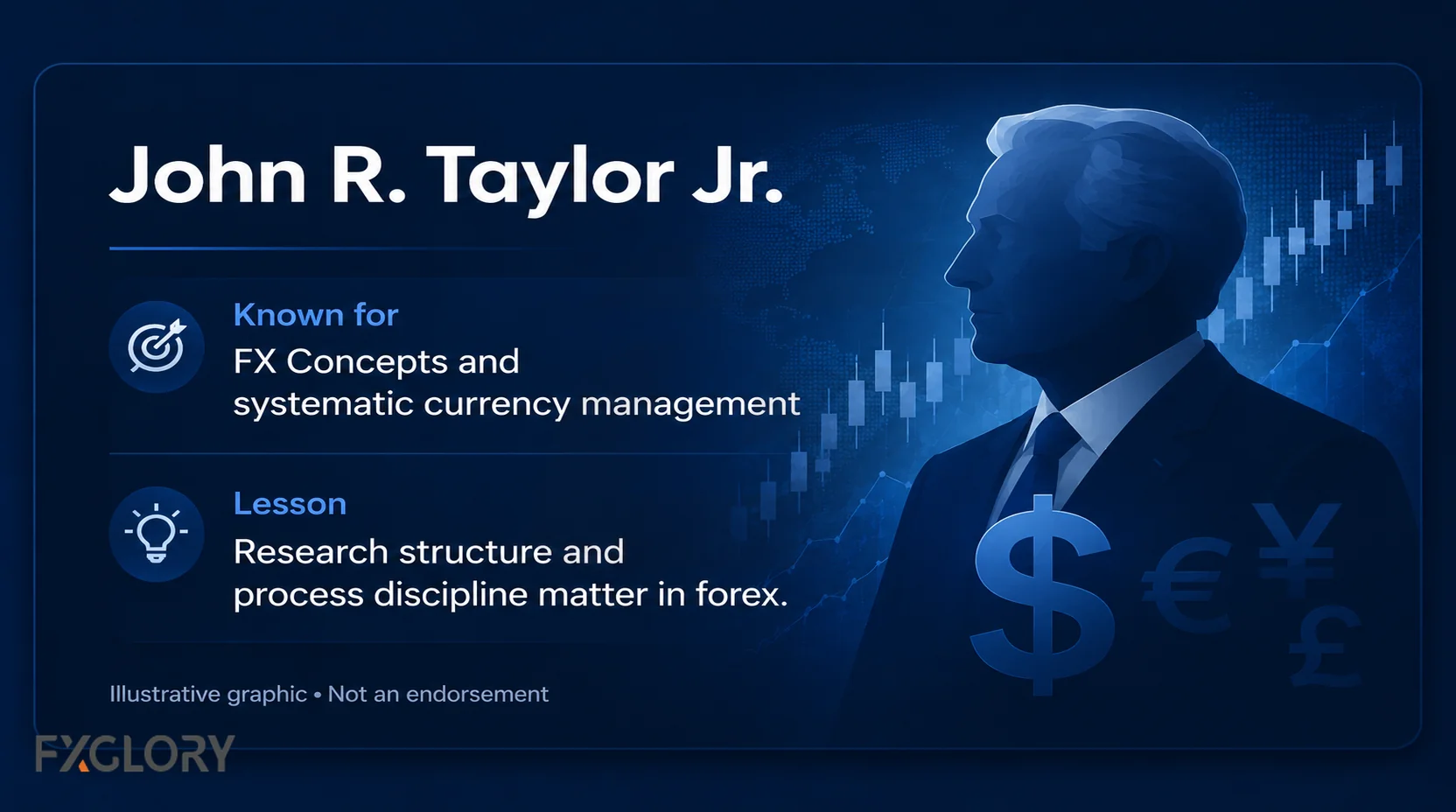
John R. Taylor Jr.
John R. Taylor Jr. is relevant to forex history because of FX Concepts and systematic currency-management work. He is less famous to beginners than Soros or Lipschutz, but his inclusion helps separate currency-market professionals from social-media personalities.
The lesson is research structure. Currency trading can involve systematic thinking, macro inputs, and process discipline. Retail traders should not confuse that with guessing a direction because a chart looks active.
Kathy Lien, Raghee Horner And Forex Education Influence
Not every important forex name is famous because of one giant trade. Some are known because they helped retail traders understand currencies, macro data, technical structure, and trading process.
Kathy Lien is widely recognized in forex education and currency analysis. Raghee Horner is also known in retail trading education. Their inclusion should be understood correctly: education influence is not the same as a verified richest-trader ranking.
Famous Traders Often Included In Lists But Not Pure Forex Traders
Many competitor lists include broader trading and investing legends. That can help users discover names, but it can also blur the topic. A trader can be famous and still not be a forex-primary trader.
| Name Or Category | Why They Appear In Lists | How To Treat The Claim |
|---|---|---|
| Ray Dalio | Global macro and investment management. | Relevant to macro thinking, not a pure forex profile. |
| Jim Simons | Quantitative trading and investing fame. | Important trading figure, but not mainly a forex list answer. |
| Richard Dennis | Futures trading and Turtle Traders history. | Useful for system discipline, not forex-specific ranking. |
| Ed Seykota | Trend-following and systems trading. | Useful trading lessons, but not a forex-only profile. |
| Peter Brandt | Classical charting and market education. | Useful for technical-analysis influence, not pure forex ranking. |
| Carl Icahn | Investing and corporate activism. | Broad investor, not a forex-trader answer. |
This distinction matters because readers searching for real forex traders deserve clean labeling, not inflated lists.
What Top Forex Traders Have In Common
Famous traders differ in style, market, timeframe, and capital. The overlapping lessons are usually less glamorous than the headlines.
- They respect risk: A trade idea can be good and still lose.
- They can be wrong: Changing view is not weakness when the evidence changes.
- They think in process: One trade does not define skill.
- They study context: Currency markets can react to rates, policy, flows, sentiment, and volatility.
- They control size: Position size can damage a good idea if it is wrong for the account.
- They review mistakes: Improvement comes from decisions reviewed honestly.
- They avoid forced action: No trade can be a valid decision.
For a broader process view, read process habits behind long-term trading improvement.
What Retail Traders Should Not Copy
The biggest mistake is treating famous traders as templates. Retail traders usually do not share the same account size, mandate, research access, liquidity, tools, time horizon, or ability to absorb drawdowns.
| Do Not Copy | Why It Is Dangerous | Better Retail Lesson |
|---|---|---|
| Institutional position size | Large traders may operate under different capital and liquidity conditions. | Use position size that fits your own risk limit. |
| One famous macro trade | Historic context may not repeat. | Build a repeatable decision process. |
| Leverage without context | Leverage can magnify losses quickly. | Review leverage rules before comparing retail trading with famous leveraged trades. |
| Conviction without invalidation | Strong belief can become stubbornness. | Define where the trade idea is wrong. |
| Online lifestyle claims | Marketing can hide risk and losses. | Look for transparent risk discussion and long-term evidence. |
| Net worth as skill proof | Wealth can come from many sources outside forex trades. | Judge process, risk, and verification quality. |
For the retail-versus-institutional distinction, see why famous institutional traders are not the same as retail traders.
How To Judge “Top Forex Trader” Claims Online
The SERP for this topic includes serious historical profiles, but it also overlaps with YouTube millionaire claims, course marketing, lifestyle content, and social-media screenshots. That is where users need caution.
| Claim Type | Trust Problem | What To Look For Instead |
|---|---|---|
| Guaranteed profits | No trader can guarantee market outcomes. | Clear risk warning and no guarantee language. |
| Luxury-first marketing | Lifestyle content can distract from risk and drawdown. | Process, rules, and education before lifestyle. |
| Profit screenshots | Screenshots can be cherry-picked or incomplete. | Long-term, risk-adjusted, transparent context. |
| No losing trades shown | Losses are part of trading. | Honest discussion of drawdowns and mistakes. |
| Pressure to buy signals | Urgency can exploit hope and FOMO. | No pressure, no promise, and clear explanation of risk. |
| Beginner copy claims | Copying results ignores capital, skill, and risk differences. | Education that helps you understand decisions, not blindly copy them. |
Why Net Worth Lists Can Mislead
Many “richest forex trader” lists rank traders by estimated net worth. That is a different intent from this page. Net worth can be private, outdated, estimated, or mixed with non-forex assets.
A trader's wealth may come from fund ownership, management fees, performance fees, equities, commodities, bonds, private investments, books, education businesses, or long-term business activity. That does not make the person irrelevant, but it means net worth should not be treated as a pure measure of forex trading skill.
| Ranking Method | Why It Is Tempting | Why It Can Mislead |
|---|---|---|
| Net worth | Easy headline. | May include many non-forex sources. |
| One famous trade | Memorable story. | Does not prove repeatability. |
| Social-media popularity | Visible and easy to compare. | Popularity is not verification. |
| Course sales | Creates authority appearance. | Selling education is not proof of trading performance. |
| Estimated profits | Sounds precise. | Often private, incomplete, or unsourced. |
For income and compensation caution, review why trader income is hard to estimate.
Practical Lessons For Retail Traders
Studying top forex traders is useful only if it becomes a better process. Admiration does not define risk, stop a bad entry, or build a repeatable plan. Do not use famous trader stories as motivation to risk money needed for bills, debt, rent, or urgent expenses.
- Write rules before risk: Use a trading plan to turn lessons into written rules.
- Review decisions, not legends: Use a journal to review your own decisions instead of admiring outcomes.
- Keep size realistic: Famous trades were often made with institutional context. Retail risk must fit the account.
- Separate conviction from stubbornness: A strong view still needs invalidation.
- Respect no-trade periods: Patience can be part of risk control.
- Practice process first: Use an order-workflow practice environment without live capital risk before live trading.
- Read the risk disclosure: Review trading, leverage, execution, stop-loss, platform, and market risks before placing real-money trades.
Sources Used For Trader Profiles And Risk Context
The historical trader profiles in this article are based on widely cited financial-reference and market-education sources. Because private trader wealth, fund performance, and compensation can be incomplete or estimated, this page avoids treating any source as an official ranking.
- Investopedia: famous forex traders overview, used for widely cited profiles such as Soros, Druckenmiller, Krieger, Lipschutz, and Kovner.
- Admiral Markets: successful forex traders article, used to compare recurring names and common lessons such as discipline, patience, risk management, and macro understanding.
- DailyForex: successful forex traders overview, used for broader list context and caution around difficult-to-verify compensation or richest-trader claims.
- Dukascopy: top forex traders article, used for broader market-education context, including currency traders, macro traders, and well-known forex educators.
- IronFX: best forex trader overview, used for comparison of common list names and the difficulty of identifying one official best trader.
For retail forex risk context, the CFTC and NASAA warn that retail off-exchange forex trading is extremely risky and caution against high-return, low-risk, get-rich-quick, and pressure-based claims: CFTC/NASAA foreign exchange currency fraud alert.
FXGlory's Risk Disclosure explains trading, leverage, order-execution, stop-loss, one-click trading, platform, and other risks that matter when retail traders compare themselves with famous traders.
This page does not provide trading signals, rankings by private wealth, copy-trading instructions, managed-account advice, or any promise that studying famous traders will produce profit.
Frequently Asked Questions
Who are the top forex traders in the world?
Names often included among top forex traders or currency-focused macro traders include George Soros, Stanley Druckenmiller, Bill Lipschutz, Andy Krieger, Bruce Kovner, Paul Tudor Jones, Michael Marcus, and John R. Taylor Jr. Some educators and analysts such as Kathy Lien and Raghee Horner are also well known in retail forex education.
Who are the top 10 forex traders often listed in the world?
Commonly cited names include George Soros, Stanley Druckenmiller, Bill Lipschutz, Andy Krieger, Bruce Kovner, Paul Tudor Jones, Michael Marcus, John R. Taylor Jr., Kathy Lien, and Raghee Horner. This is not an official ranking, and some are macro traders or educators rather than pure forex-only traders.
Why do top forex trader lists disagree?
Lists disagree because they use different criteria: fame, estimated wealth, one historic trade, long-term fund performance, forex education influence, or broader macro trading success. That is why this page avoids treating any list as an official ranking.
Who is the best forex trader in the world?
There is no official verified title for the best forex trader in the world. George Soros is often named because of the famous 1992 British pound trade, but ranking traders by one trade, fame, or estimated wealth can be misleading.
Who is the most famous forex trader?
George Soros is usually the most famous forex trader because of his role in the 1992 British pound short associated with Black Wednesday. That does not mean retail traders can copy his capital, access, timing, or risk context.
Who are the most successful forex traders of all time?
The most commonly cited names include Soros, Druckenmiller, Lipschutz, Krieger, Kovner, Jones, Marcus, and Taylor. Their success is usually tied to macro trading, currency trades, institutional risk-taking, or long-term market careers.
Are top forex traders ranked by net worth?
They should not be ranked only by net worth. Net worth estimates are often private, old, or mixed with hedge fund ownership, fees, investments, business interests, equities, commodities, and assets outside forex.
Are famous forex traders always pure forex traders?
No. Many famous names in forex lists are macro traders, hedge fund managers, futures traders, or multi-asset investors who also made major currency trades. The label should be used carefully.
What is the difference between a macro trader and a forex trader?
A forex trader focuses on currency pairs. A macro trader may trade currencies, bonds, equities, commodities, and rates based on global economic themes. Many famous names in forex lists are macro traders who made important currency trades.
Can retail traders copy George Soros or other top traders?
Retail traders should not copy famous trades blindly. Institutional traders may have different capital, research access, liquidity, mandates, risk controls, and time horizons. Retail traders should focus on process lessons, not copying position size or famous trade ideas.
What can beginners learn from top forex traders?
Beginners can learn the importance of risk control, patience, preparation, position sizing, adaptability, reviewing mistakes, and avoiding emotional trading. They should not treat famous traders as proof that forex trading is easy or typical.
What do successful forex traders have in common?
Common traits include defined risk, discipline, patience, research, emotional control, willingness to be wrong, respect for losses, and a process for reviewing decisions. None of these traits guarantees profit.
Are there real forex traders online?
Yes, but online claims need verification. A real trader should not rely only on lifestyle images, profit screenshots, pressure selling, or vague promises. Look for transparent risk discussion, long-term process, drawdown honesty, and no guaranteed-return claims.
How can I tell if a forex trader is fake?
Warning signs include guaranteed profits, no discussion of losses, cherry-picked screenshots, pressure to buy a course or signal, luxury-first marketing, unverifiable track records, and claims that beginners can copy results easily.
Are YouTube forex traders reliable?
Some may provide useful education, but YouTube popularity is not proof of trading skill. Treat videos as education only unless claims are supported by transparent, long-term, risk-adjusted evidence.
Are female forex traders included among top forex traders?
Some well-known women in forex education and trading include Kathy Lien and Raghee Horner. A dedicated female forex traders page can cover that intent in more depth without turning this overview into a separate profile page.
Who is Bill Lipschutz?
Bill Lipschutz is a trader widely associated with major foreign exchange trading at Salomon Brothers. He is often discussed for risk management, psychology, and the importance of understanding market sentiment.
Who is Andy Krieger?
Andy Krieger is widely known for a major New Zealand dollar short after the 1987 market crash. His story is often used to discuss aggressive macro trading, but his scale and context are not retail templates.
Who is Stanley Druckenmiller?
Stanley Druckenmiller is a macro trader known for his long investing career and work with George Soros around the 1992 British pound trade. He is often studied for macro thinking and capital preservation.
Is George Soros the richest forex trader?
George Soros is often named in richest-trader lists, but net worth rankings are estimates and include wealth from investments, fund management, and business activity beyond one forex trade. A separate richest-forex-trader page should handle that question directly.
Do top forex traders always have high win rates?
Not necessarily. A trader can be successful with a lower win rate if losses are controlled and winning trades are large enough, but that depends on the strategy, risk rules, costs, and execution. Win rate alone is not enough.
Are top forex traders profitable every month?
No reliable rule says top traders are profitable every month. Even skilled traders can have drawdowns, losing periods, and mistakes. Any claim of consistent profit without risk should be treated cautiously.
Can studying famous forex traders make me profitable?
No. Studying famous traders can help with perspective and risk awareness, but it cannot create a tested strategy, trading edge, discipline, or income by itself.
Do famous forex traders prove beginners can become rich from forex?
No. Famous forex traders are visible because of exceptional outcomes, long careers, major trades, or public influence. Their stories do not show what is typical for beginners and do not prove that forex trading can make a beginner rich.
Should I follow top forex traders' strategies?
Do not follow a strategy just because a famous trader used something similar. A strategy must fit your capital, risk tolerance, time, market knowledge, costs, and ability to follow rules.
What is the safest lesson from top forex traders?
The safest lesson is that risk control matters more than admiration. Famous traders became known for exceptional outcomes, but retail traders need written rules, realistic sizing, review, and risk awareness before live trading.
Does FXGlory provide trading signals from top forex traders?
No. This page is educational and does not provide trading signals, copy-trading instructions, managed-account advice, or promises based on famous traders.
Where should a beginner start before studying top forex traders?
A beginner should first understand what a forex trader does, how currency pairs work, what leverage and margin mean, how risk is defined, and how to use a trading plan and journal before studying famous traders.
Related Contents
Study Process Before Live Risk
Create an FXGlory account to access FXGlory's trading environment and review platform workflow, account conditions, leverage rules, margin awareness, and your own written trading plan before placing a real-money trade.
Create an FXGlory Account