

What Are Forex Trading Terms?
Forex trading terms are the words used to describe currency pairs, price quotes, trade size, order types, account conditions, market behavior, and risk.
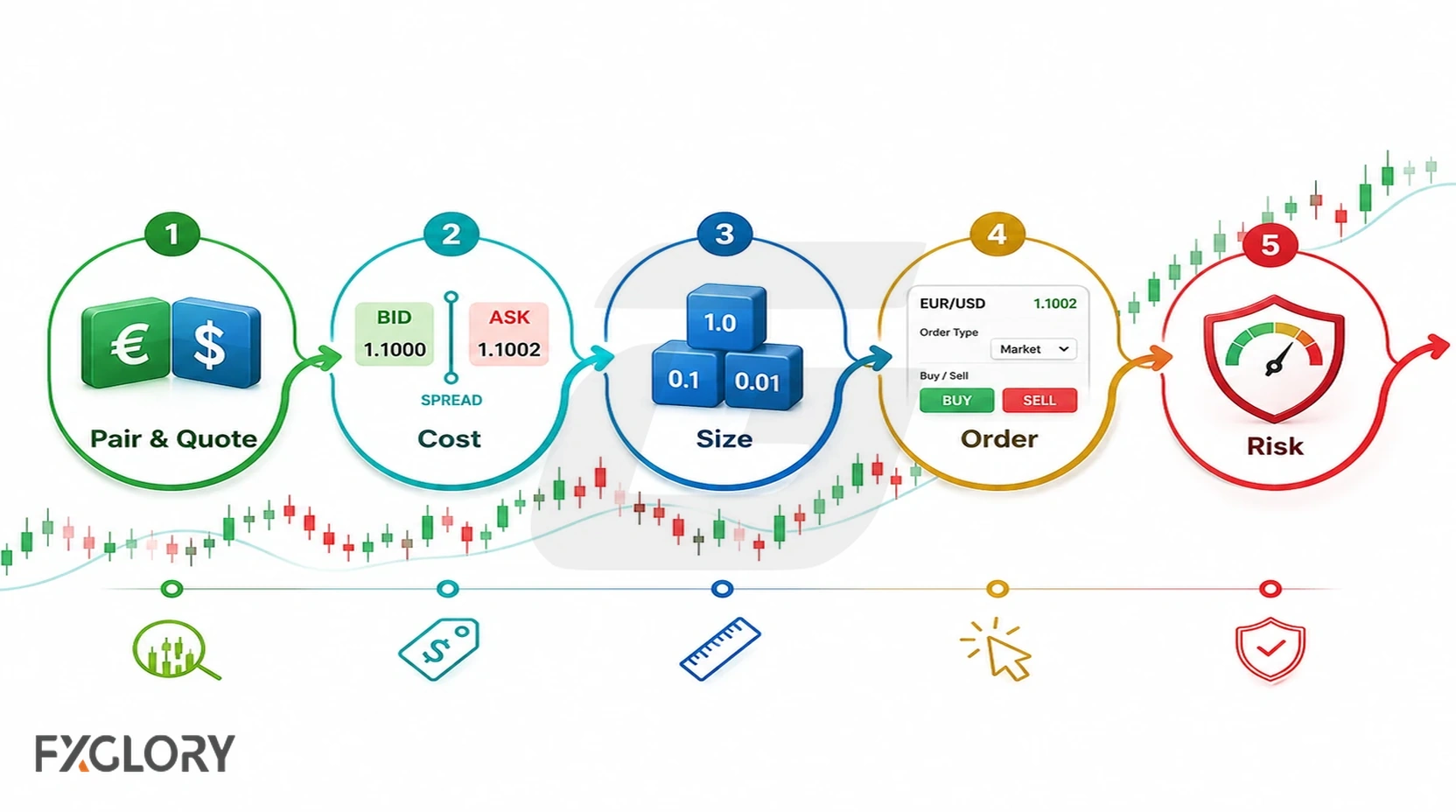
This glossary focuses on the terms beginners are most likely to meet when reading a quote, placing an order, or reviewing a trade. The entries are short recognition definitions rather than full tutorials.
Price And Quote Terms
For a full guide to quote structure, read reading forex quotes.
Forex
Forex is short for foreign exchange: exchanging or trading one currency against another.
Currency Pair
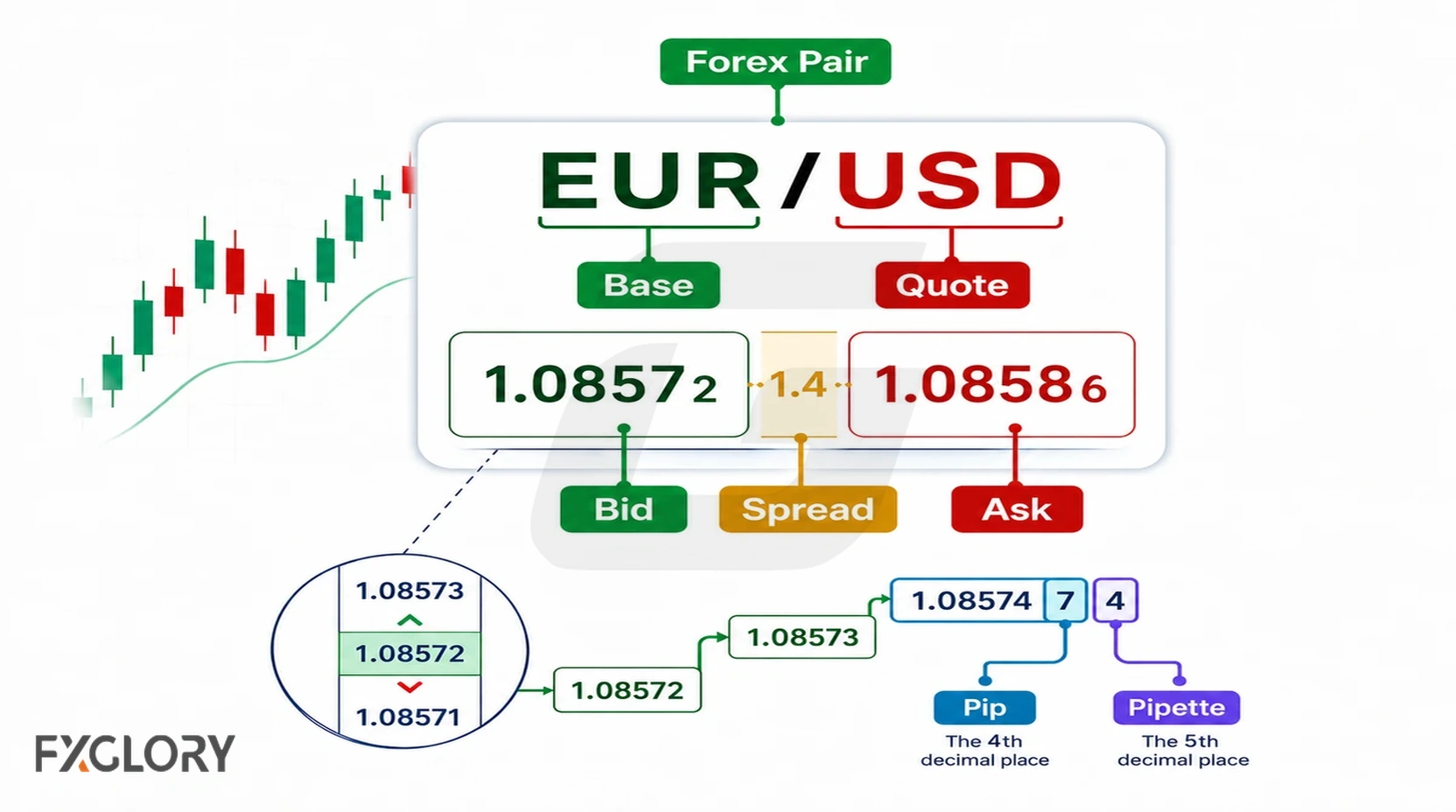
A currency pair shows two currencies being compared, such as EUR/USD or GBP/USD.
Base Currency
The base currency is the first currency in a pair. In EUR/USD, EUR is the base currency.
Quote Currency
The quote currency is the second currency in a pair. In EUR/USD, USD is the quote currency.
Exchange Rate
The exchange rate is the price of one currency in terms of another.
Bid Price
The bid is usually the price at which a trader can sell a currency pair.
Ask Price
The ask is usually the price at which a trader can buy a currency pair. For deeper detail, see bid and ask price in forex.
Spread
The spread is the difference between the bid and ask price. It is one of the trading costs associated with entering and exiting a position.
Pip
A pip is a standard unit used to describe price movement in a currency pair. For a deeper explanation, read what is a pip in forex trading.
Pipette
A pipette is a fraction of a pip, often shown as an extra decimal place in a price quote.
Trade Size And Account Terms
Lot Size
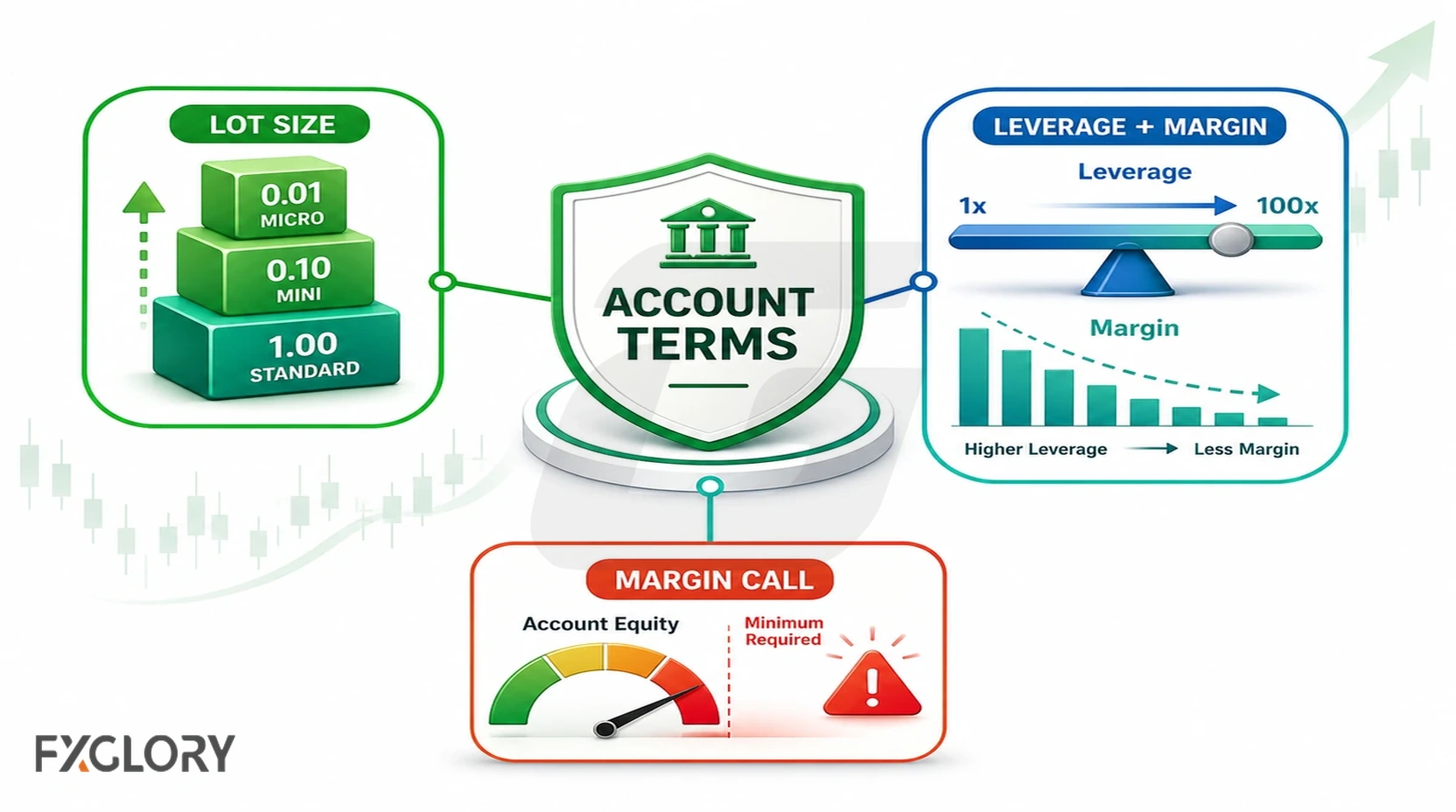
Lot size is the trade-size unit used for a forex position. It affects how much each pip movement may be worth. For more detail, see what is a lot size in forex.
Standard, Mini, And Micro Lots
Standard, mini, and micro lots are different trade-size units.
Position Size
Position size is the total exposure of the trade being taken.
Leverage
Leverage allows a trader to control a larger position with a smaller amount of margin. Available leverage does not change the profit or loss of an unchanged position; account risk increases when leverage is used to take larger exposure relative to equity. Review what is leverage in forex trading.
Margin
Margin is the amount of account funds required to open or maintain a leveraged position. It is not the same as the total risk of the trade.
Margin Call
A margin call refers to an account condition associated with insufficient available margin. The exact warning, restriction, or position-closing process depends on the broker and platform rules.
Direction And Order Terms
Long
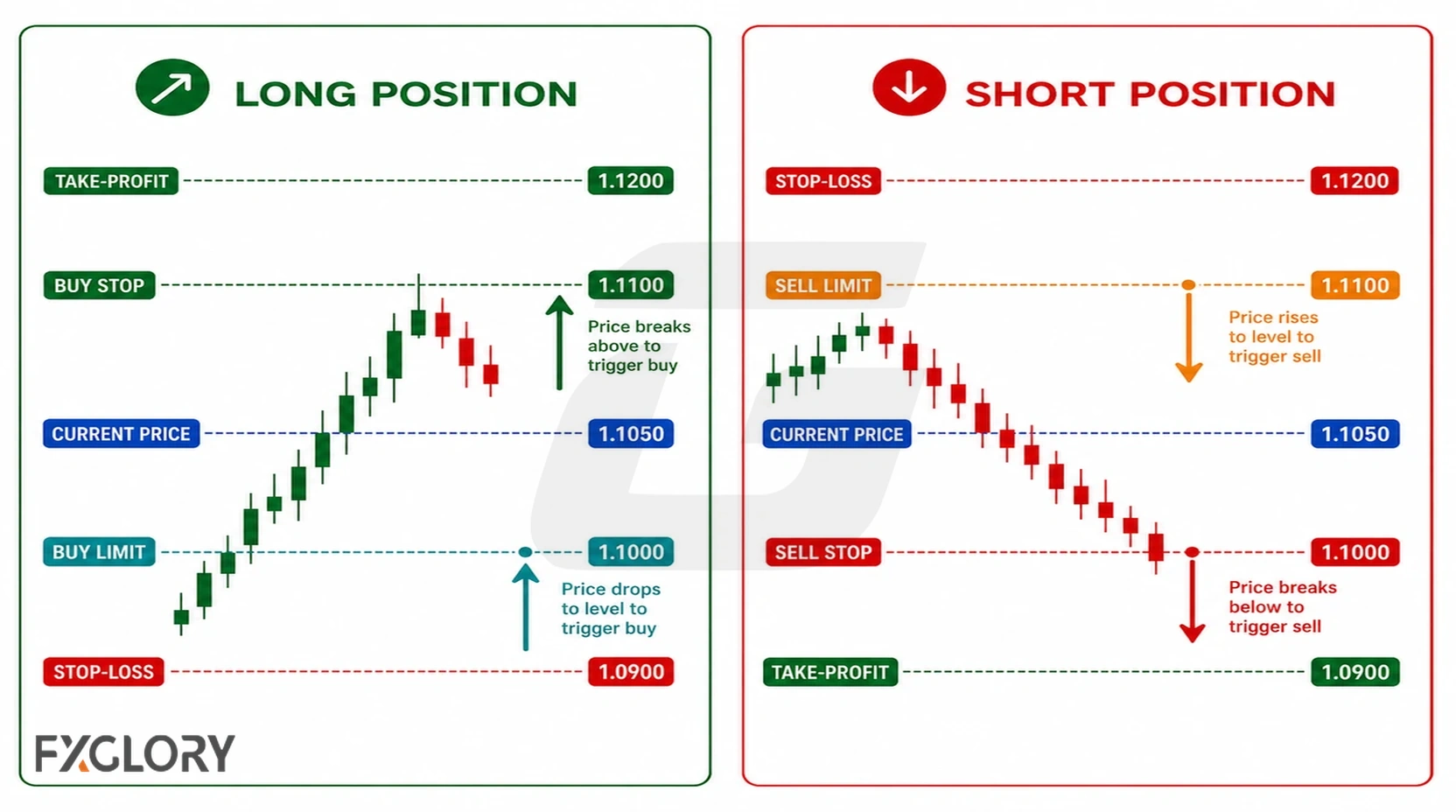
Going long means buying a currency pair because the trader expects the base currency to rise against the quote currency. For more context, see long and short in forex.
Short
Going short means selling a currency pair because the trader expects the base currency to fall against the quote currency.
Market Order
A market order is an instruction to enter or exit at the available market price. The final fill can differ from the price seen when the order was sent.
Limit Order
A limit order is an instruction to trade at a specified price or better, subject to market availability and execution conditions.
Stop-Loss
A stop-loss is an order or planned exit level intended to limit loss if the market moves against the trade. It does not guarantee an exact exit price in all market conditions.
Take-Profit
A take-profit is an order or planned exit level used to close a trade if price reaches a chosen target.
Risk And Market Condition Terms
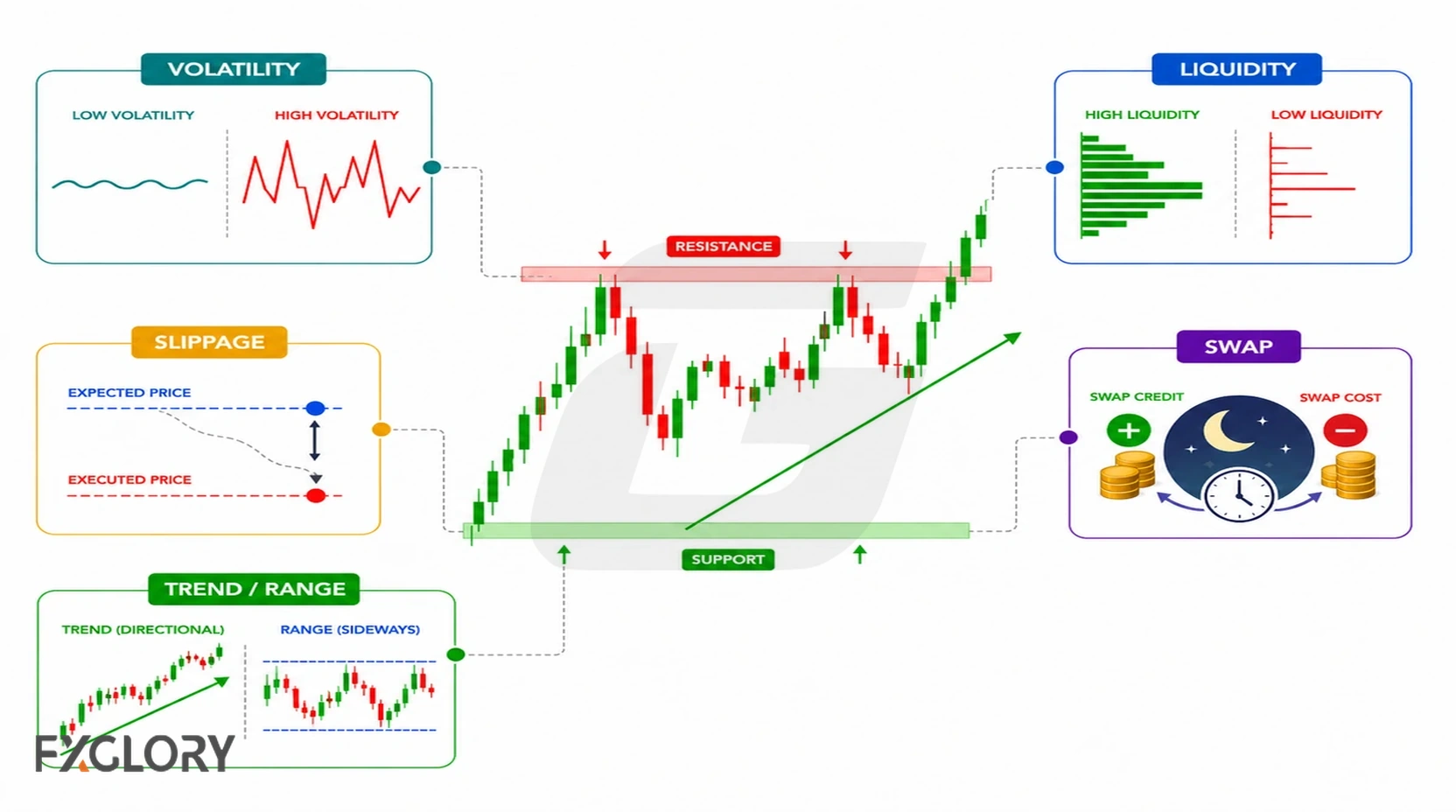
Volatility
Volatility describes how much and how quickly price moves. Read what is volatility in forex for a deeper guide.
Liquidity
Liquidity describes how easily orders can be matched near the current market price. It can affect spread, slippage, and execution. See what is liquidity in forex.
Slippage
Slippage is the difference between the expected execution price and the price at which an order is actually filled.
Swap
Swap is an overnight rollover cost or credit that may apply when a position remains open past the broker's rollover time. Learn more in what is swap in forex.
Support
Support is a price area where buying interest has previously appeared or selling pressure has weakened. It does not guarantee that price will rise.
Resistance
Resistance is a price area where selling interest has previously appeared or buying pressure has weakened. It does not guarantee that price will fall.
Trend
A trend describes a market that is generally moving upward or downward over a period of time.
Range
A range describes a market moving between upper and lower price areas without a clear sustained trend.
Forex Terms Beginners Often Mix Up
- Pip vs spread: A pip measures price movement. Spread is the difference between bid and ask.
- Lot size vs position size: Lot size is a trade-size unit. Position size is the total exposure of the trade.
- Leverage vs margin: Leverage allows larger exposure relative to equity. Margin is the account amount required to support a leveraged position.
- Bid vs ask: Bid is usually the sell price. Ask is usually the buy price.
- Volatility vs liquidity: Volatility describes price movement. Liquidity describes how easily orders can be matched near current price.
- Swap vs spread: Spread is the bid-ask difference. Swap may apply when a position is held past rollover.
- Stop-loss vs margin call: A stop-loss is a trade-level exit instruction or plan. A margin call is an account-level margin condition.
- Long vs bullish: Long is a position direction. Bullish is a view that price may rise.
Example: Forex Terms In A EUR/USD Quote
Suppose EUR/USD is shown as 1.0800 / 1.0802. EUR is the base currency, USD is the quote currency, 1.0800 is the bid, and 1.0802 is the ask.
The difference between the bid and ask is the spread. A trader buying EUR/USD would normally enter at the ask, while a trader selling would normally enter at the bid.
This single quote demonstrates several core terms together: currency pair, base currency, quote currency, bid, ask, spread, and direction. For deeper practice, study a major pair page such as EUR/USD.
Final Thoughts on Forex Trading Terms
A useful forex glossary should help a beginner recognize what each term means without turning every definition into a separate tutorial. The most important distinctions are the ones that affect how price is quoted, how large a trade is, what it costs, how an order works, and what account or market conditions can change execution.