

Quick Answer: How Can You Be Successful In Forex Trading?
To work toward success in forex trading, protect capital first, use a written trading plan, control leverage and position size, practice on demo, track every trade, manage emotions, review mistakes, understand trading costs, and avoid trades that do not meet your rules. Success should mean a repeatable process and controlled risk, not guaranteed income.
A trader who wants long-term improvement needs evidence. That evidence comes from written rules, recorded trades, risk limits, and honest review. Without those parts, a winning trade can be luck and a losing trade can become an excuse instead of a lesson.
Before focusing on success habits, make sure the role itself is clear. FXGlory's guide to what a forex trader is responsible for explains the trader role, retail context, professional context, and basic market expectations.
What Success Should Mean In Forex Trading
Success in forex trading should not be defined as never losing, making income every week, or finding a setup that works forever. Forex markets can move because of interest-rate expectations, inflation data, employment reports, central-bank communication, political events, liquidity conditions, and sudden risk sentiment changes.
A more useful definition is process-based. A trader is building success when decisions become less random, risk is defined before entry, losses stay within planned limits, position size is controlled, and trade records show what is improving and what is still weak.
| Weak Definition Of Success | Stronger Definition Of Success |
|---|---|
| Trying to win every trade. | Accepting losses while keeping them within planned limits. |
| Measuring skill by one profitable week. | Reviewing many similar trades before judging a method. |
| Increasing lot size after a winning streak. | Keeping position size connected to account risk and stop distance. |
| Chasing social-media trades. | Taking only trades that match a written plan. |
| Trading for salary-like income. | Treating retail trading as uncertain risk exposure, not guaranteed pay. |
Forex is a large global market, but market size does not make individual trading safe. The Bank for International Settlements reported OTC foreign exchange turnover of $9.6 trillion per day in April 2025. A large market can still expose an individual trader to leverage risk, spread costs, slippage, margin pressure, and emotional mistakes.
Success Is A Process, Not A Guaranteed Result
No trader controls the next candle. A trader can control preparation, position size, entry conditions, exit rules, risk per trade, review habits, and whether to step aside. That is why this page focuses on process rather than promises.
A strong process does not remove losses. It can reduce avoidable mistakes such as overtrading, revenge trading, taking setups outside the plan, ignoring spreads, holding losing positions because of hope, or increasing leverage without understanding margin.
- Do not treat a winning streak as proof: A few wins can happen even with poor rules.
- Do not treat a loss as automatic failure: A planned loss can be part of a controlled method.
- Do not treat demo profit as live proof: Live trading adds real financial pressure and execution conditions.
- Do not treat leverage as progress: Higher exposure can make normal movement more damaging.
Start With Capital Protection
Capital protection means knowing how much can be lost before entering a trade. It includes stop logic, position size, margin requirement, maximum daily or weekly loss, and what happens if the market moves quickly against the position.
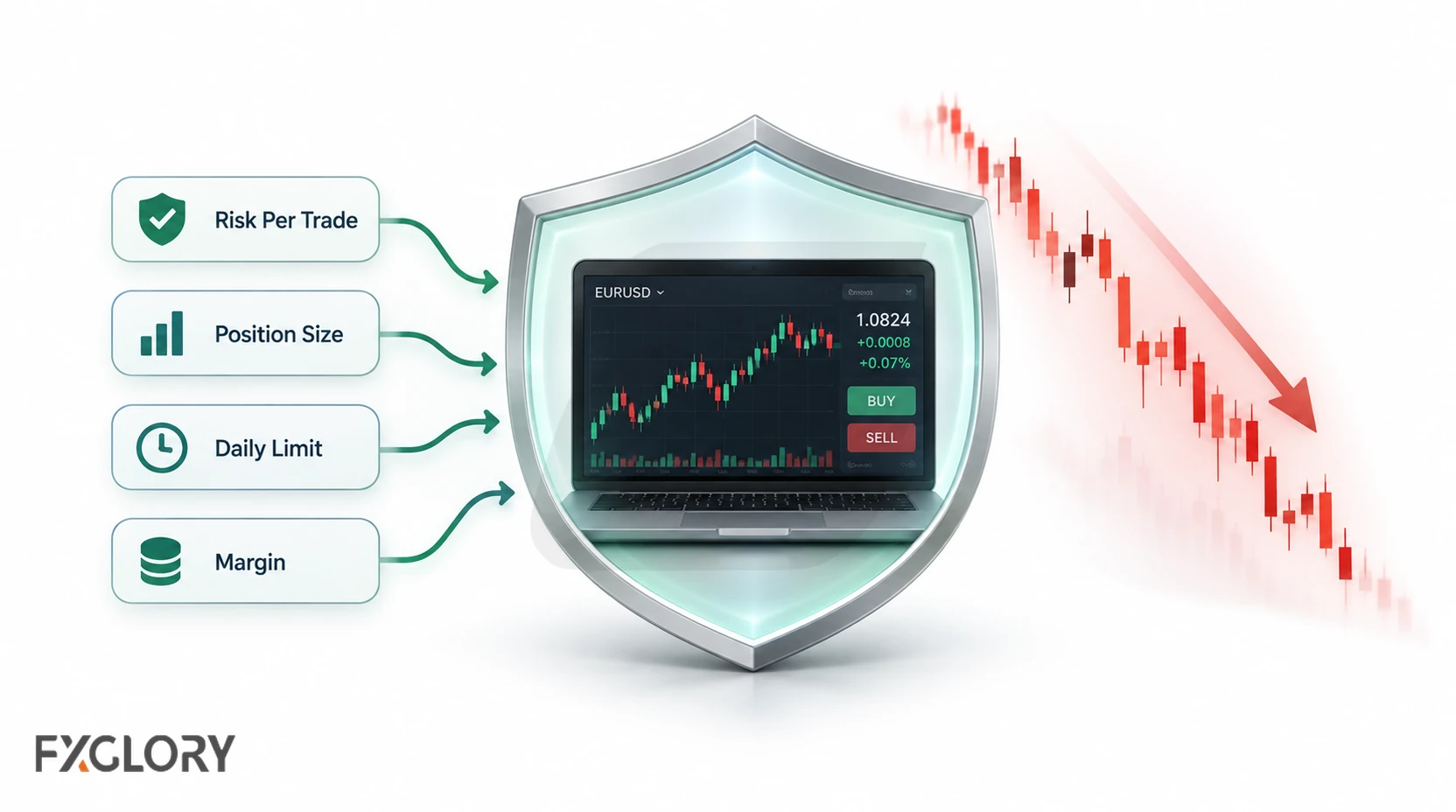
A trader who risks too much cannot evaluate a strategy calmly. One oversized trade can create emotional pressure, force poor decisions, or damage the account before the trader has enough data to review the method.
| Capital-Protection Rule | Why It Matters | What To Check |
|---|---|---|
| Risk per trade | Limits damage from a single wrong idea. | Account size, stop distance, lot size, and leverage. |
| Maximum daily or weekly loss | Stops emotional trading after a poor sequence. | Rule for stopping after a defined loss level. |
| Position size | Controls how much price movement affects equity. | Lot-size context before increasing exposure. |
| Margin requirement | Shows whether leveraged exposure can be supported. | A margin estimate before placing a leveraged trade. |
| Leverage limit | Prevents small movements from becoming oversized losses. | Leverage conditions before sizing positions. |
Capital protection is not pessimism. It is the part of trading that allows a trader to keep reviewing, learning, and correcting decisions after losses.
Use A Written Trading Plan
A trading plan turns a vague idea into rules that can be followed and reviewed. The plan does not need to be long, but it should answer the practical questions before price moves quickly.
A useful plan says what market conditions are acceptable, which pair or instrument is being studied, what setup is valid, where the trade is invalidated, how position size is calculated, when the trade is skipped, and how the result will be recorded.
- Market: Which currency pairs or instruments are you allowed to trade?
- Setup: What must appear before entry is considered?
- Entry condition: What confirms the trade idea?
- Invalidation: Where is the idea wrong?
- Position size: How is lot size connected to risk?
- Exit rule: What controls stop, target, partial exit, or manual exit?
- No-trade rule: When must you step aside?
- Review rule: What will be written in the journal after the trade?
For a practical writing structure, use FXGlory's trading plan template before the trade appears. The goal is not to make the plan complicated; the goal is to make decisions less random.
Choose One Trading Style And Test It
Many traders damage their learning process by changing styles after every loss. A trader may try scalping one day, swing trading the next week, news trading after that, and then an indicator strategy after seeing someone else post a result. This makes review nearly impossible.
Style choice should fit screen time, decision speed, stress tolerance, trading costs, account conditions, and the ability to record decisions. A scalper, day trader, swing trader, and position trader face different pressures. A trader should choose a style that can be tested and reviewed, not simply the style that looks exciting.
Before choosing a workflow, review which trading style fits your screen time and risk tolerance. If the learning path is still unclear, step back to the beginner roadmap before chasing consistency.
Control Leverage, Lot Size, Margin And Costs
A trade can look attractive on a chart and still be weak after costs and exposure are considered. Spread, slippage, swap or rollover, leverage, margin requirement, and lot size all affect whether a trade is practical.
This matters most for short-term styles, where spreads and execution quality can affect small targets, but it also matters for longer-held trades because overnight cost, event risk, and wider stop distances can change the account impact.
| Check | Question To Ask | Helpful FXGlory Resource |
|---|---|---|
| Spread | Is the entry cost reasonable for the size of the expected move? | Check the cost gap before judging a setup. |
| Pip movement | Do I understand how price movement affects the trade? | Calculate movement before estimating results. |
| Lot size | Does the position size match the planned risk? | Connect trade size with account risk. |
| Leverage | Does leverage make the exposure too large for the account? | Understand leverage before increasing exposure. |
| No-leverage comparison | Can the approach be studied with lower exposure? | Review whether leverage is necessary for your approach. |
| Margin | Can the account support the position if price moves against it? | Estimate margin before placing a leveraged trade. |
FXGlory's trading account conditions and account feature comparison can help traders review order size, margin call, stop-out, platform availability, and account-specific conditions before building a live workflow.
Practice On Demo, But Respect The Demo-To-Live Difference
Demo practice can help a trader learn platform actions, order entry, risk calculation, stop placement, trade management, and journal discipline without exposing real funds. It is especially useful before a trader has a stable workflow.
Demo trading is not the same as live trading. Real funds can change emotions, hesitation, risk tolerance, and behavior after losses. Live conditions may also involve different execution pressure, slippage, liquidity, and spread behavior depending on the market situation.
FXGlory's demo account page can support practice before live risk. Use demo practice to test procedures and rules, not to assume that future live results will match virtual results.
Keep A Trading Journal
A trading journal turns trading from memory into evidence. Without records, a trader may remember the best wins, forget repeated mistakes, or blame the market for decisions that broke the plan.
A journal does not need to be complicated. It should record enough detail to answer one question: did the trader follow the process, or did the trader improvise?
| Journal Field | Why It Helps |
|---|---|
| Date, market, and timeframe | Shows when and where the decision was made. |
| Setup reason | Checks whether the trade matched the plan. |
| Risk amount and lot size | Shows whether exposure was controlled. |
| Entry, stop, and exit | Records whether trade management followed the rule. |
| Emotional state | Identifies FOMO, revenge, fear, greed, or hesitation. |
| Result and lesson | Turns the trade into reviewable data. |
Journaling should track wins and losses. A profitable trade taken outside the plan is still a process warning. A losing trade taken correctly may be less damaging than an impulsive win, because the correct losing trade can be reviewed honestly.
Manage Psychology: FOMO, Revenge Trading, Fear And Greed
Psychology matters because most trading mistakes happen when emotion overrides rules. FOMO can push a trader into late entries. Revenge trading can increase risk after a loss. Fear can close a trade without a rule. Greed can increase lot size beyond the plan.
A psychological rule is useful only if it changes behavior. Saying “stay disciplined” is not enough. A useful rule might be: stop trading after two rule-breaking trades, pause after a daily loss limit, reduce size after a missed routine, or skip a trade when the setup cannot be explained in writing.
- FOMO: Do not enter because price is moving and others are talking about it.
- Revenge trading: Do not increase size to win back a loss.
- Overconfidence: Do not expand risk because recent trades were profitable.
- Fear: Do not abandon a planned exit because the trade feels uncomfortable.
- Hope: Do not hold a losing position without a valid rule.
If emotional control is weak, reduce risk exposure, return to demo practice, or stop trading until the plan can be followed again. Better preparation does not remove emotion, but it gives emotion fewer places to control the trade.
Build A Pre-Trade Checklist
A pre-trade checklist slows down weak decisions before they become live exposure. The checklist should be short enough to use, but clear enough to block trades that do not meet the plan.
| Question | Trade Only If |
|---|---|
| Does the setup match the written plan? | The entry reason is clear and not invented after price moved. |
| Is the invalidation point defined? | You know where the idea is wrong before entry. |
| Is position size calculated? | Lot size matches risk and stop distance. |
| Have spread and volatility been checked? | The expected move is not too small for the cost and conditions. |
| Is margin understood? | The account can support the position under the planned exposure. |
| Is there major news nearby? | You understand event risk or choose to wait. |
| Am I calm enough to follow the plan? | The trade is not revenge, FOMO, boredom, or pressure. |
A checklist does not make a trade safe. It helps stop trades that should not be taken.
Know When Not To Trade
Knowing when not to trade is part of forex trading success. Some of the best decisions are skipped trades because no setup was clear, risk was too high, or the trader was not in a condition to follow rules.
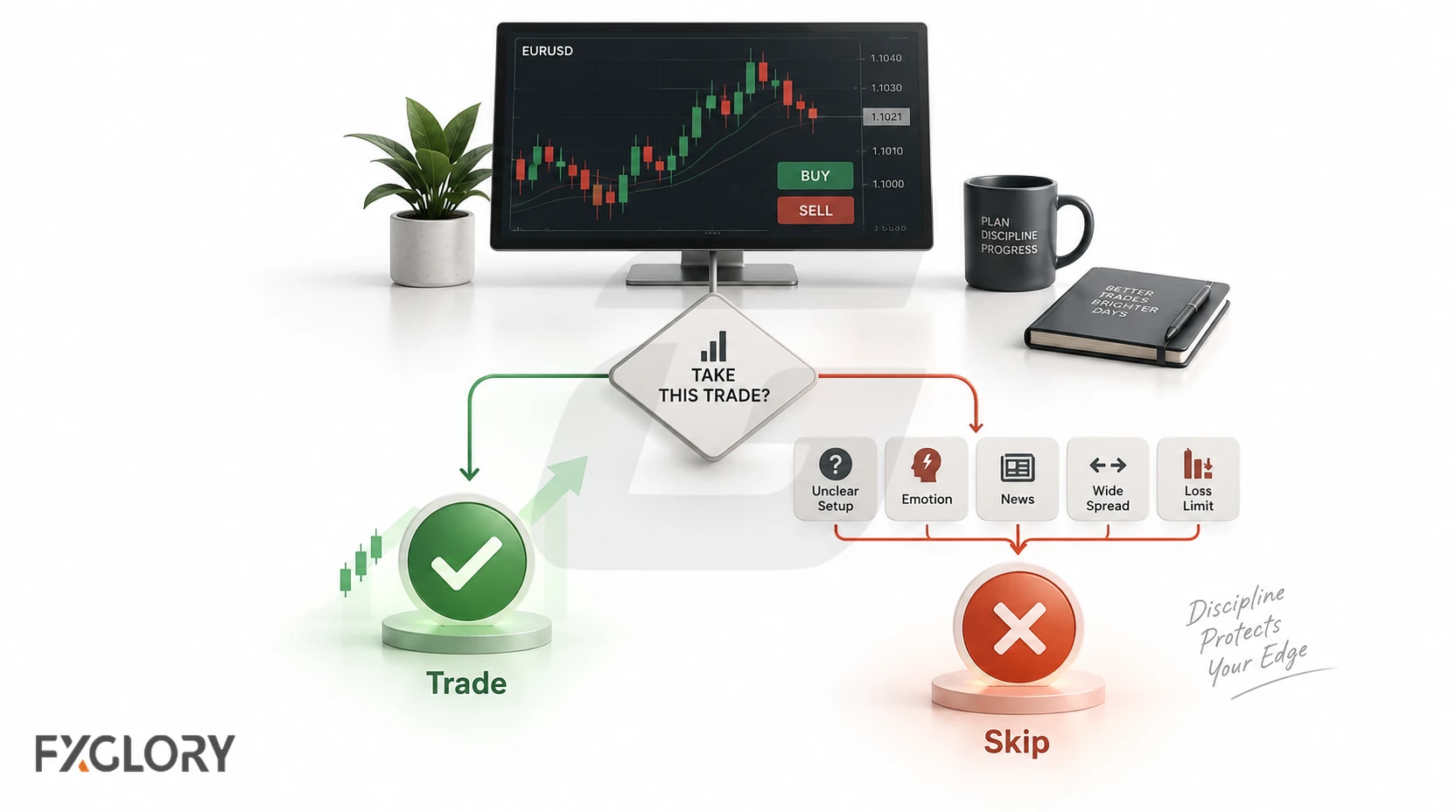
- The setup is unclear: If the reason must be forced, the trade can wait.
- The trade is emotional: Revenge, boredom, FOMO, fear, or pressure are not entry signals.
- News risk is too close: Scheduled releases can change volatility, spread, and execution conditions.
- Spread is unusually wide: A small target may become unrealistic after costs.
- Margin is not understood: Do not trade leveraged exposure that has not been estimated.
- The daily loss limit is reached: Continuing can turn one bad session into a larger account problem.
- The money is needed elsewhere: Funds for bills, rent, debt, or essential needs should not be exposed to trading risk.
Review Results Without Excuses
Review is where improvement becomes visible. The review should separate trade outcome from trade quality. A winning trade can be poor if it broke the plan. A losing trade can be acceptable if it followed a tested method and controlled risk.
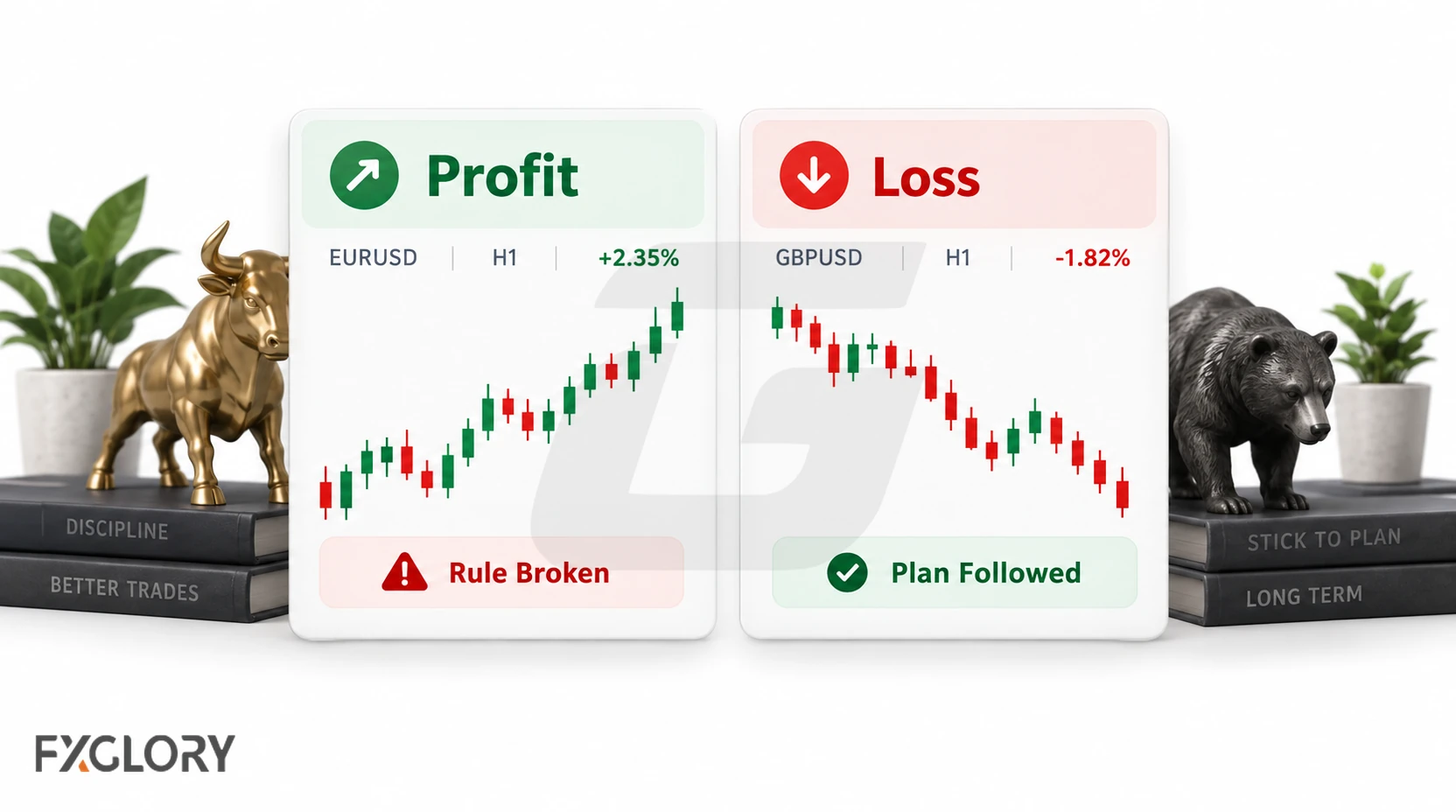
Review should also separate market behavior from trader behavior. The market can move unpredictably, but the trader can still review whether position size, entry timing, exit logic, spread awareness, and emotional control were handled correctly.
- Check plan fit: Did the trade match the setup rules?
- Check risk: Was loss size defined before entry?
- Check execution: Did spread, slippage, or news affect the trade?
- Check behavior: Did you move stops, chase entry, overtrade, or hesitate?
- Check sample size: Are you judging one trade or a meaningful group of similar trades?
- Check adjustment: Does the plan need a rule change, or does the trader need better discipline?
Common Mistakes That Block Forex Trading Success
Many trading problems are not caused by lack of indicators. They come from risk, behavior, and review mistakes that appear repeatedly.
- Trading without a written plan: Decisions change with emotion and market noise.
- Risking too much too soon: Oversized positions can damage the account and confidence.
- Ignoring leverage: Exposure can become larger than the trader understands.
- Judging by one trade: One win or loss does not prove a method.
- Changing strategy after every loss: Constant switching prevents useful review.
- Using demo results as proof: Demo practice is useful, but live pressure is different.
- Trading after emotional triggers: Revenge, FOMO, and overconfidence can override risk rules.
- Ignoring costs: Spread, slippage, and overnight adjustments can change expected results.
- Skipping a journal: Without records, mistakes become opinions instead of evidence.
- Expecting trading to fix financial pressure: Urgent money needs can push poor decisions.
Forex Trading Success Habits Table
The table below summarizes the practical controls that support a more disciplined trading process. It is not a formula for profit.
| Success Habit | What It Controls | What Can Go Wrong Without It |
|---|---|---|
| Written trading plan | Entry, exit, risk, routine, and review rules. | Random trades, FOMO entries, and changing rules during a trade. |
| Risk limit | Loss size and account survival. | Overleverage, margin pressure, and emotional damage after large losses. |
| Position-size calculation | How much a price move affects the account. | A normal market move becomes an oversized account loss. |
| Demo practice | Platform workflow and rule testing without real funds. | Live trades are placed before order behavior and risk actions are understood. |
| Trading journal | Evidence for review. | Repeating mistakes without noticing the pattern. |
| Psychology rule | Behavior after fear, greed, FOMO, or losses. | Revenge trading, overtrading, hesitation, or rule-breaking. |
| Cost check | Spread, slippage, swap or rollover, and execution awareness. | A setup looks better on the chart than it behaves in trading conditions. |
| No-trade rule | Protection from poor conditions and poor trader state. | Taking weak trades because the trader wants action. |
Sources Used
The external sources below support market-size context, retail-risk warnings, and regulatory-protection context. They do not provide trading signals, performance claims, or personal financial advice.
- Bank for International Settlements: OTC foreign exchange turnover in April 2025 — used for global FX market-size context.
- CFTC/NASAA Investor Alert: Foreign Exchange Currency Fraud — used for retail forex risk and fraud-warning context.
- ESMA CFD and binary options product-intervention measures — used for retail-risk and investor-protection context in applicable jurisdictions.