
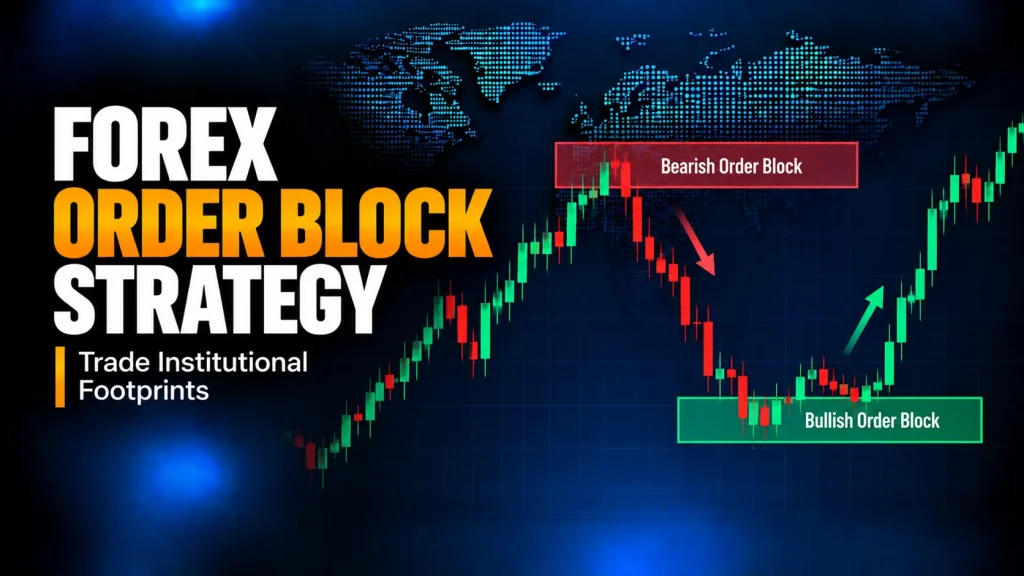
What Is an Order Block in Forex?
An order block in forex is a chart-based price-action zone usually marked around the last opposite candle or small consolidation before a strong price move.
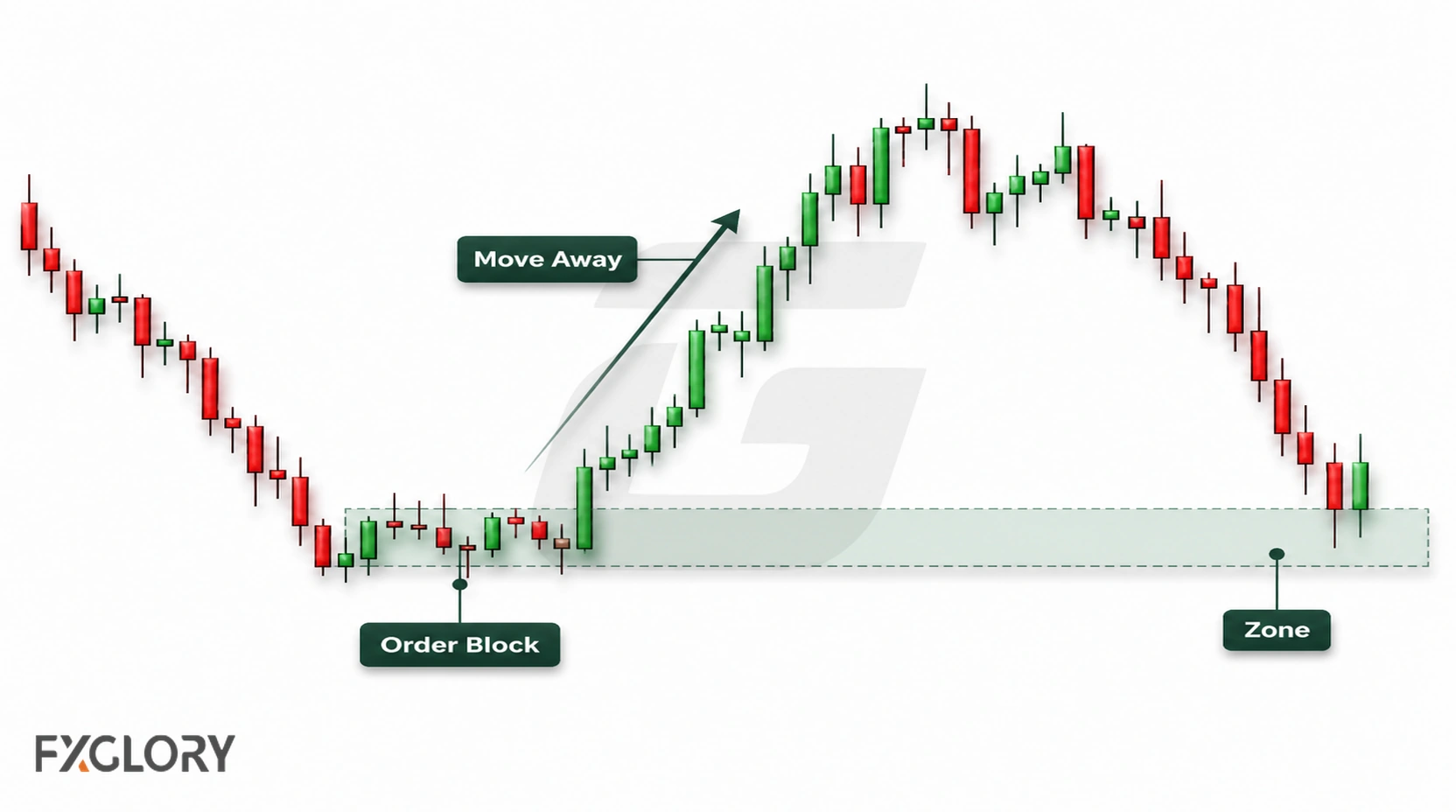
Before a strong upward move, traders may mark the last bearish candle or nearby consolidation as a possible bullish order block. Before a strong downward move, they may mark the last bullish candle or nearby consolidation as a possible bearish order block.
This page focuses on the chart concept itself. For the broader framework around swings, trends, ranges, and direct price movement, see what price action means in forex.
Block Order vs Forex Order Block
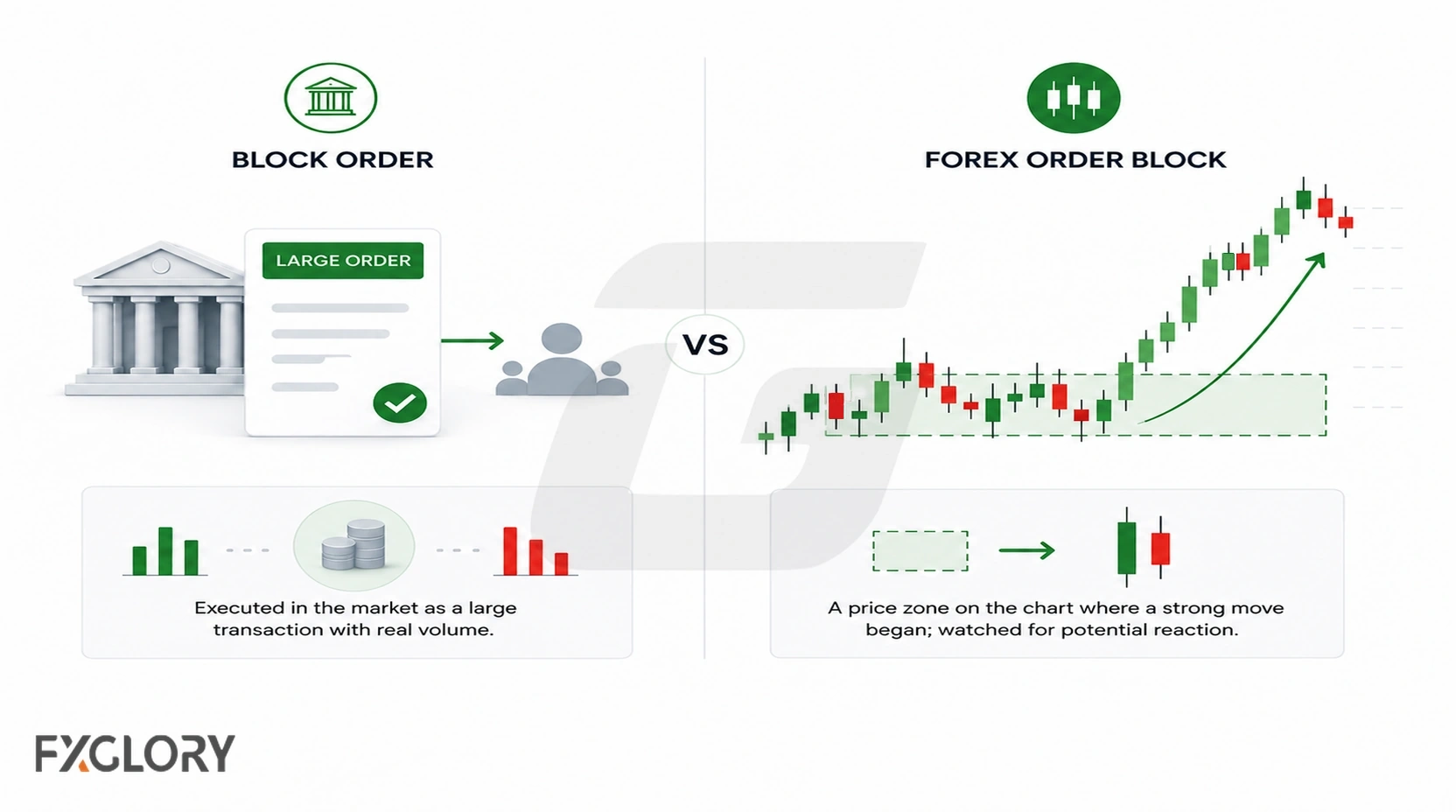
Order block and block order sound similar, but they describe different things.
| Term | Meaning | Main Caution |
|---|---|---|
| Block order | A large transaction that may be split to reduce market impact | Not the same as a chart-marked order block |
| Forex order block | A chart zone traders mark around a candle or consolidation before a strong move | Does not prove actual order size, owner, or intent |
| Order-flow data | Direct or estimated trade/order information where available | Not shown by candle structure alone |
A candle chart can show where a strong move began, but it cannot verify the size, owner, or intention of orders placed there. For the separate topic of order-flow data, use the dedicated guide.
How Order Blocks Form on a Forex Chart
Order blocks are usually discussed after price leaves a visible zone with strong movement. The zone is then marked because it appears near the origin of that move.
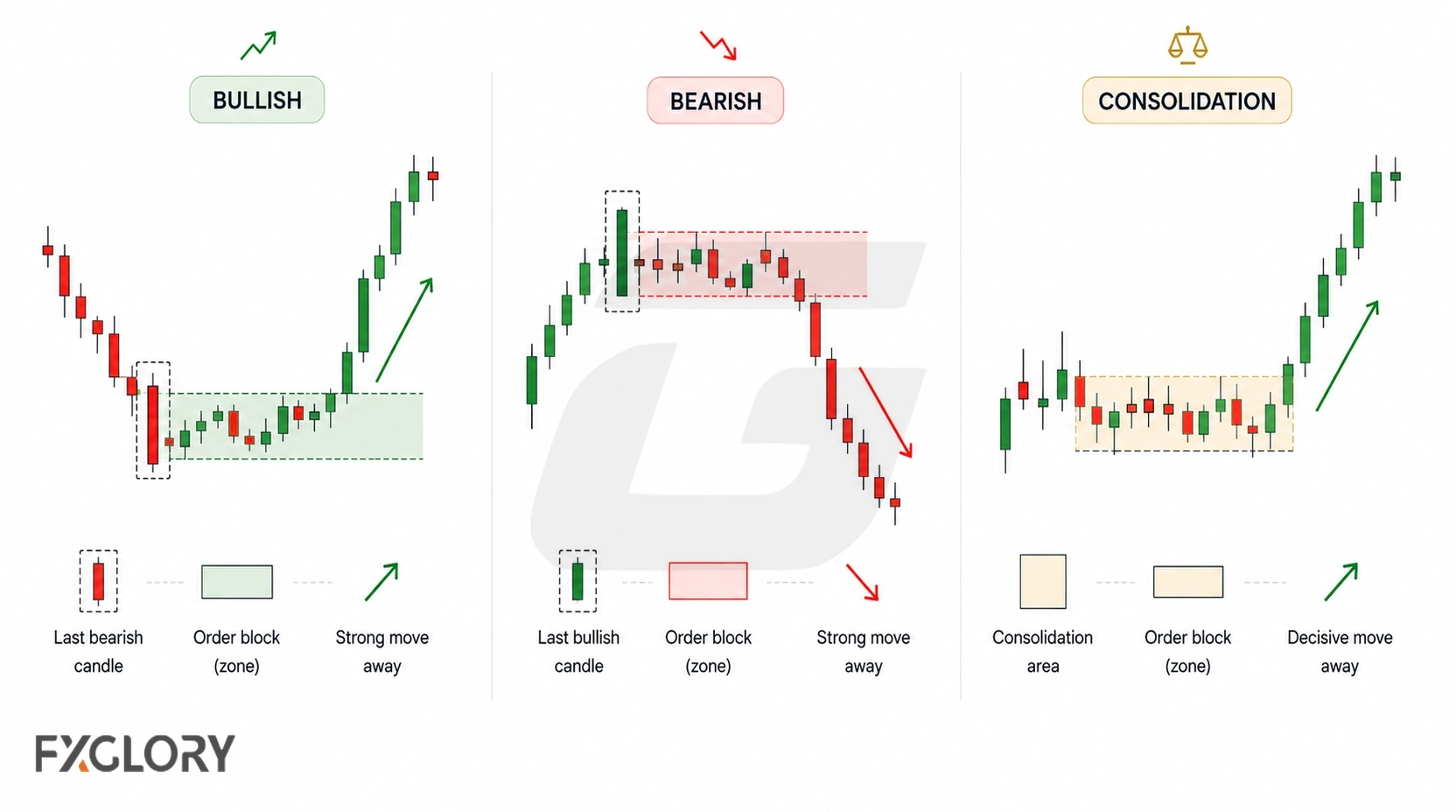
| Order Block Type | Common Chart Description | Main Review Point |
|---|---|---|
| Bullish order block | Often marked around the last bearish candle or small consolidation before a strong upward move | Review whether the move away was clear and whether the broader context supports the zone |
| Bearish order block | Often marked around the last bullish candle or small consolidation before a strong downward move | Review whether the move away was clear and whether the broader context supports the zone |
| Consolidation order block | A small clustered area before price moves away strongly | Check whether the boundaries are distinct enough to mark without forcing |
| Stronger-Looking Order Block | Weaker-Looking Order Block |
|---|---|
| Clear zone boundaries | Messy candle cluster |
| Strong move away | Choppy move away |
| Visible on the selected timeframe | Only visible after forcing |
| Context supports the reading | Appears inside random noise |
Because order blocks are drawn from candles, a different feed, timeframe, or candle close can change whether a zone appears the same way. For chart basics, see how to read forex charts.
Order Block vs Fair Value Gap vs Liquidity Pool
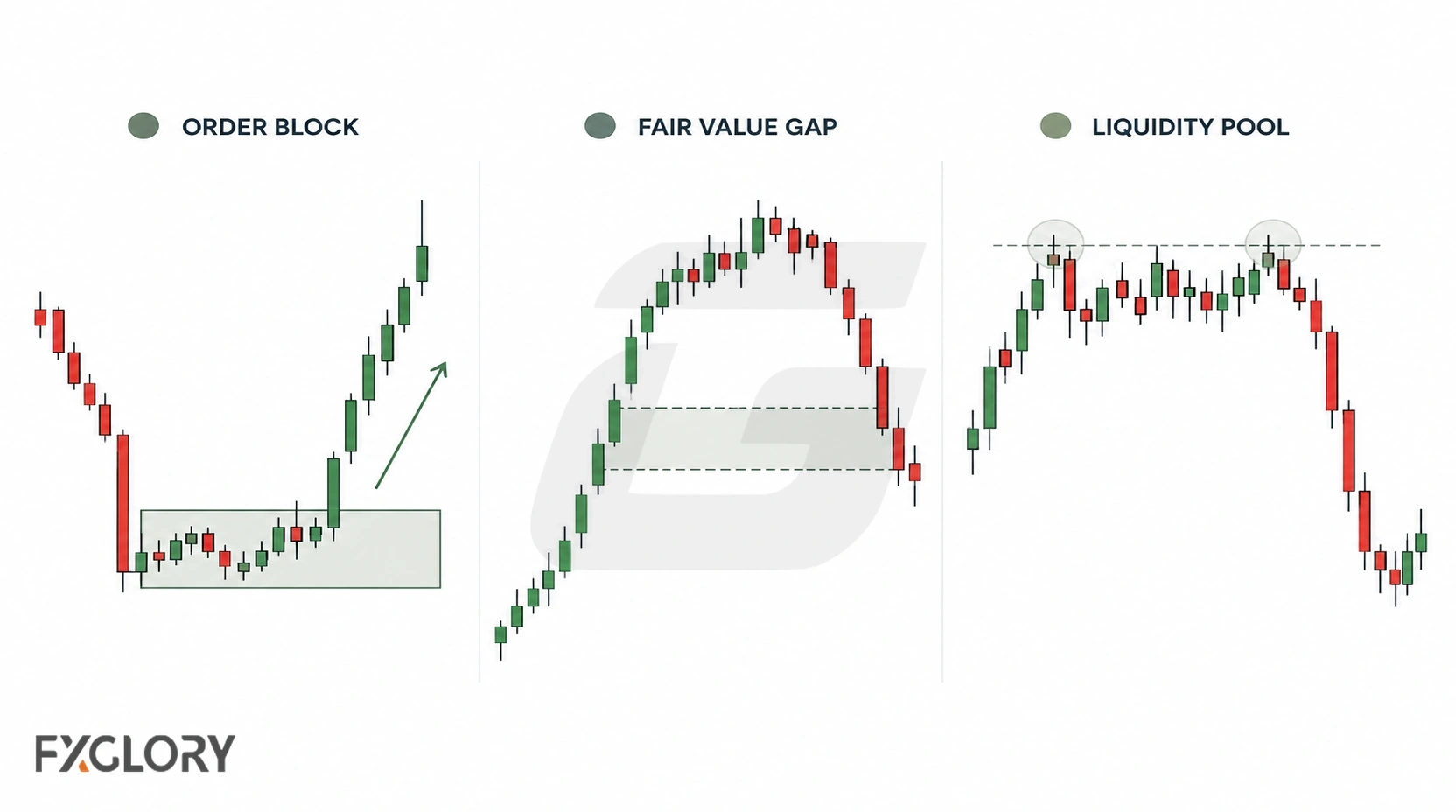
Order blocks, fair value gaps, and liquidity pools are often discussed together, but each concept focuses on a different chart feature.
| Concept | Main Focus | Main Caution |
|---|---|---|
| Order block | A zone near the origin of a strong move | Chart-derived, not verified order-flow evidence |
| Fair value gap | A non-overlapped area after fast movement | A gap does not have to fill |
| Liquidity pool | Suspected order clustering around visible highs, lows, equal highs, or equal lows | Does not prove hidden intent or stop hunting |
An order block can appear near a fair value gap or liquidity pool, but overlapping labels should not be treated as automatic confirmation.
Order Blocks, Retests, and Mitigation
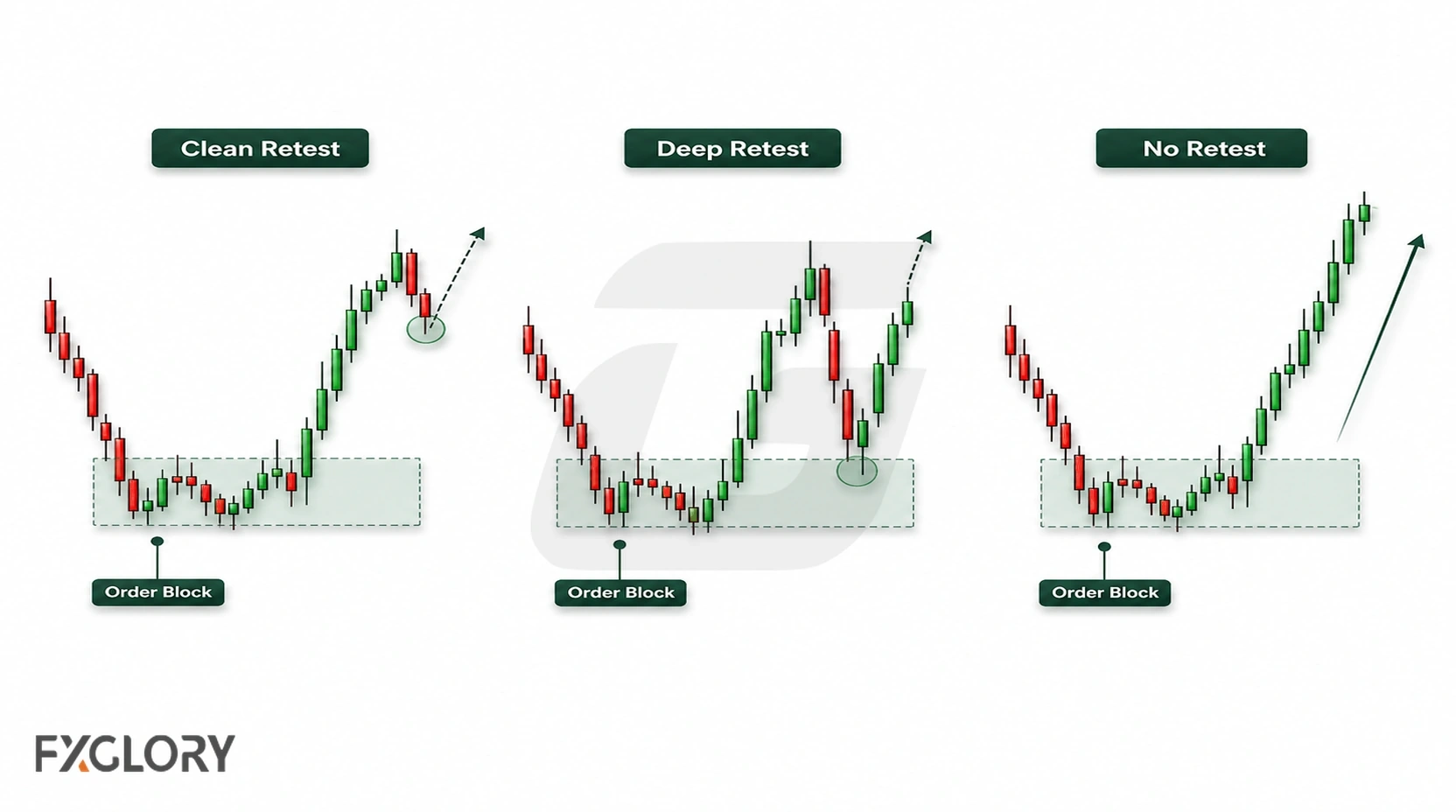
Some traders watch whether price later returns to a marked order block. This return is often called a retest; some also use the word mitigation.
| Outcome | What It Means | What To Review |
|---|---|---|
| Clean retest | Price returns to the marked zone and reacts | Whether the reaction holds and still fits the broader structure |
| Partial retest | Price touches only part of the zone | Whether the boundaries are still useful |
| Deep retest | Price moves far into the zone | Whether the original idea is weakening |
| No retest | Price does not return to the zone | No further interpretation is required |
Breaker Order Block and Invalidation
A breaker order block is usually discussed when a prior order-block zone fails and some traders later watch that area from the opposite side.
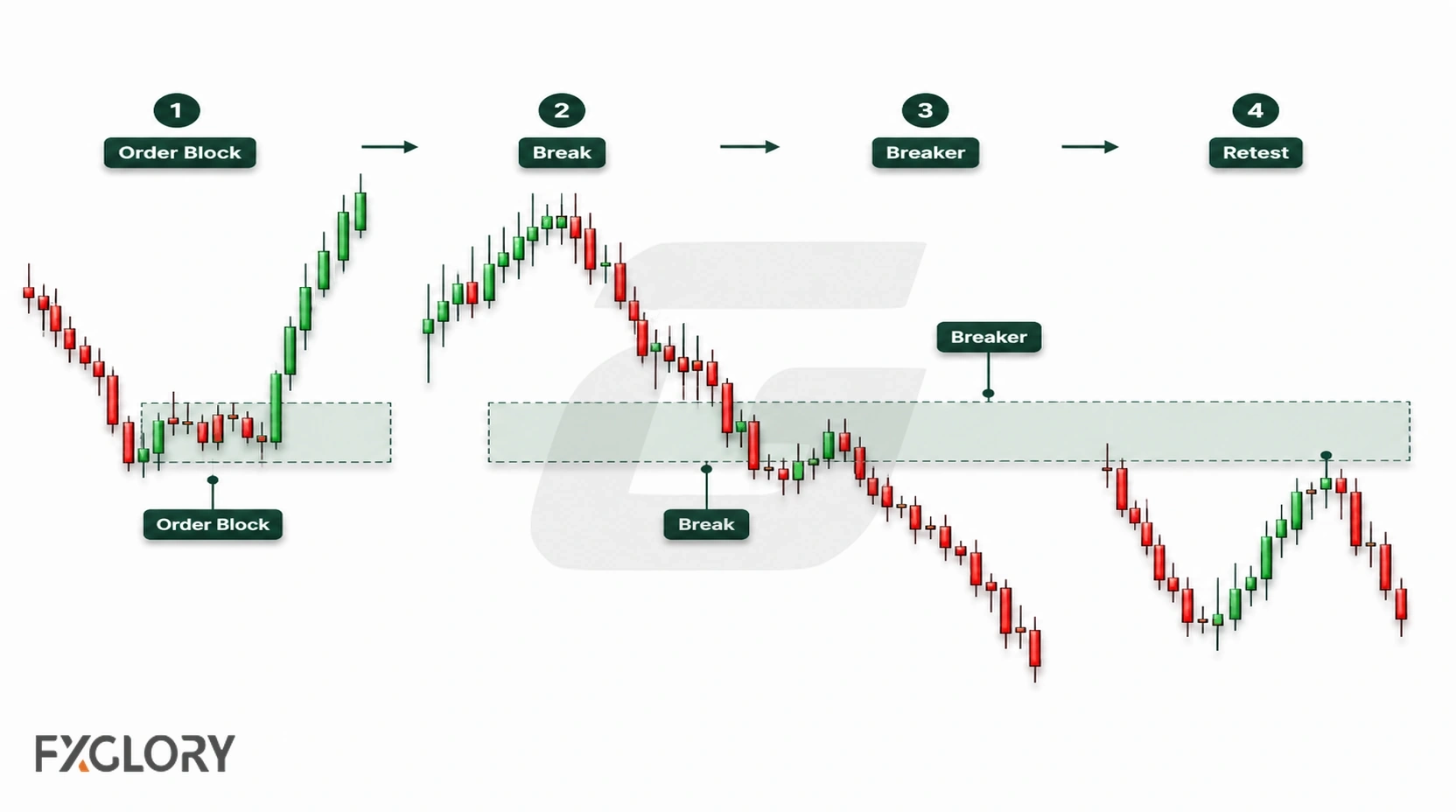
For example, a failed bullish block may later be watched as a bearish reference area, or a failed bearish block as a bullish reference area.
Invalidation means the original zone no longer fits the chart. If price behavior contradicts the reason the zone was marked, the analysis should be updated rather than defended with extra assumptions.
Order Block Indicators
Some chart scripts label possible order-block zones automatically, but there is no single standardized detection method. One script may mark the last opposite candle before a large move, while another may require displacement, a structure break, volatility thresholds, or other filters.
- Detection rules can differ: Compare the script's actual logic with the manual definition you intend to use.
- Timeframe matters: A zone marked on one timeframe may look different or disappear on another.
- Chart feed matters: Different candle data can change which zones are detected.
- Automation is not validation: A script can label candidate zones, but it cannot verify hidden orders or replace chart review.
If an indicator is used, document its detection rules so automated and manual order-block analysis are not mixed without noticing.
How Traders Review an Order Block
A practical review should answer six questions before the zone is used in a wider trading plan.
- Was the zone marked before a clear move away? Avoid selecting a candle only because price moved later.
- Where does the zone sit in market structure? Use market structure to understand nearby swings and direction.
- What is the broader directional context? Is price trending, ranging, or unclear?
- Are nearby FVG or liquidity labels actually relevant? Extra labels should add information, not just confidence.
- Which timeframe defines the zone? Keep the analysis tied to a specific chart timeframe.
- What invalidates the zone? Define the condition that makes the order-block interpretation no longer useful.
When an Order Block Is Not Clear Enough
Not every candle before a strong move deserves an order-block label. Some areas are too noisy, too forced, or too dependent on hindsight.
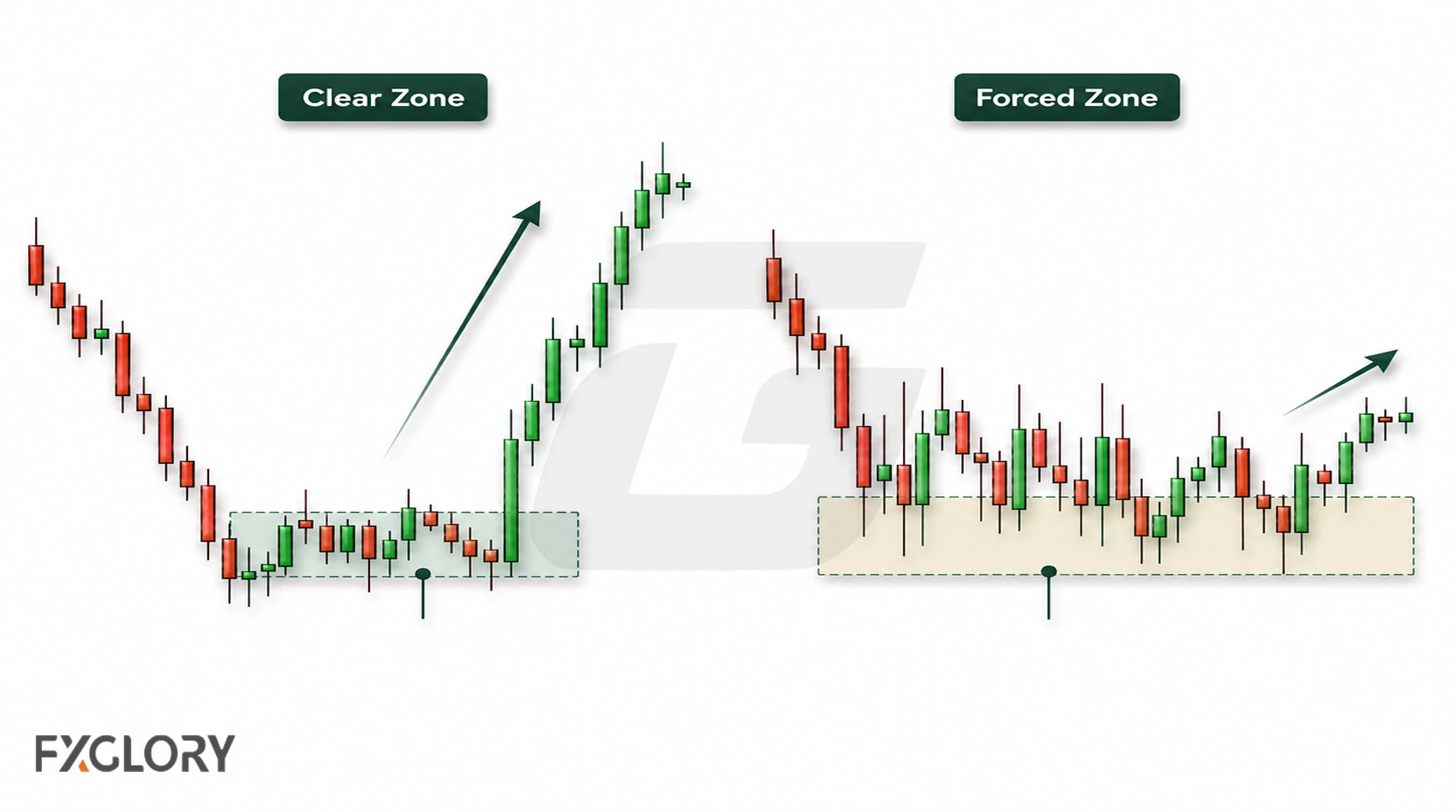
- Forced candle selection: The zone is chosen only because price moved later.
- Messy surrounding candles: Boundaries are unclear inside overlapping price action.
- Weak move away: Price does not leave the zone decisively.
- Feed dependence: The zone appears on one feed but not another.
- Unsupported hidden-order claims: The explanation relies on intent the chart cannot verify.
- No invalidation: There is no clear condition that would make the zone unusable.
Common Mistakes With Forex Order Blocks
- Calling every last opposite candle an order block: The move away and surrounding structure still matter.
- Confusing chart labels with verified orders: Candle structure does not identify the owner or size of orders.
- Overstacking labels: FVG, liquidity, structure, and order-block labels can make weak analysis look stronger than it is.
- Using inconsistent indicator definitions: Different scripts may mark different zones.
- Keeping a failed zone alive: Update the analysis when the invalidation condition is met.
Example: Order Block on GBP/USD
Suppose GBP/USD moves sideways for several candles on the timeframe being studied and then moves sharply upward. Some traders may mark the last bearish candle or the small consolidation area before the move as a possible bullish order block.
If price later returns, the useful questions are whether the zone is still clear, whether the broader structure still supports the reading, and what would invalidate the idea. Price may react, move through the area, or never return at all.
A Practical Way to Review Forex Order Blocks
Mark the zone, record why it qualifies, note the timeframe, compare it with the broader structure, and define what would invalidate it. If an indicator is involved, document the script's detection rules as well.
If the goal is to turn order-block analysis into a complete entry, invalidation, exit, and risk framework, use the broader price action strategy guide rather than treating the zone itself as the whole strategy.