Fibonacci in Forex Trading: Beginner Guide to Retracements and Extensions

Learn what Fibonacci means in forex trading, how Fibonacci numbers and ratios relate to retracement and extension levels, how traders apply Fibonacci between swing highs and swing lows, and why Fibonacci levels should be treated as zones, not guaranteed signals.
 
Written byHenry Green
Published
Last updated

Key Take Aways

  • Fibonacci in forex trading uses ratio-based levels to mark possible retracement and extension zones on a chart.
  • Fibonacci numbers are the sequence itself, while Fibonacci ratios are the percentages traders usually plot on charts.
  • The 50% level is commonly included in Fibonacci tools, but it is not part of the Fibonacci sequence itself.
  • Fibonacci levels are chart reference zones, not exact price guarantees, trade instructions, or standalone signals.
Risk note: Forex trading involves risk of loss. Fibonacci levels can help organize chart zones, but they do not guarantee price direction, profitable trades, or protection from losses.

What Is Fibonacci in Forex Trading?

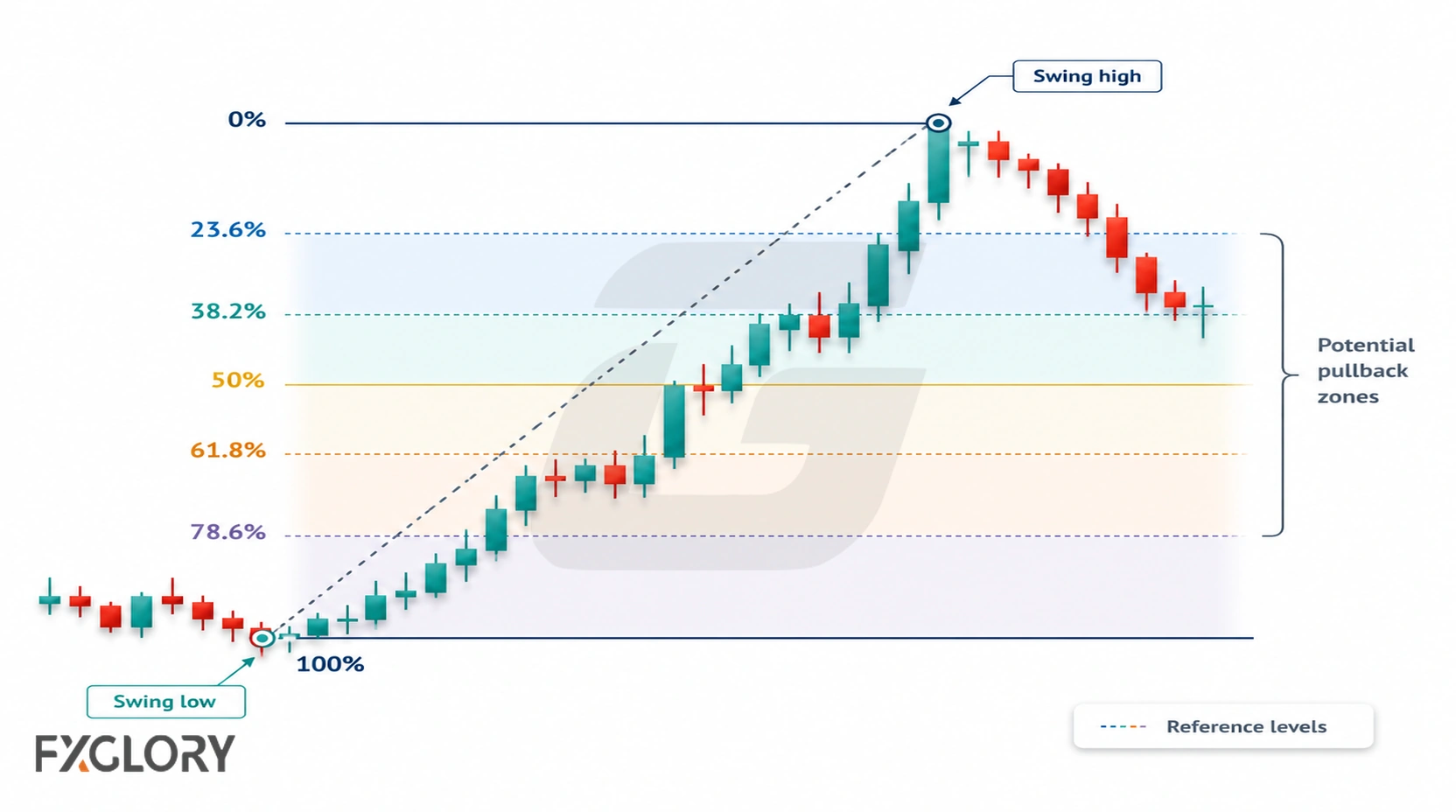
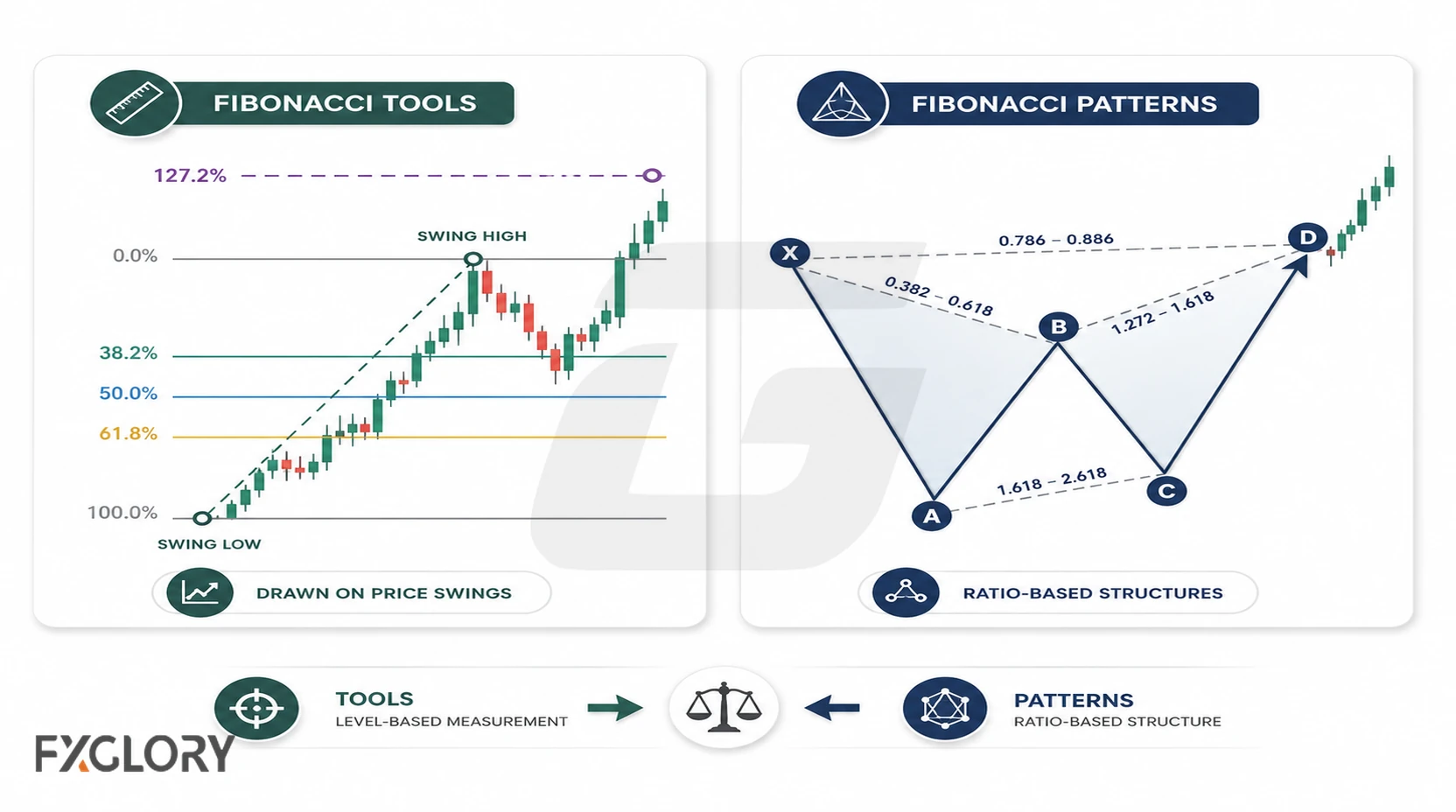
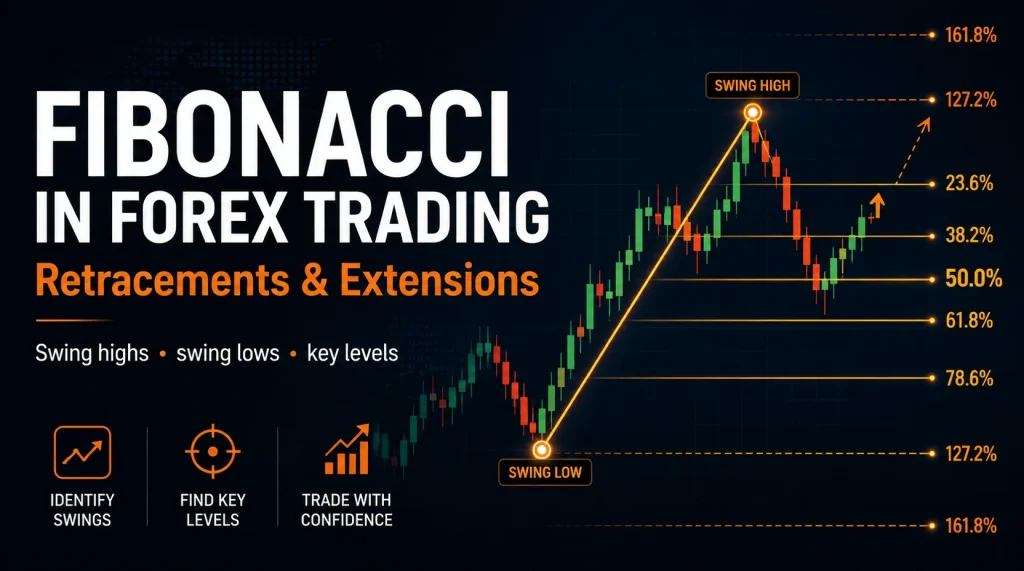
Fibonacci in forex trading is a technical-analysis drawing method that uses ratio-based levels to mark possible retracement and extension zones on a chart.

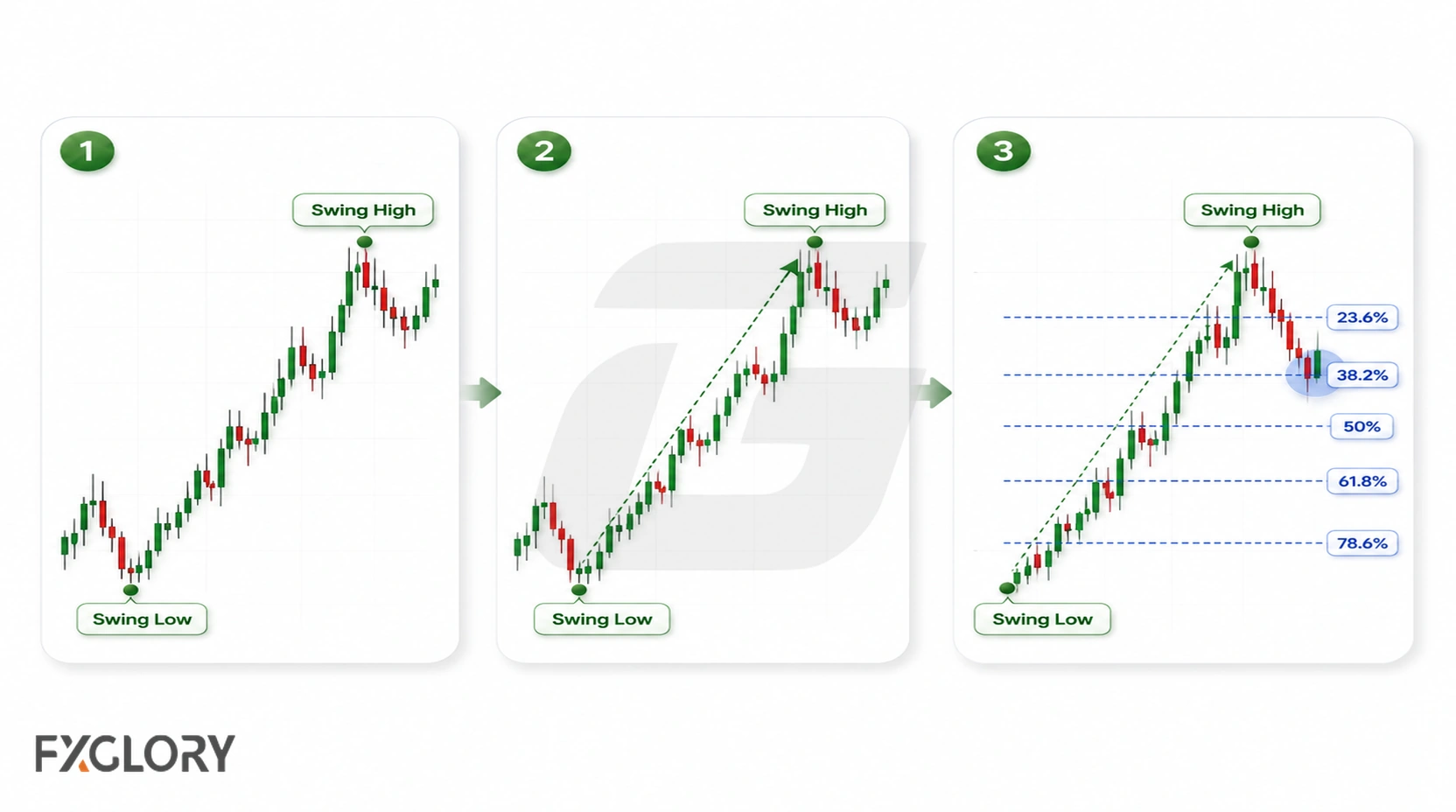
A trader usually applies Fibonacci between a selected swing high and swing low. The tool then marks levels between or beyond those points. These levels can help organize a chart scenario, but they are not prices the market is required to respect.

Fibonacci is not a standalone trading signal. It does not tell a trader where to enter, where to exit, or how much to risk by itself.

This guide focuses on Fibonacci as a drawing tool inside forex technical analysis. For the broader framework, start with the full technical-analysis roadmap.

Plain-English idea: Fibonacci levels are reference zones drawn from a selected price swing. They can help organize a chart, but they do not decide the next move.

Fibonacci Numbers, Ratios, and Forex Levels

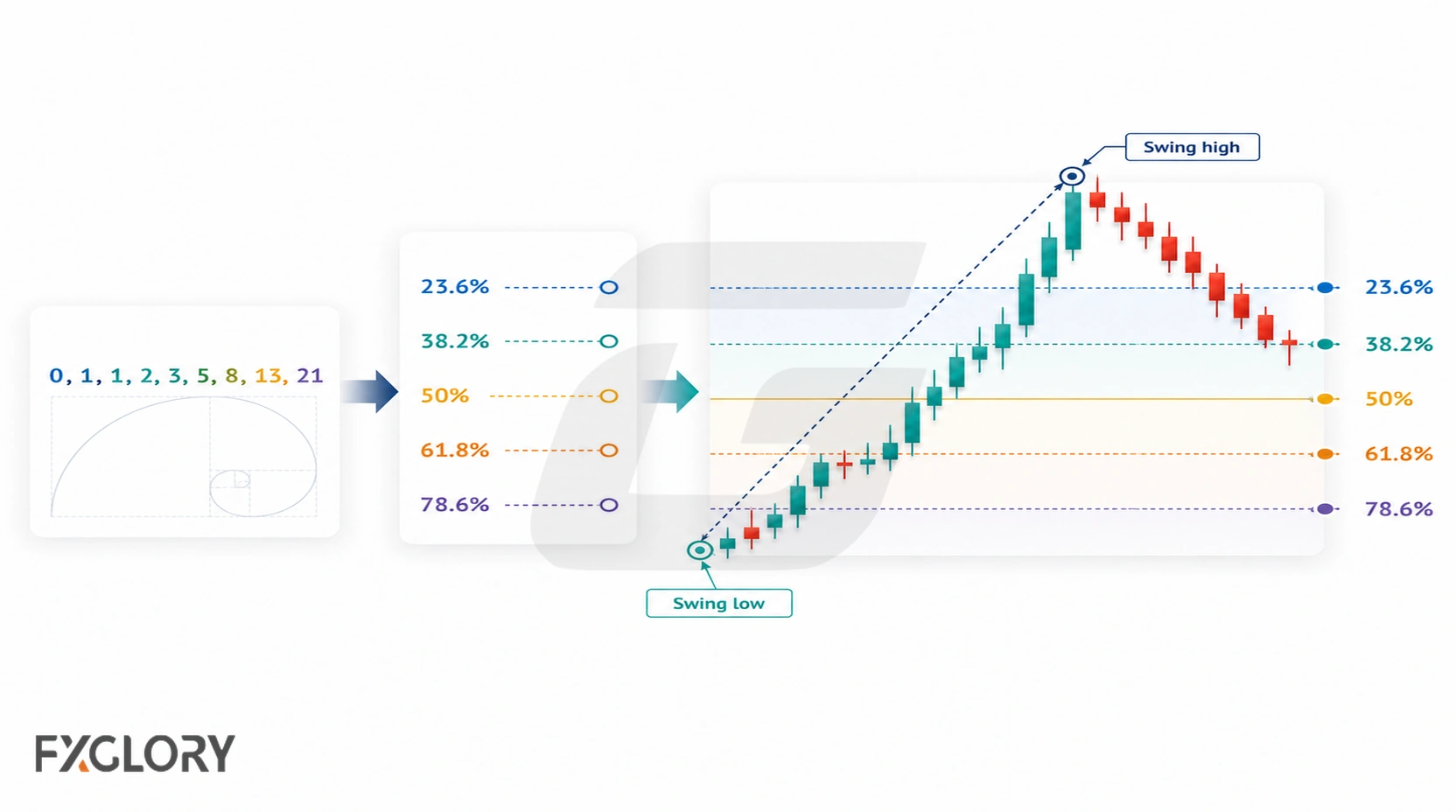
The Fibonacci sequence is a number sequence where each new number is created by adding the two numbers before it. It begins with numbers such as 0, 1, 1, 2, 3, 5, 8, 13, and 21.

Fibonacci numbers are the sequence itself. Fibonacci ratios are the percentages traders usually plot on charts. In forex analysis, the ratios matter more than the raw sequence numbers because charting tools use ratio levels to divide or project a selected price swing.

Level TypeCommon LevelsBeginner Note
Retracement levels23.6%, 38.2%, 50%, 61.8%, 78.6%Used to review possible pullback zones inside a selected swing
Extension levels127.2%, 161.8%, 200%Used to review possible projected zones beyond the original swing
50% level50%Commonly included, but not strictly a Fibonacci ratio

The 50% level is widely used because traders often watch whether a move gives back about half of its prior swing. It is useful to know, but it should not be described as a Fibonacci number.

Accuracy note: Fibonacci tools often include the 50% level, but the 50% level is not part of the Fibonacci sequence itself.

Fibonacci Retracement vs Fibonacci Extension
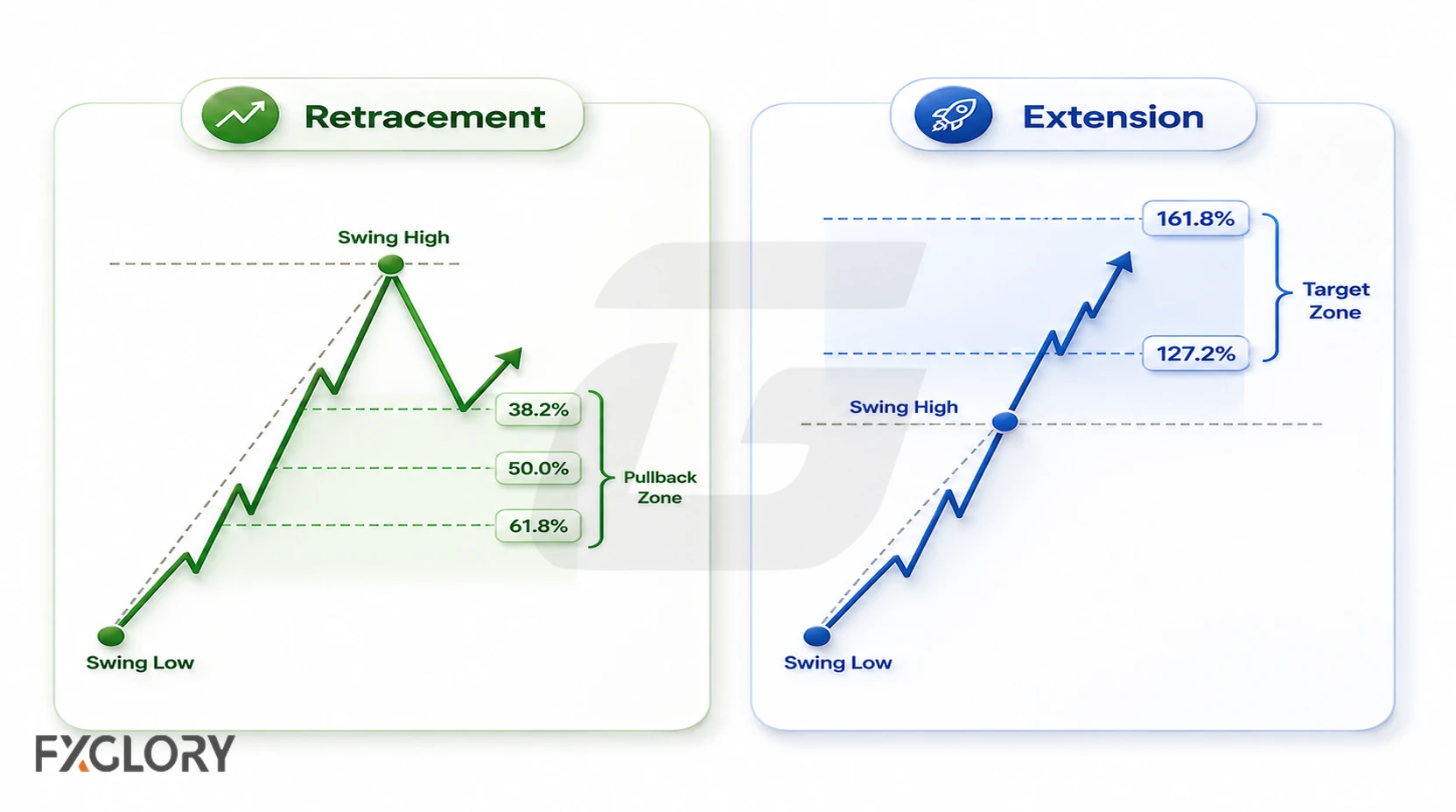
Fibonacci retracement and Fibonacci extension are related, but they are not the same.

ToolUsed ForMain Risk
Fibonacci retracementReviewing possible pullback zones inside a selected price swingThe level may fail, or the swing points may be poorly chosen
Fibonacci extensionReviewing possible projected zones beyond the original price swingThe projected zone may never be reached

A retracement level looks back inside the swing. An extension level projects beyond the swing. Both are chart references, not trade instructions.

Fibonacci rule: A Fibonacci level should be treated as an area to review, not an exact price that must hold.

How Fibonacci Is Drawn on a Forex Chart

Fibonacci levels depend on the swing points chosen by the trader. That is why two traders can draw different Fibonacci levels on the same chart.

Before drawing Fibonacci, the chart interface should already be clear: pair or asset, timeframe, chart type, price scale, and current price area. For that foundation, use the chart-interface basics before drawing levels.

  • Swing high: A visible high point used as one anchor.
  • Swing low: A visible low point used as the other anchor.
  • Upward move: Traders often draw from a swing low to a swing high when reviewing a pullback after an upward move.
  • Downward move: Traders often draw from a swing high to a swing low when reviewing a pullback after a downward move.
  • Weak swing points: Small or noisy swings can create weak Fibonacci levels.

Forced anchor points create forced Fibonacci levels. A clean drawing starts with a clear swing, not with a preferred answer.

How Traders Read Fibonacci Levels

Traders often use Fibonacci levels to organize ratio zones inside or beyond a selected swing. Those zones may later be compared with price behavior, trend context, or historical reaction areas.

Fibonacci ReadingWhat It May Help ReviewWhy It Can Fail
Shallow retracementPrice pulls back only a small part of the prior moveThe move may still reverse later
Deep retracementPrice gives back a larger part of the prior moveThe prior swing may be weakening
Level confluenceA Fibonacci level aligns with other chart contextConfluence does not remove risk
Extension zonePrice reaches a projected area beyond the original swingThe extension may be missed, overshot, or ignored

A Fibonacci zone is an area where a trader may slow down and review price behavior, not a place where price must react.

Fibonacci is most useful when the swing, timeframe, and nearby chart context all tell the same story.

For historical reaction-area context beyond Fibonacci, review the historical reaction-zone layer.

Fibonacci overlaps with other chart concepts, but it should not replace them.

ConceptWhat It OwnsHow Fibonacci Relates
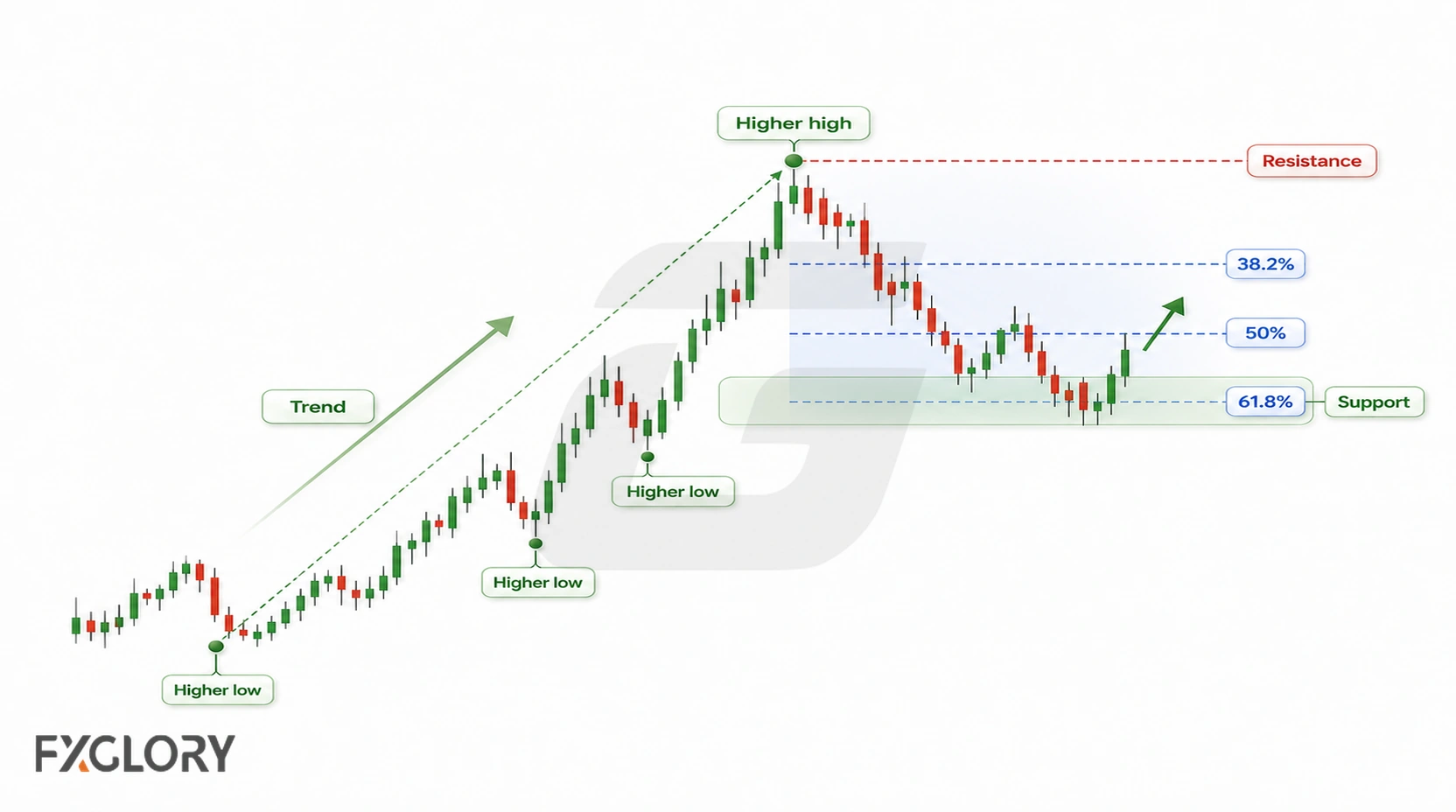
TrendDirection and whether price is moving up, down, sideways, or unclearFibonacci is often used after a directional move to review pullback zones
Market structureThe swing-by-swing arrangement of highs, lows, ranges, and transitionsFibonacci depends on selecting meaningful swing points
Support and resistanceHistorical areas where price has reacted beforeFibonacci levels may be watched more closely when they align with these areas
FibonacciRatio-based retracement and extension zones between selected swing pointsIt gives reference zones, not guaranteed reactions

The direction layer before the retracement helps separate trending, ranging, and unclear charts. For the swing selection behind Fibonacci, use the swing-point map behind the drawing.

Timeframes and Fibonacci in Forex

Fibonacci levels depend on the timeframe being studied. A level drawn on a 5-minute chart may not carry the same context as a level drawn on a daily chart.

  • Higher timeframe: May show broader swing context.
  • Lower timeframe: May show more detail but also more noise.
  • Mixed timeframes: A short-term Fibonacci level may disagree with the larger chart condition.
  • Unclear timeframe: A Fibonacci reading is incomplete if the timeframe is not known.

Higher-timeframe Fibonacci levels may carry broader chart context, while lower-timeframe levels can be noisier. This does not mean a higher-timeframe level must hold.

When Fibonacci Is Not Clear Enough

Fibonacci is not useful on every chart. Some conditions make the drawing weak or easy to misread.

  • No clear swing: The high and low points are not obvious.
  • Messy range: Price overlaps too much for a clean retracement reading.
  • Forced anchors: The trader changes the drawing until a preferred level appears.
  • News-driven movement: A sudden move can ignore technical reference zones.
  • Overcrowded chart: Too many levels can make every price look important.
  • Timeframe conflict: One timeframe gives a level that another timeframe does not support.
  • No invalidation: The trader cannot explain where the Fibonacci scenario is wrong.
Stand-aside rule: If the swing points are unclear or the levels need to be forced, the Fibonacci reading may not be strong enough for a live decision.

Common Mistakes With Fibonacci Forex Trading

Fibonacci mistakes often come from treating levels as if they are automatic trade signals.

  • Treating 61.8% as magic: The level can fail, overshoot, or be ignored.
  • Forcing swing points: Weak anchors create weak levels.
  • Using Fibonacci in a messy range: Retracements are harder to read when price has no clear swing.
  • Moving the drawing after price changes: Changing anchors to fit a preferred idea creates false confidence.
  • Ignoring the 50% detail: The 50% level is common, but it is not a Fibonacci sequence level.
  • Using extensions as guaranteed targets: Extensions are projected zones, not promised destinations.
  • Ignoring spread and volatility: Execution conditions still matter even when a level looks clean.
  • No invalidation: The trader cannot explain where the Fibonacci idea fails.

Example: Fibonacci Retracement on Gold

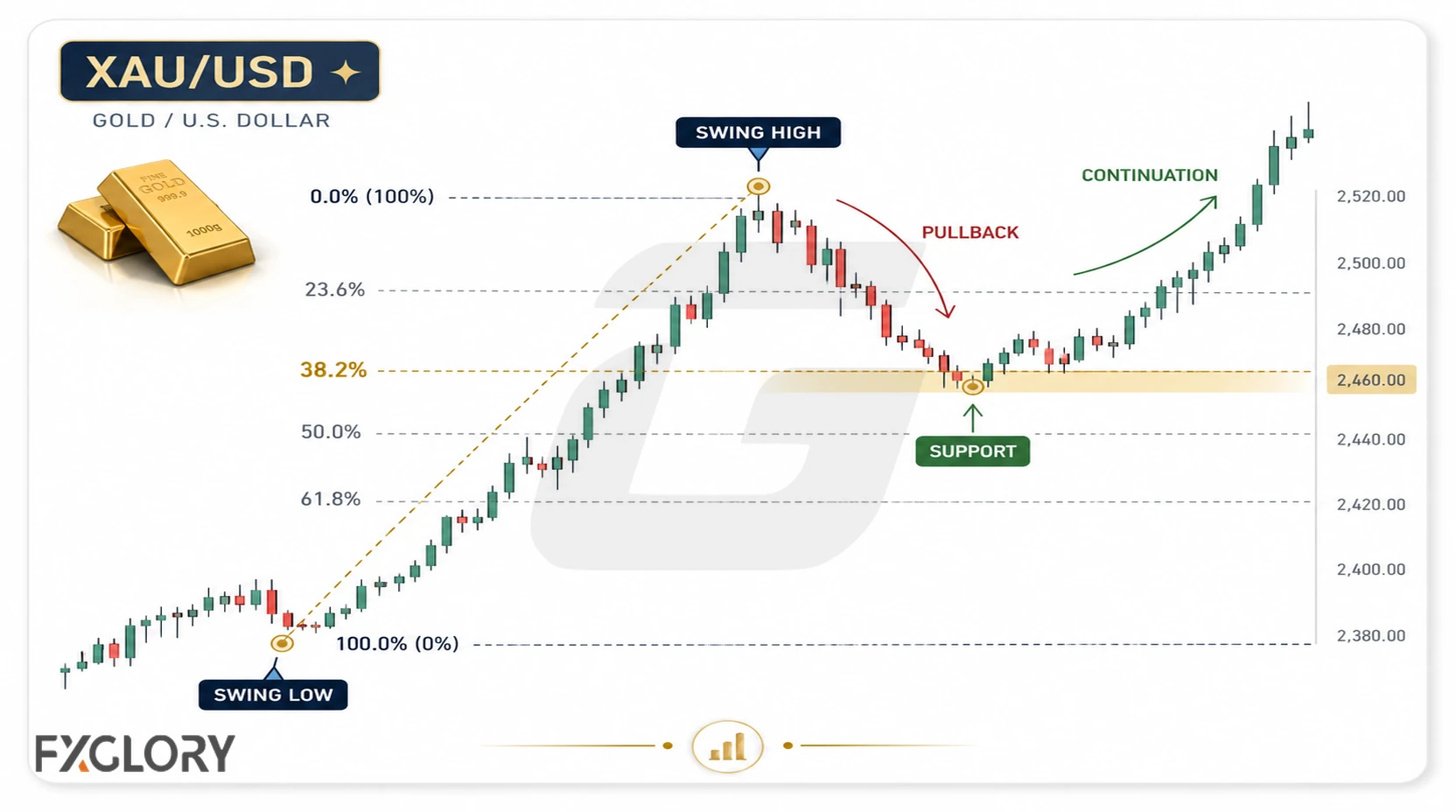
Suppose gold has made a visible upward swing on the timeframe being studied. A trader may draw Fibonacci from the swing low to the swing high to review possible pullback zones.

If price later pulls back toward the 38.2%, 50%, or 61.8% area, the trader may treat those areas as Fibonacci zones to review. That does not mean gold must bounce from one of them. Price can pause, continue lower, overshoot the level, or ignore it completely.

A safer review would check whether the selected swing is clear, whether the timeframe supports the reading, whether the level aligns with other chart context, and where the idea becomes invalid. Spread, volatility, liquidity, position size, and account risk still matter.

Example note: This is not a trade recommendation or signal. It shows how Fibonacci can be organized into a chart scenario before any trading decision.

A Safer Way to Use Fibonacci in Forex Trading

Fibonacci in forex trading uses ratio-based levels to mark possible retracement and extension zones. These zones can help organize a chart, but they do not predict price by themselves.

A beginner should understand the difference between Fibonacci numbers, Fibonacci ratios, retracement levels, extension levels, swing highs, and swing lows before using the tool. The 50% level should also be understood correctly because it is commonly included but is not strictly a Fibonacci ratio.

The safer approach is to treat Fibonacci as a measuring tool, not a decision-maker. Before using real money, the trader should know which swing was measured, which ratio zone matters, what would invalidate the idea, and how much risk is attached.

Final risk reminder: Fibonacci is only one part of a trading decision. Market condition, news, spread, slippage, liquidity, volatility, position size, and account risk still matter.

Frequently Asked Questions

What is Fibonacci in forex trading?

Fibonacci in forex trading is a technical-analysis drawing method that uses ratio-based retracement and extension levels to mark possible chart zones between selected swing points. These levels are not guaranteed signals.

What are Fibonacci numbers in forex?

Fibonacci numbers are the sequence itself, such as 0, 1, 1, 2, 3, 5, 8, and 13. Forex traders usually plot Fibonacci ratios, such as 38.2%, 61.8%, and 161.8%, rather than the raw numbers.

What are the main Fibonacci retracement levels?

Common Fibonacci retracement levels include 23.6%, 38.2%, 50%, 61.8%, and 78.6%. The 50% level is commonly included in charting tools, but it is not strictly a Fibonacci ratio.

What is the 50% Fibonacci level?

The 50% level marks the halfway point of a selected price swing. It is widely included in Fibonacci retracement tools, but it is not part of the Fibonacci sequence itself.

What is the difference between Fibonacci retracement and extension?

Fibonacci retracement levels are used to review possible pullback zones inside a selected swing. Fibonacci extension levels are used to project possible zones beyond the original swing.

How do you draw Fibonacci in forex?

A trader usually selects a visible swing high and swing low, then applies the Fibonacci tool between those points. The direction depends on whether the trader is reviewing a move upward or downward.

Does Fibonacci work in forex trading?

Fibonacci can help organize possible chart zones, especially when levels align with other context. It should not be treated as a method that always works or as proof that price must react.

Can Fibonacci predict forex prices?

Fibonacci should not be treated as a prediction tool. It can mark possible retracement or extension zones, but price can ignore, overshoot, or invalidate those levels.

Related Contents

Technical Analysis ForexReturn to the broader chart-analysis framework behind Fibonacci levels.
How to Read Forex ChartsReview the chart-interface basics before drawing Fibonacci between swing points.
Forex TrendUnderstand the direction context that often comes before a Fibonacci pullback reading.
Support and Resistance in ForexReview historical reaction-zone context before comparing it with Fibonacci ratio zones.

Practice Reading Fibonacci Levels Before Trading Live

Use a free FXGlory demo account to practice reviewing chart swings, Fibonacci levels, timeframe context, and trade decisions before using real money. Live spread, liquidity, and execution conditions can differ.

Open a Free Demo Account