
What Is a Forex Gap?
A forex gap is a visible jump on a currency-pair chart between one shown price area and the next, with little or no trading displayed between the two levels.
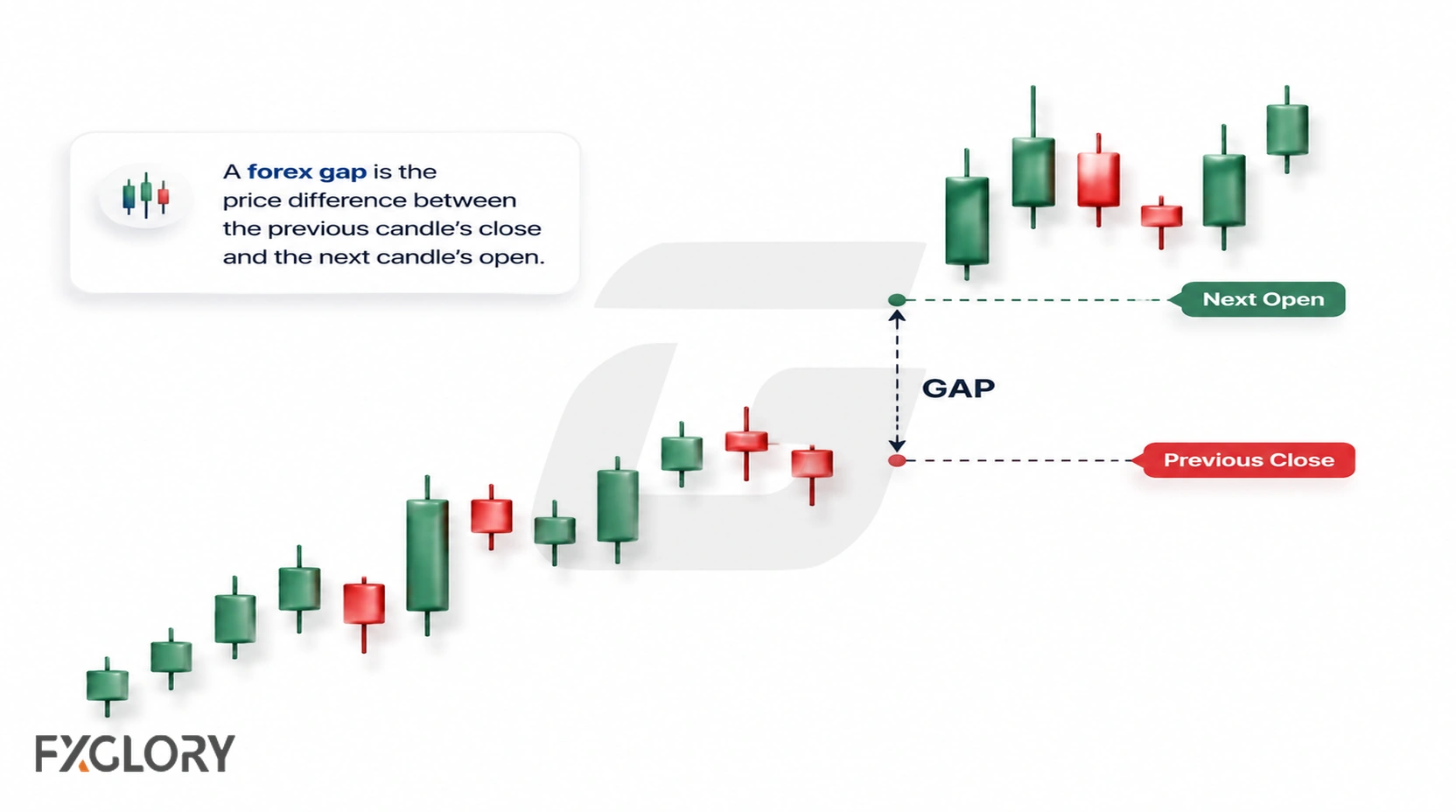
On a chart, the next candle may open noticeably above or below the previous candle’s close. The space between them shows that the chart did not print the usual step-by-step movement through every displayed level.
Forex gaps are usually less common than stock gaps because major currency pairs trade almost continuously during the trading week. They can still appear around the weekend reopen, holidays, major news, geopolitical events, low-liquidity periods, or platform data differences.
This guide focuses on gaps as chart behavior and execution risk inside forex technical analysis. For the broader chart-reading framework, start with the bigger technical-analysis map.
Gap Up vs Gap Down in Forex
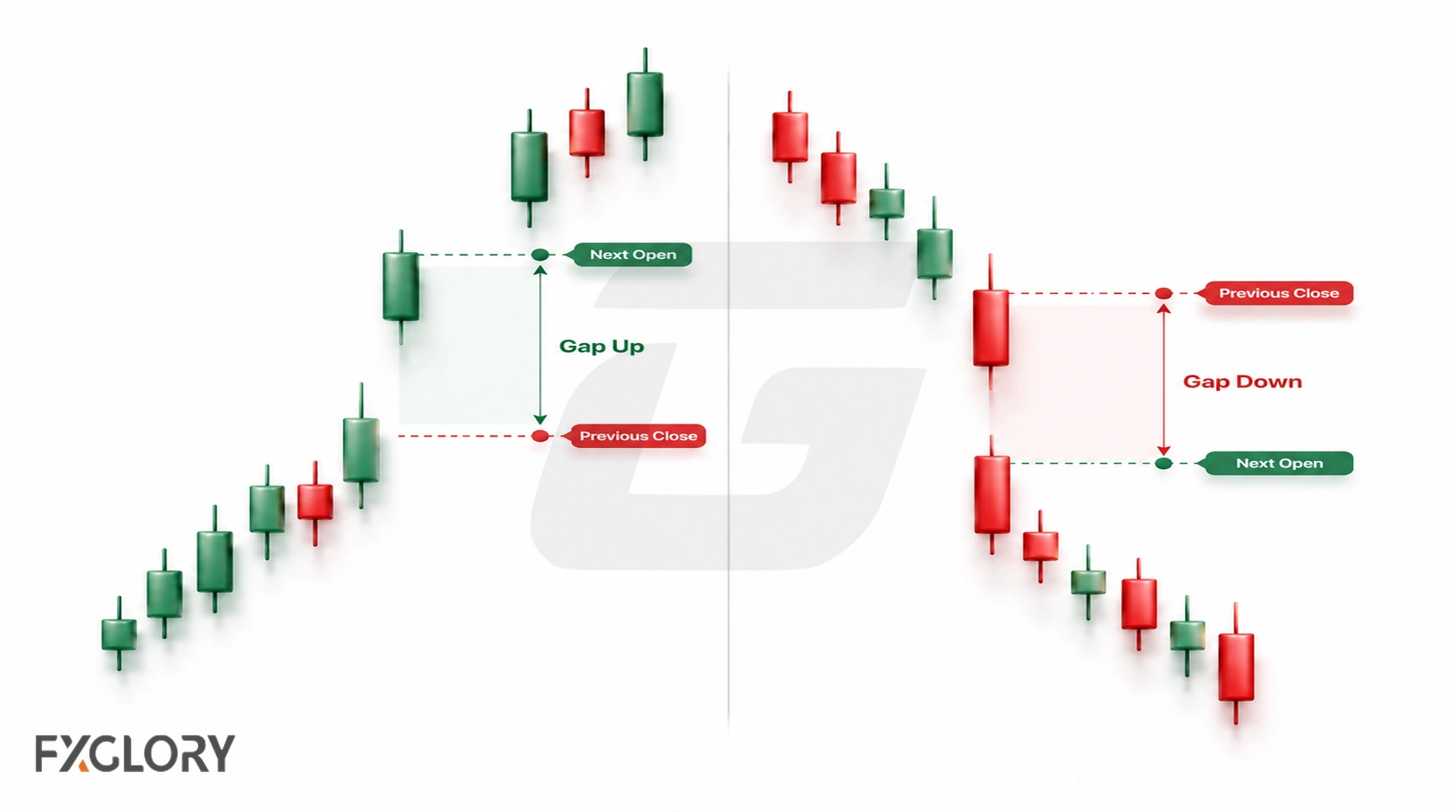
Forex gaps are often described as gap up or gap down. These labels describe where the new price opens compared with the previous shown price.
| Gap Type | What It Means | What It Does Not Mean |
|---|---|---|
| Gap up | Price opens above the previous shown price area | It does not guarantee bullish continuation |
| Gap down | Price opens below the previous shown price area | It does not guarantee bearish continuation |
A gap up can fade, continue, partially fill, or become part of a wider range. A gap down can do the same in the opposite direction. The gap direction only tells where price opened; it does not explain what price will do next.
Why Do Forex Gaps Happen?
Forex gaps happen when price reprices faster than the chart displays normal trading through each level. In forex, this often involves timing, liquidity, news, or data-feed conditions.
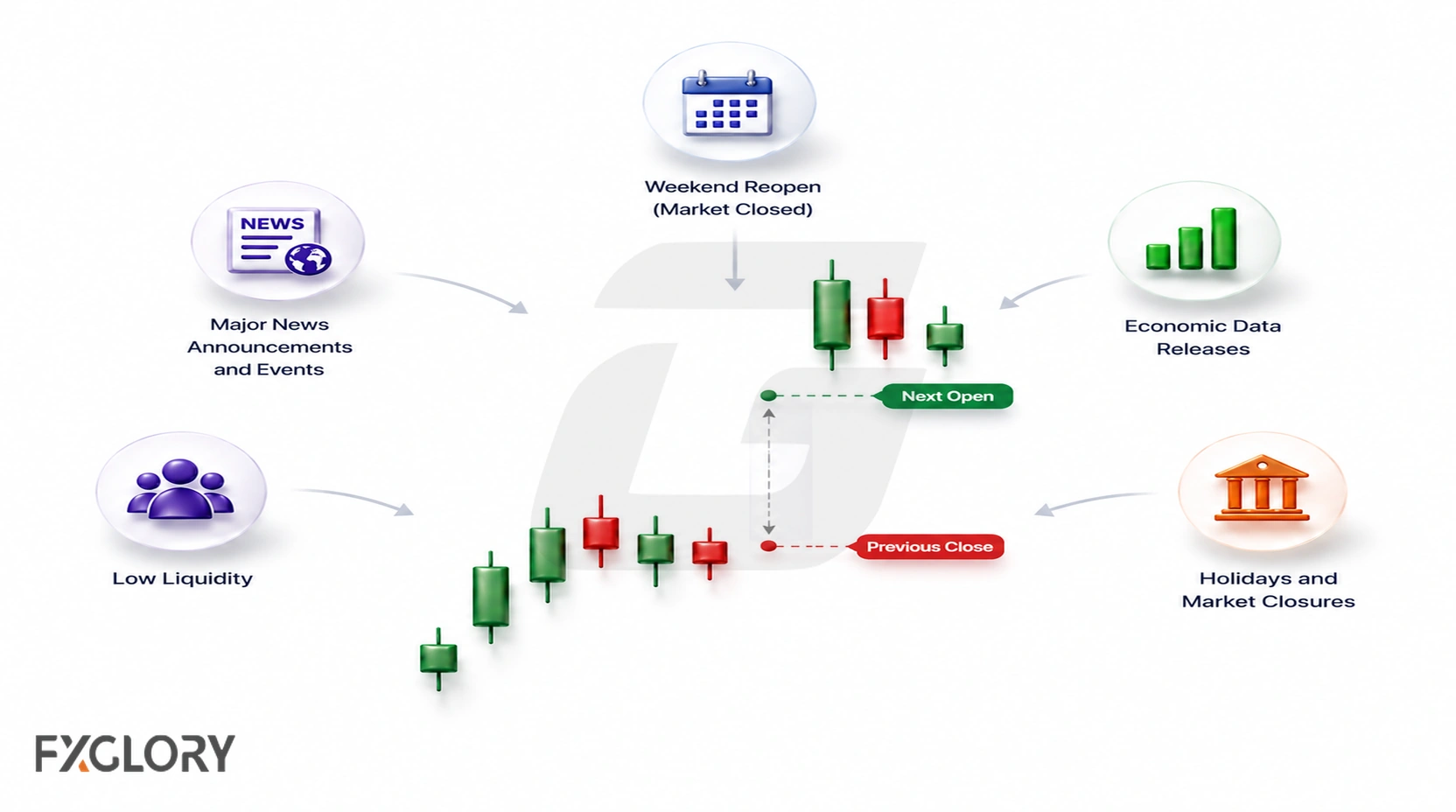
- Weekend market reopen: Price may reopen away from the Friday close after weekend news or order repricing.
- Major news: Economic releases, central-bank comments, or geopolitical events can cause sharp repricing.
- Holiday periods: Thinner participation can make price movement less smooth.
- Low liquidity: Fewer active participants can make price jump through areas more easily.
- Broker or platform data differences: Different feeds may display gaps differently.
- Spread changes: Wider spreads can make the visible chart movement look more abrupt, especially near opens or volatile periods.
A weekend gap, news gap, and feed-related gap should not be read the same way.
Forex Weekend Gap: Why It Happens
A forex weekend gap happens when a currency pair reopens at a different price from its Friday close. It is one of the main gap scenarios traders encounter because the retail forex market pauses over the weekend while new information can still change how currencies are priced.
Elections, geopolitical events, economic headlines, unexpected policy comments, or changes in risk sentiment can lead traders and liquidity providers to reprice currency pairs before normal weekly liquidity has fully returned.
- Friday close vs Sunday or Monday open: The new opening price may be above or below the previous close.
- Weekend news: Events during the closure can create repricing before regular liquidity returns.
- Thin opening conditions: Liquidity can be lighter near the weekly open.
- Spread widening: Spreads may widen around the open or during unstable conditions.
- Slippage risk: Orders may fill away from expected levels if price opens beyond them.
Common Types of Forex Gaps
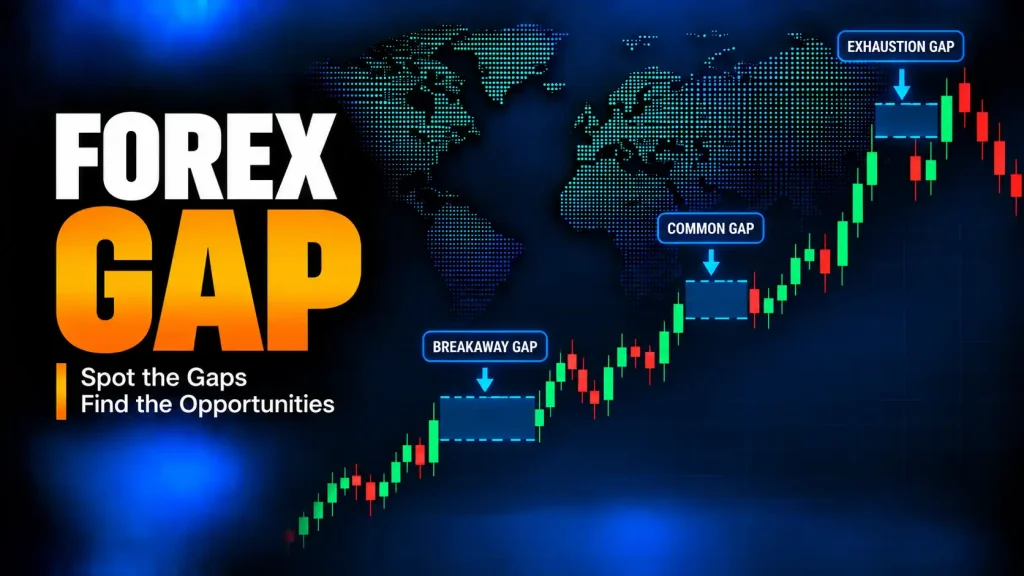
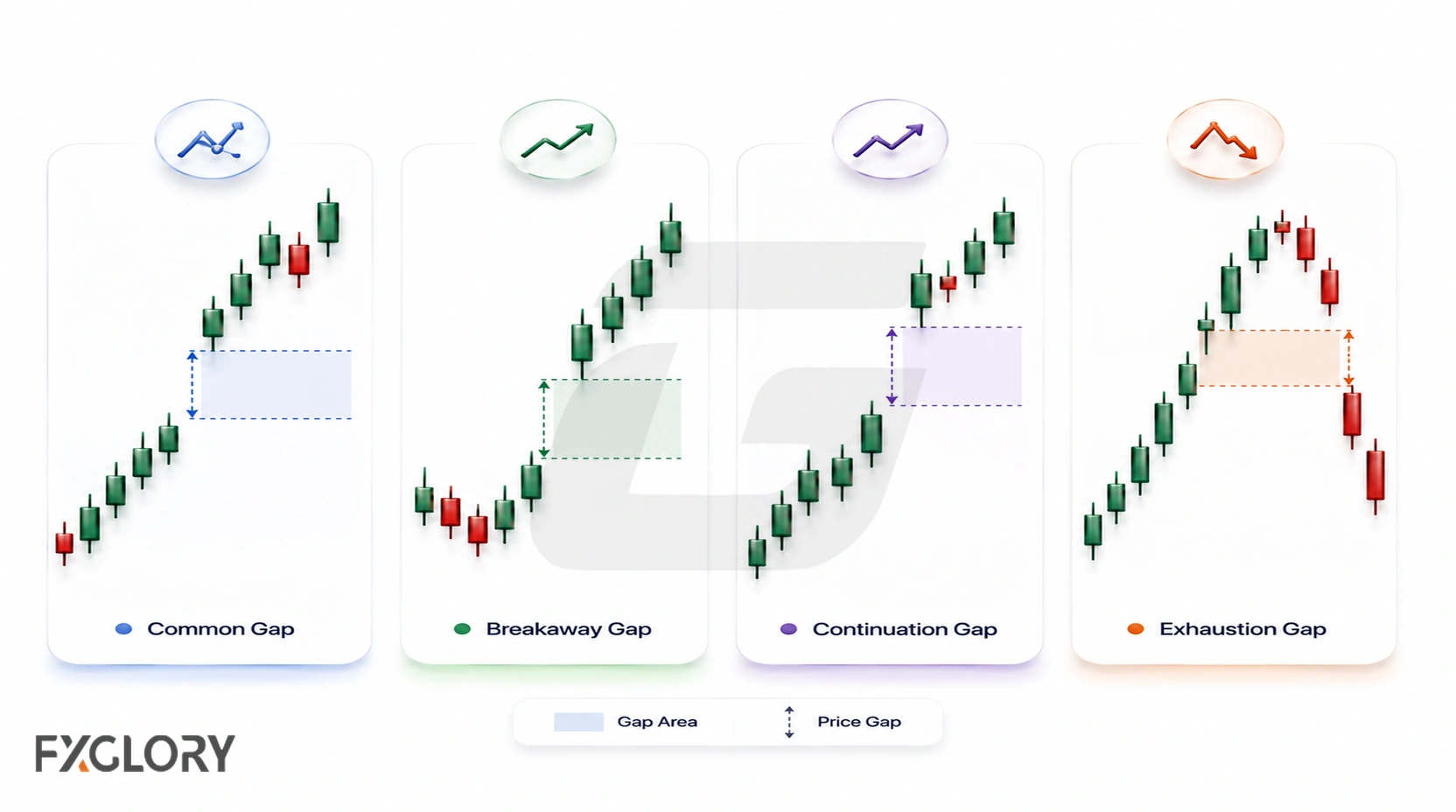
Traders use several gap labels to describe where a gap appears within the broader price move. The value of the label comes from the surrounding market structure and what price does after the gap.
| Gap Type | Basic Idea | Beginner Risk |
|---|---|---|
| Common gap | A gap that appears without a major structural change | It may be overinterpreted as important |
| Breakaway gap | A gap that appears near a range break or important area | The breakout may fail |
| Continuation or runaway gap | A gap that appears in the direction of an existing move | The move may already be stretched |
| Exhaustion gap | A gap that appears late in a move and may suggest weakening pressure | It is easier to identify after the fact |
These labels are most useful when they are compared with market structure, nearby support or resistance, and post-gap price action.
Do Forex Gaps Always Fill?
No. Forex gaps do not always fill. A gap fill means price returns to the earlier gap area and trades back through part or all of the visible space.
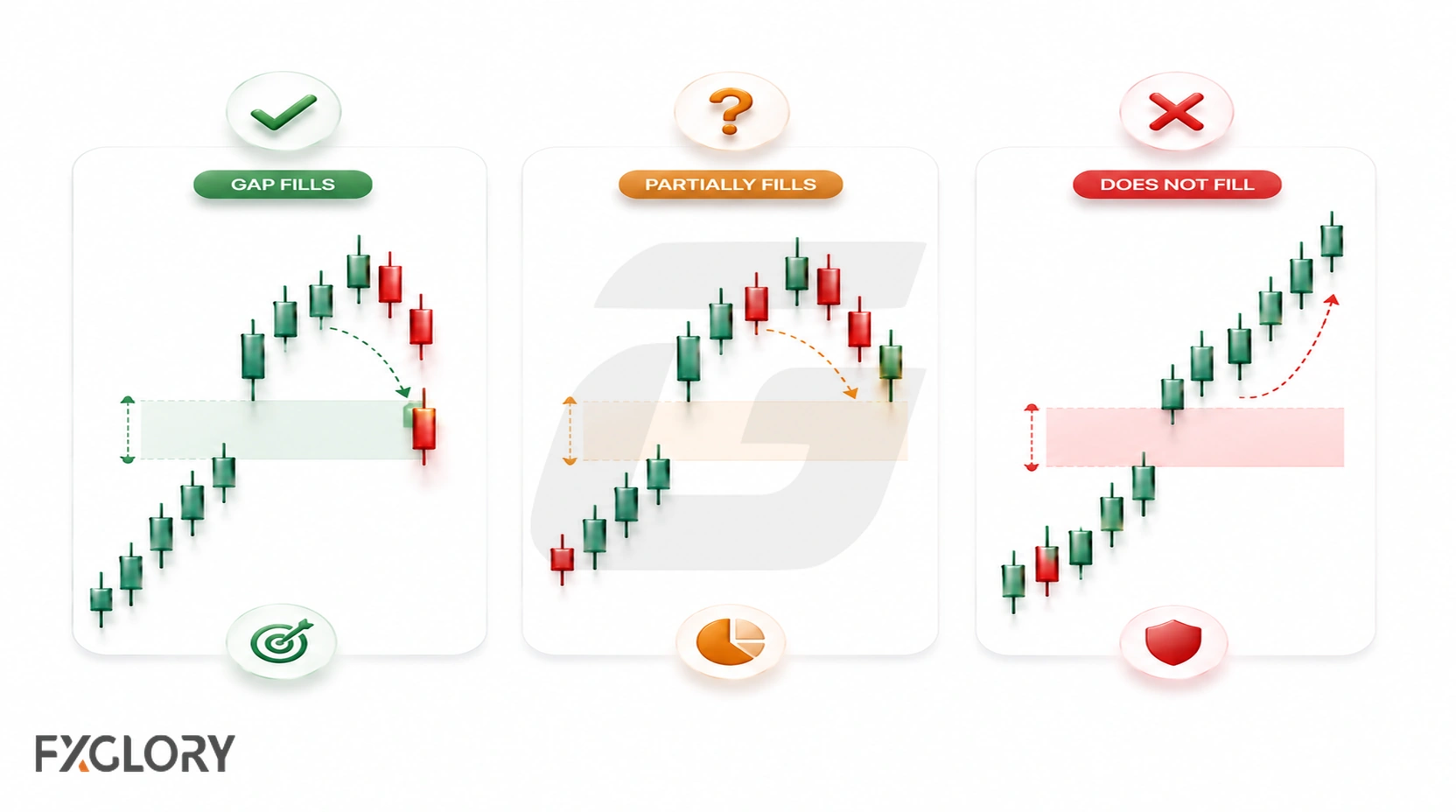
A gap may fill quickly, partially fill, take longer than expected, continue away from the gap, or stay open. Treating every gap as something that must close can lead to forced trades.
- Gap fill: Price returns into the gap area.
- Partial fill: Price enters part of the gap but does not fully close it.
- Continuation: Price keeps moving away from the previous close.
- Failed fill: Price starts to fill the gap but then reverses again.
Gap Risk, Spread, and Slippage
Gap risk matters because price can move beyond expected levels before an order is filled. This is especially important around weekend opens, major news, and thin-liquidity periods.
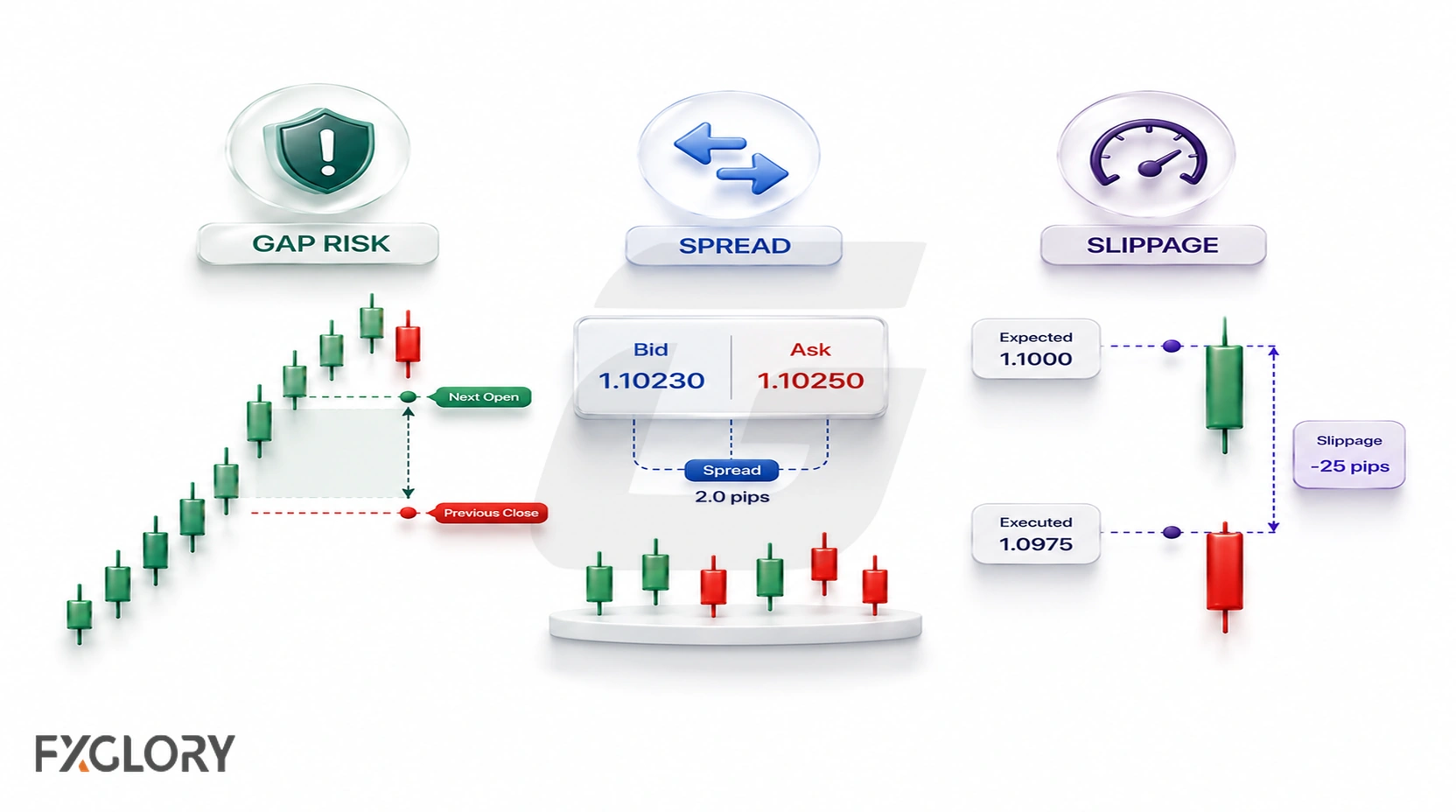
A gap is the visible price jump on the chart. Slippage is the difference between the expected order price and the actual fill price. A gap can cause slippage when price skips through the level where an order was expected to execute.
- Stop-order slippage: A stop order may be filled at a worse price if the market gaps through the stop level.
- Wider spreads: The difference between bid and ask may widen during unstable or thin conditions.
- Thin liquidity: Fewer available prices can make execution less stable.
- Leverage risk: A small price gap can have a larger account impact when position size or leverage is high.
- Fast repricing: Price can move before the trader has time to react.
- Weekend exposure: Positions held over the weekend may reopen at a different price from the Friday close.
For that reason, execution conditions should be checked before the chart pattern is evaluated.
Why Some Forex Charts Show Different Gaps
Different forex charts may show different gaps because not every broker or platform builds candles from the same data in the same way.
- Broker server time: Different server times can create different daily or weekly candles.
- Candle close time: A candle may close at a different moment depending on the platform setup.
- Liquidity provider feed: Different feeds may show different prices or tick histories.
- Bid, ask, or mid charts: A chart may show bid prices, ask prices, or a midpoint.
- Weekend candles: Some platforms show small weekend candles, while others filter them out.
- Missing ticks or filtering: Data cleaning, missing ticks, or aggregation can change how gaps appear.
One screenshot may not show whether the gap came from market repricing, chart settings, or the data feed.
How to Review a Forex Gap Before Trading
A consistent review process helps separate the cause of the gap, the price response, and the execution conditions that affect risk.
- Identify the gap: Is price opening above or below the previous shown price area?
- Check the cause: Is the gap related to the weekend, news, a holiday, low liquidity, or platform data?
- Check spread conditions: Is the spread normal, widened, or unstable?
- Review liquidity context: Is the market active or thin?
- Read price behavior after the gap: Does price fill, partially fill, continue, or fail? For this part, use the price-action layer after the jump.
- Check structure: Did the gap break, respect, or confuse the broader swing arrangement? Use the swing-structure view if the gap changes the broader chart.
- Check reaction zones: Is the gap opening near an area where price has reacted before? For that, review the reaction-zone map.
- Define invalidation: What price behavior would show that the gap scenario is wrong?
- Check risk: Is the possible loss acceptable if the gap extends, spreads widen, or execution is worse than expected?
If the cause is unclear or spreads and execution remain unstable, waiting for conditions to normalize can make the gap easier to evaluate.
Common Mistakes With Forex Gaps
Common mistakes usually come from assuming what the gap must do next or ignoring the execution conditions around it.
- Assuming every gap must fill: Some gaps continue or only partially fill.
- Ignoring the cause: A news gap and a data-feed gap do not have the same meaning.
- Trading during unstable spreads: Wider spreads can change the real risk of a position.
- Ignoring slippage: Stop orders may fill worse than expected if price gaps through the level.
- Using too much leverage: Gap movement can have a larger account impact when exposure is high.
- Comparing different chart feeds blindly: Broker time, bid/ask charts, and weekend candles can change the visible gap.
- No invalidation: The trader cannot explain where the gap scenario is wrong.
Example: Weekend Gap on EUR/USD
Suppose EUR/USD closes on Friday and opens after the weekend above the previous shown price area. A beginner may describe that as a weekend gap up.
The gap does not prove that EUR/USD must continue higher. It also does not prove that price must return and fill the gap. The trader should first check whether there was weekend news, whether spreads are stable, whether liquidity has returned, and how price behaves after the open.
If price starts moving back into the gap area, that may create a possible gap-fill scenario. If price holds above the gap and continues away, that may create a different scenario. If the spread is wide or price is moving erratically, the gap may not be suitable for a live decision.
How to Put Forex Gaps in Context
A forex gap shows that price has moved from one shown level to another without normal trading displayed between them. Gaps can happen around weekend reopenings, major news, holidays, low-liquidity conditions, or platform data differences.
A gap can fill, partially fill, continue, or fail. Useful gap analysis combines the cause, market context, spread and liquidity conditions, invalidation, and risk control.
Gap analysis is more useful when the trader can explain what caused the gap, how price behaved afterward, where the scenario fails, and whether spread, liquidity, and slippage make execution acceptable.