
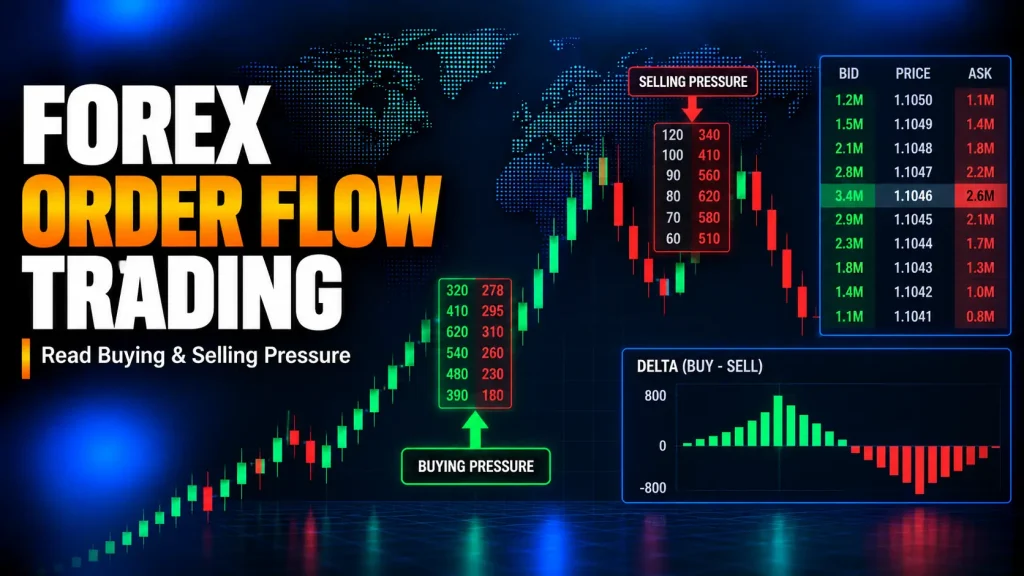
What Is Order Flow in Forex?
Order flow in forex means studying available buying and selling activity behind price movement. Traders may use order-flow concepts to review liquidity, market orders, limit orders, aggressive buying or selling, bid and ask activity, imbalances, absorption, and execution pressure.
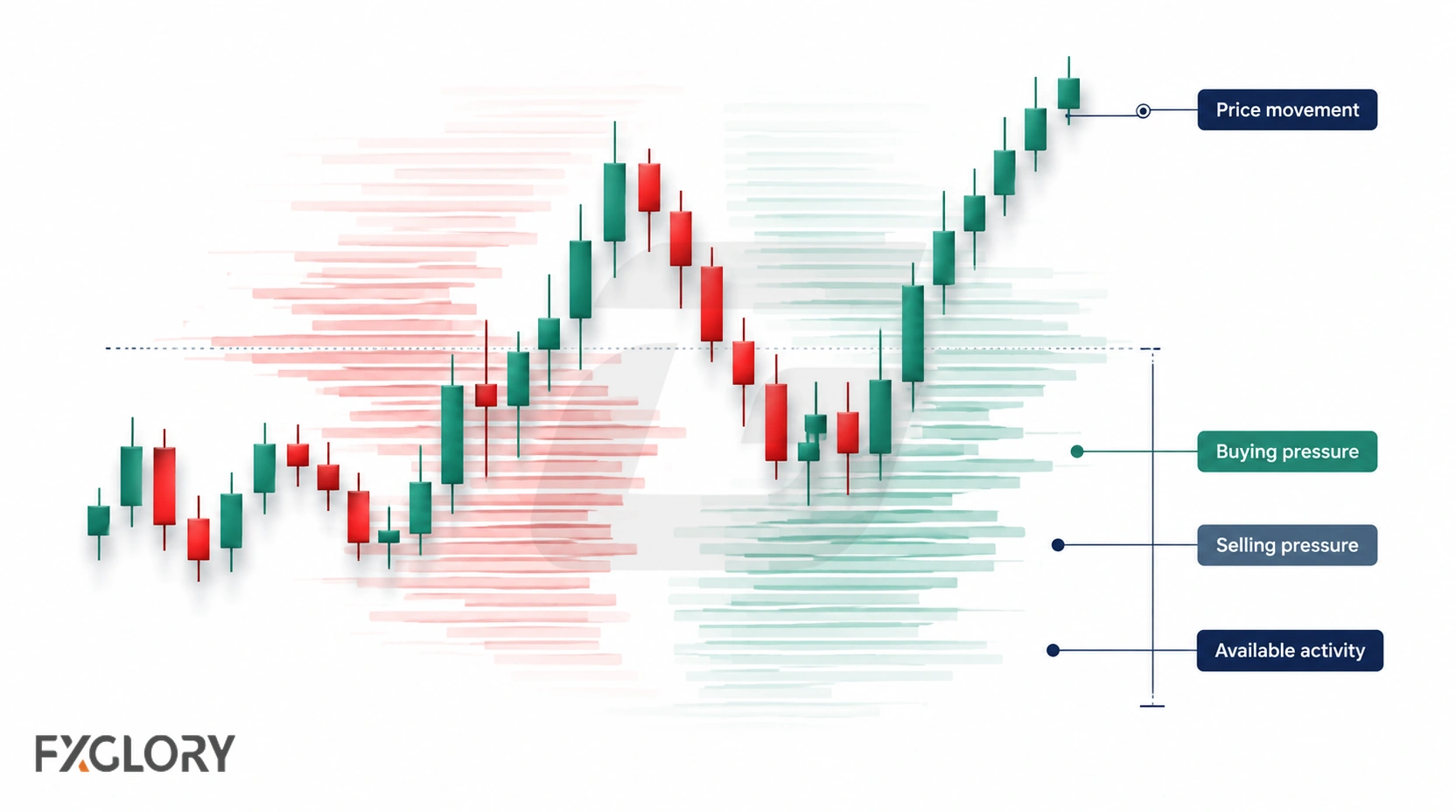
Order flow looks inside or around the move instead of only reading the finished candle. It tries to understand the activity that may be happening during the move, based on the data available to the trader.
This guide treats order flow as an advanced chart-reading concept inside forex technical analysis. For the broader chart-reading framework, start with technical analysis forex.
The Most Important Forex Order Flow Caveat
Spot forex is decentralized. There is no single central exchange that shows the complete global forex order book or all market-wide volume to retail traders.
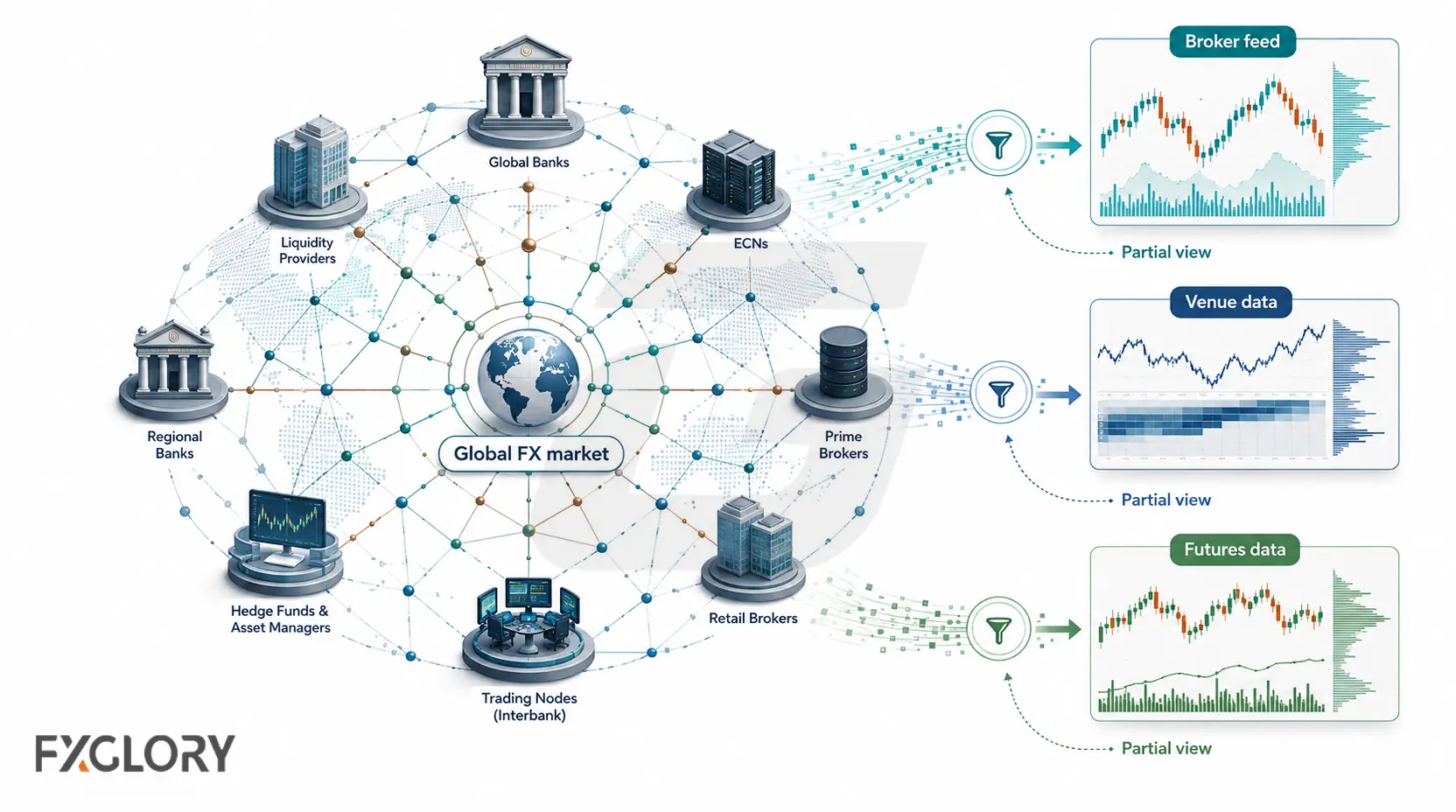
A platform may show broker-side liquidity, a specific venue’s depth, tick volume, futures-derived data, footprint-style data, or executed activity from a particular feed. Those views can be useful, but they are still partial.
This matters because an order-flow reading can look clear inside one data source while the broader decentralized market remains unseen. The reading should be treated as context, not proof.
Order Flow vs Technical Analysis
Traditional technical analysis usually studies price history, chart patterns, levels, indicators, and market structure. Order flow studies available current activity behind price movement, such as executed trades, resting liquidity, bid/ask activity, or volume at price.
Order flow is not classic technical analysis, but it can support technical analysis. A trader may first identify price context, then use available order-flow data to review whether buying or selling pressure appears to support or conflict with that context.
- Technical analysis: Reads price history, chart structure, patterns, levels, and indicators.
- Price action: Reads visible price movement directly. Learn more in what is price action in forex.
- Market structure: Reads the broader swing arrangement behind price movement. Learn more in forex market structure.
- Order flow: Reviews available activity inside or behind the move.
How Orders Move Price
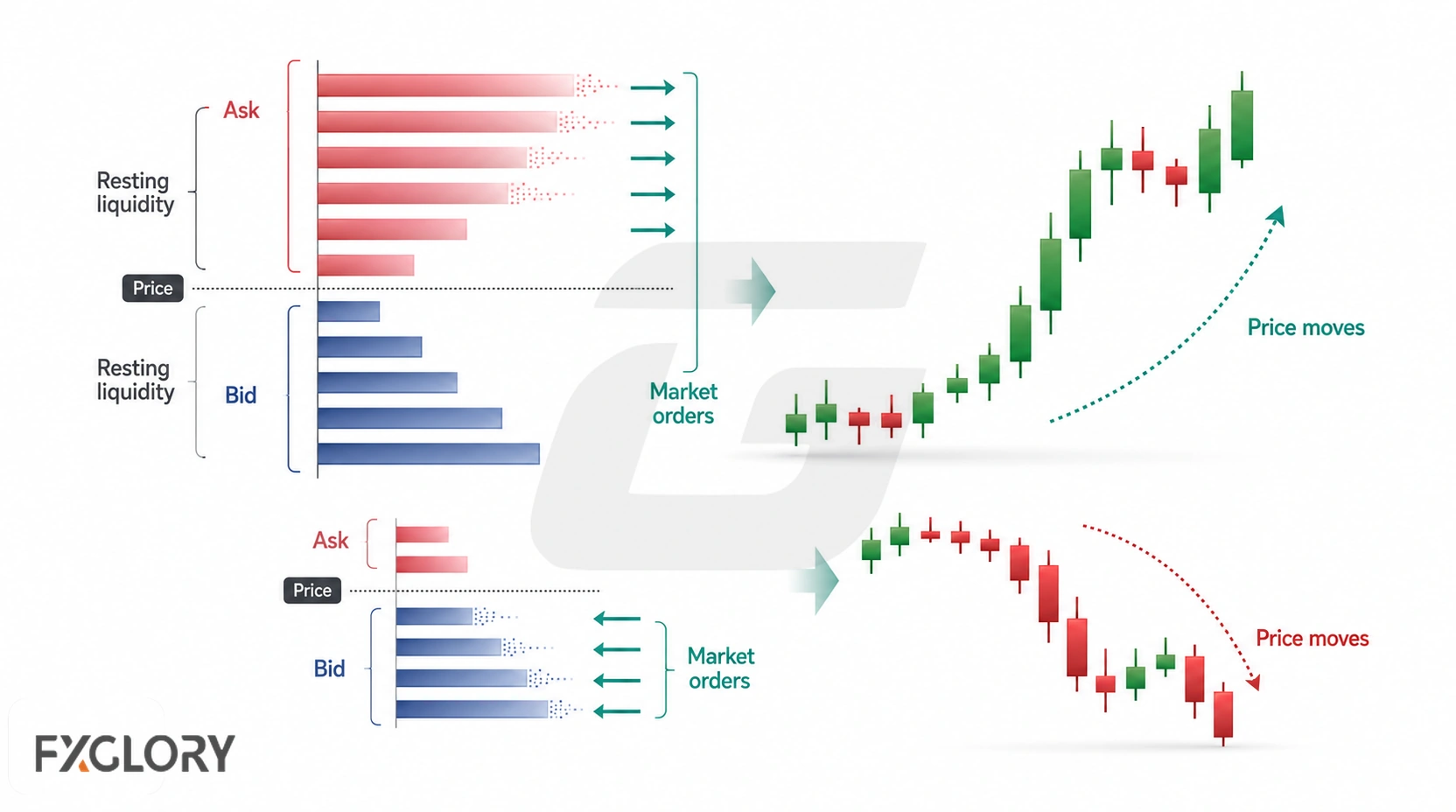
Price changes as buying and selling activity interacts with available liquidity. In an order-book view, traders often distinguish aggressive orders that seek immediate execution from resting orders that wait at a price.
| Concept | Basic Meaning | Forex Caveat |
|---|---|---|
| Market order | An order that seeks immediate execution at available prices | Visible only if the data feed shows that executed activity |
| Limit order | An order with a specified execution price or better; if it does not execute immediately, it may rest in the order book | Spot FX depth may be broker or venue-specific |
| Bid | The price at which selling can be matched with buyers | Displayed bid depth may not represent the full FX market |
| Ask | The price at which buying can be matched with sellers | Displayed ask depth may be partial |
| Spread | The difference between bid and ask | Can widen during fast or thin conditions |
| Liquidity | Available orders that can absorb buying or selling | Visible liquidity can change or disappear quickly |
An order-flow reading becomes more useful when the trader understands what the data source actually shows and what it does not show.
Common Order Flow Tools and Data
Order-flow tools can show different views of available activity. They are not all the same, and their usefulness depends on the market, broker, platform, and data source.
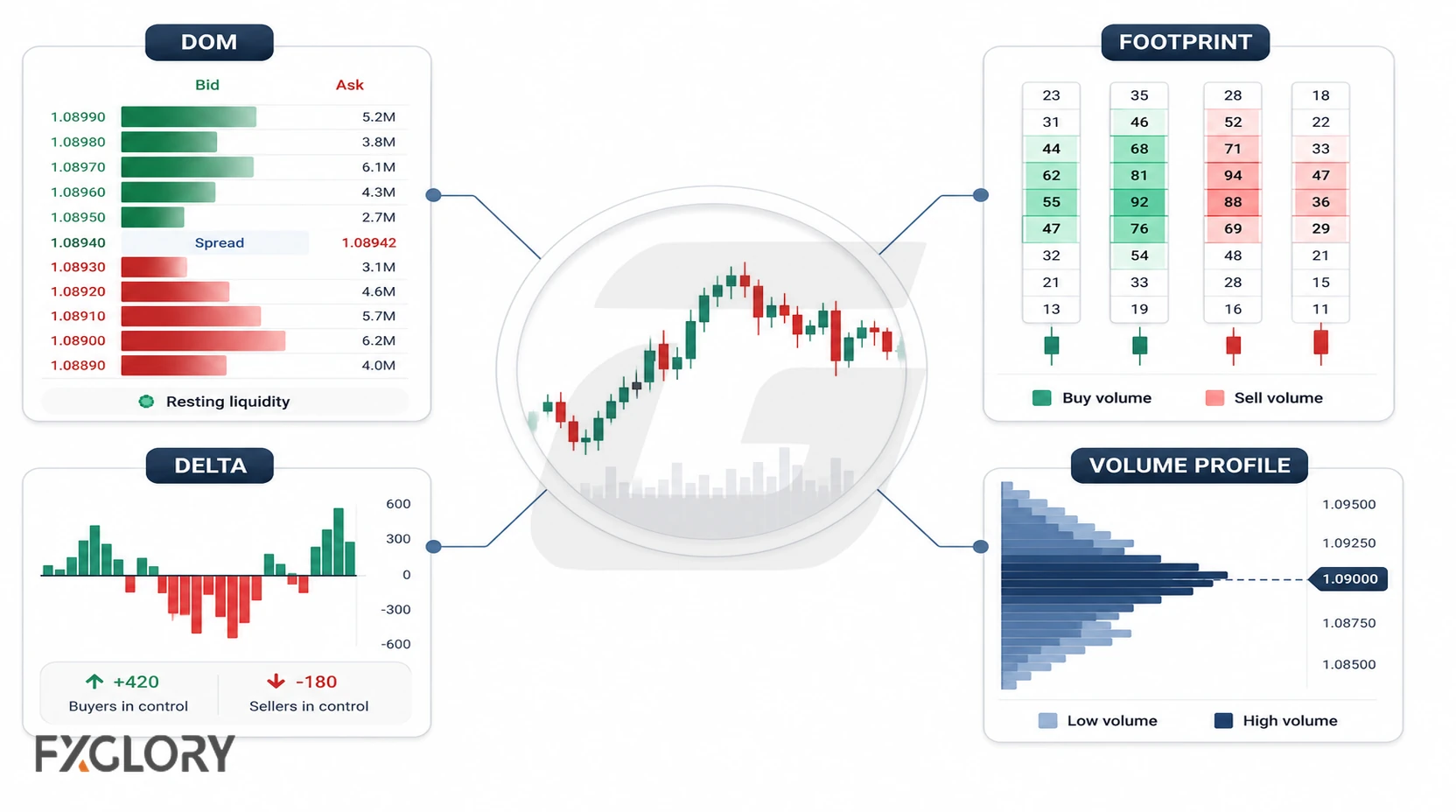
| Tool or Data Type | What It Shows | Main Risk |
|---|---|---|
| Order book or DOM | Resting buy and sell interest at different prices | In spot FX, it may show only broker or venue-specific depth |
| Time and sales | Executed transactions from the available feed | May not represent all market activity |
| Footprint chart | Bid/ask activity or volume at price inside candles | Requires suitable data and can be hard to read |
| Delta | Difference between aggressive buying and selling in the feed | Depends entirely on the source data |
| Cumulative delta | Running view of delta over time | Can diverge from price and confuse beginners |
| Volume profile | Activity or volume distribution by price | May be feed-specific in forex |
A tool is most useful when the trader understands what its data source includes and excludes.
Forex Order Flow Data Limitations
Different order-flow data sources have different limits, especially in spot forex.
- No central spot FX order book: Retail traders usually cannot see all global spot forex orders in one place.
- Broker or venue-specific data: A platform may show only the activity available through that broker, venue, or liquidity feed.
- Tick volume: Tick volume shows how often price updates, not the full traded volume of the global forex market.
- Futures-derived data: Currency futures can provide centralized exchange data, but futures data is not identical to spot forex.
- DOM limitations: Depth of market in forex may not show hidden liquidity or all available counterparties.
- Tool differences: Different platforms can display different order-flow pictures depending on their feeds and calculations.
What Order Flow Traders Look For
Order-flow traders usually look for available evidence of buying pressure, selling pressure, liquidity, imbalance, absorption, exhaustion, or failed movement. These ideas should be read with chart context.
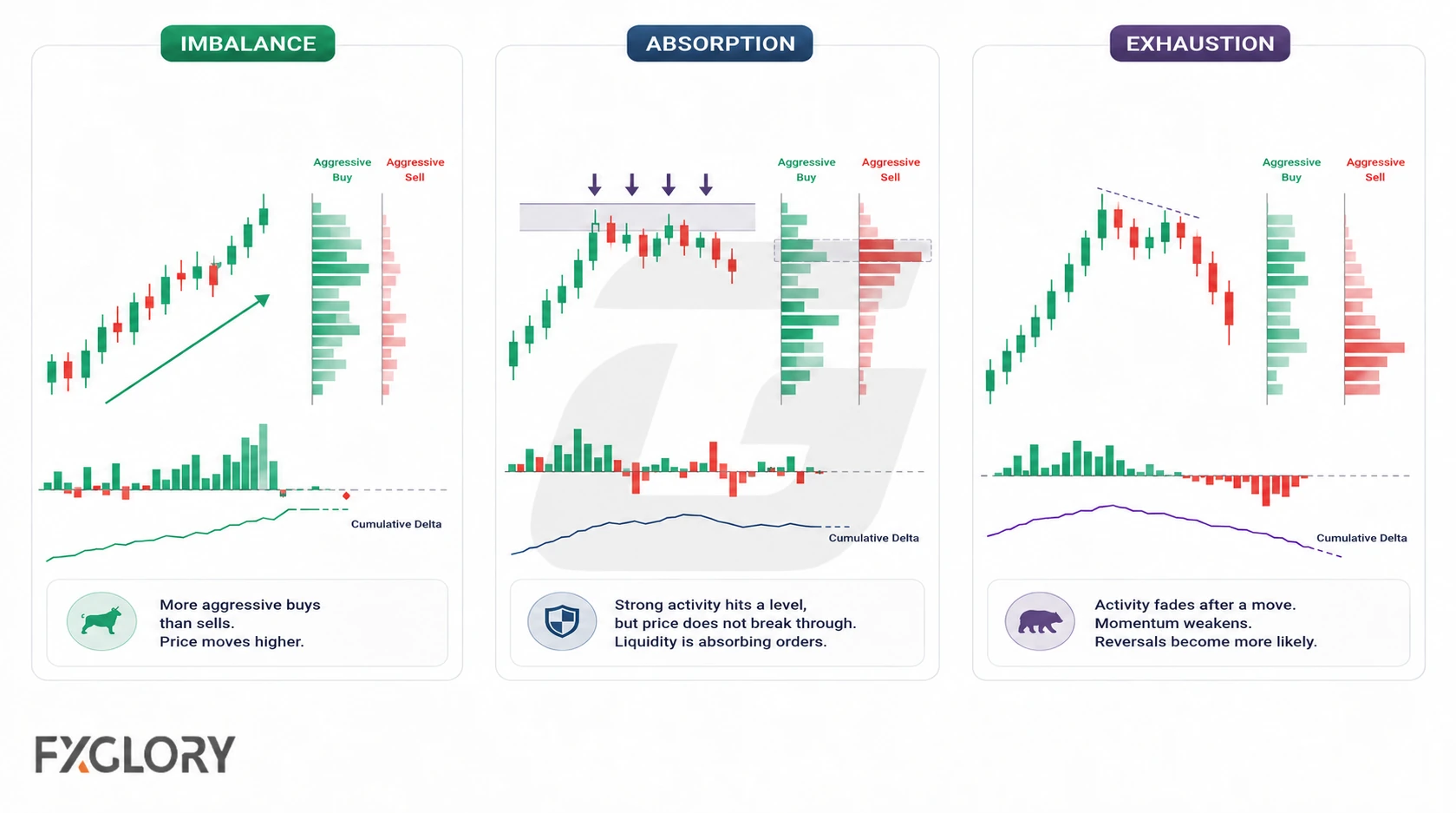
- Buying pressure: Available data suggests buyers are aggressively lifting offers or pushing price higher.
- Selling pressure: Available data suggests sellers are aggressively hitting bids or pushing price lower.
- Imbalance: One side appears stronger than the other in the available feed.
- Absorption: Strong buying or selling appears, but price does not move as expected.
- Exhaustion: Activity appears to slow after a move, but this does not guarantee reversal.
- Liquidity changes: Visible resting interest appears, disappears, or shifts around key prices.
These observations describe the available feed; they are not trade entries by themselves.
Order Flow vs Price Action, Market Structure, and Support or Resistance
Order flow is connected to price action, market structure, and support or resistance, but these concepts are not the same.
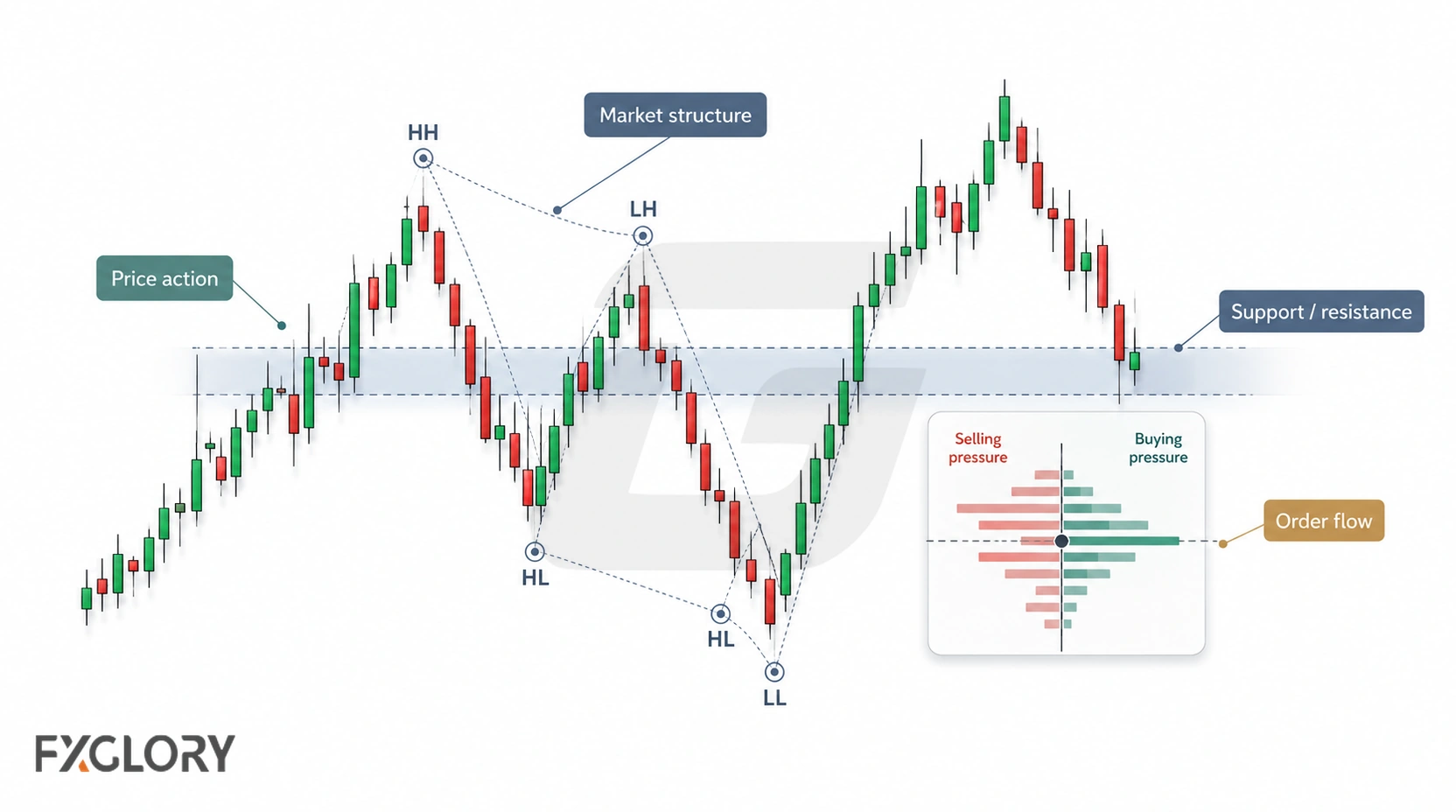
- Price action: Shows visible price movement on the chart.
- Market structure: Shows the broader arrangement of swing highs, swing lows, trends, ranges, and transitions.
- Support and resistance: Helps identify reaction zones where price has paused, rejected, broken, or returned before. Learn more in support and resistance in forex.
- Order flow: Reviews available buying and selling activity around or inside those price movements.
A trader may use order flow to study what appears to be happening near a reaction zone or inside a breakout attempt. That does not mean the trader can see all orders or know what price must do next.
When Order Flow Is Not Reliable Enough
Order flow is not always clear enough to use. Some conditions make the data noisy, incomplete, delayed, or easy to misread.
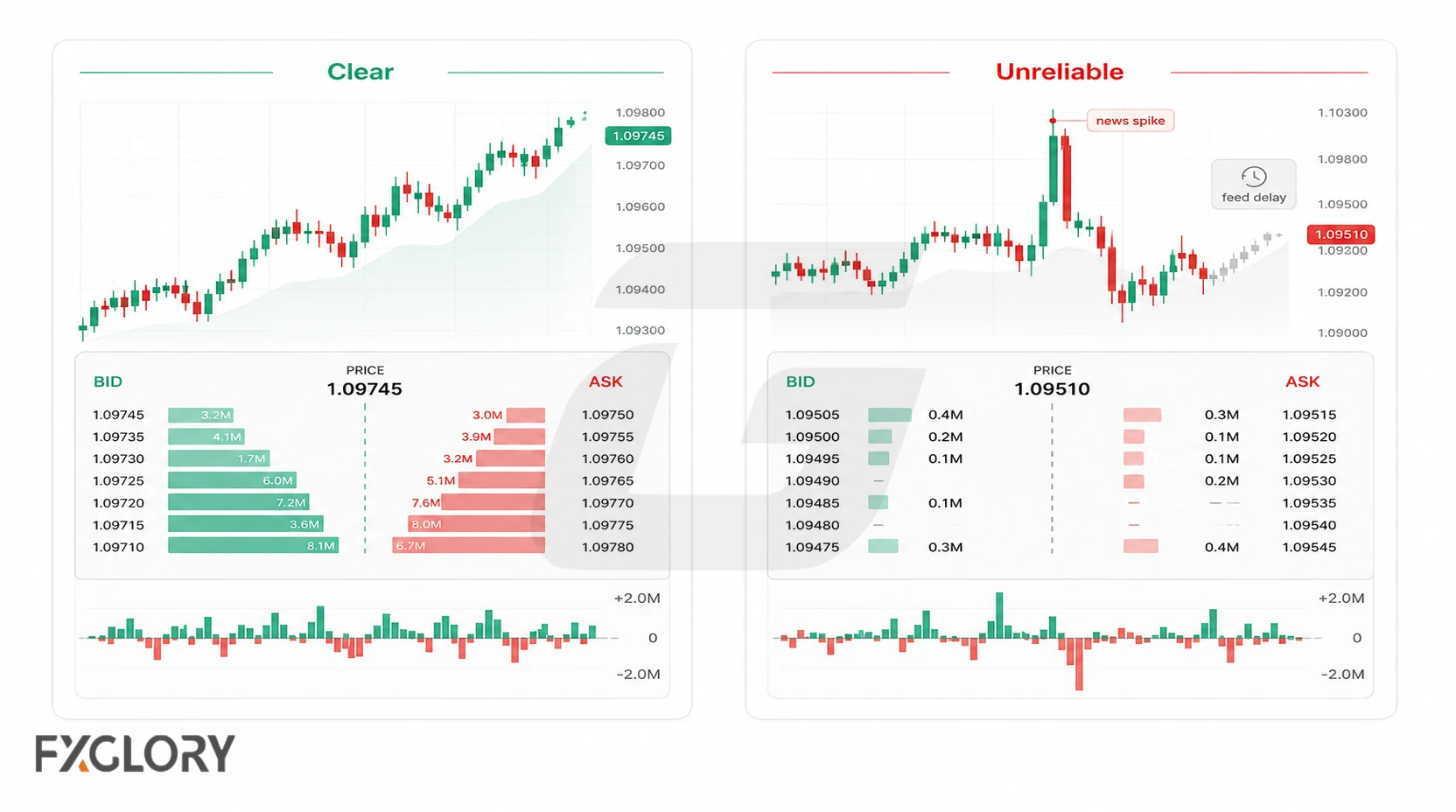
- Partial data: The feed does not represent the full decentralized forex market.
- Thin liquidity: Visible order activity may change quickly or become irregular.
- News volatility: Fast movement can overwhelm normal order-flow behavior.
- Platform or feed delay: Delayed or limited data can make short-term analysis unreliable.
- Spoofing or cancellations: Visible resting orders may disappear before execution.
- Overfitting every tick: Reading too much into small changes can create false confidence.
- No broader context: Order-flow activity without price action or market-structure context can be misleading.
Common Mistakes With Forex Order Flow
Order-flow mistakes often come from treating partial data as if it shows the entire market.
- Assuming full market visibility: Retail forex tools usually show only a partial view of order activity.
- Calling every imbalance a signal: An imbalance can fail or disappear quickly.
- Ignoring the spread: Spread changes can affect execution and risk.
- Ignoring liquidity conditions: Thin or fast markets can distort order-flow readings.
- Using futures data as spot forex proof: Futures data can be useful context, but it is not the same as the full spot FX market.
- Following tool colors blindly: Heatmaps, footprints, and delta tools require interpretation.
- No invalidation: The trader cannot explain where the order-flow idea is wrong.
Example: Reading Available Order Flow on EUR/USD
Suppose EUR/USD is near a previous reaction area and the available order-flow feed shows repeated aggressive buying while price fails to continue higher.
A trader may describe that as possible absorption in the available data. If the same feed later shows buying pressure fading or selling pressure increasing, the trader may review whether the original idea still fits the chart context.
The observation is only evidence from the available feed. It still needs to fit the chart context and a defined invalidation before it can support a trading decision.
A Safer Way to Use Order Flow in Forex
Order-flow analysis is most useful when the trader knows what the feed represents and can document the data source, chart context, invalidation point, and result. Different broker, venue, platform, futures-derived, and tick-volume feeds can show different pictures, so consistency matters when reviewing outcomes.