Is Forex Trading Gambling? Key Differences, Risks & Warning Signs

Learn when forex trading becomes gambling-like, how structured trading differs from betting, why leverage increases risk, and which warning signs mean a trader should stop and review their behavior.
 
Written byHenry Green
Published
Last updated
Is Forex Gambling?

Key Takeaways

  • Forex trading is not automatically gambling, but it can become gambling-like when someone trades without analysis, a written plan, risk limits, position sizing, stop logic, journaling, or discipline.
  • Structured forex trading still involves uncertainty. Analysis can support a decision, but it cannot make the outcome certain or guarantee income.
  • Gambling-like forex behavior includes chasing losses, revenge trading, increasing lot size emotionally, copying signals blindly, trading from boredom, and believing one trade must win.
  • Leverage can make gambling-like behavior more dangerous because small price movements can create larger account losses and margin pressure.
  • A trading plan, journal, risk rules, demo practice, and emotional controls can reduce impulsive decisions, but they cannot remove forex risk.
Risk note: Forex trading involves risk of loss. Structured trading habits can reduce impulsive decisions, but they cannot guarantee profit, remove uncertainty, prevent slippage, avoid margin pressure, or make leverage safe. This page is educational content, not personal financial advice.

Is Forex Trading Gambling?

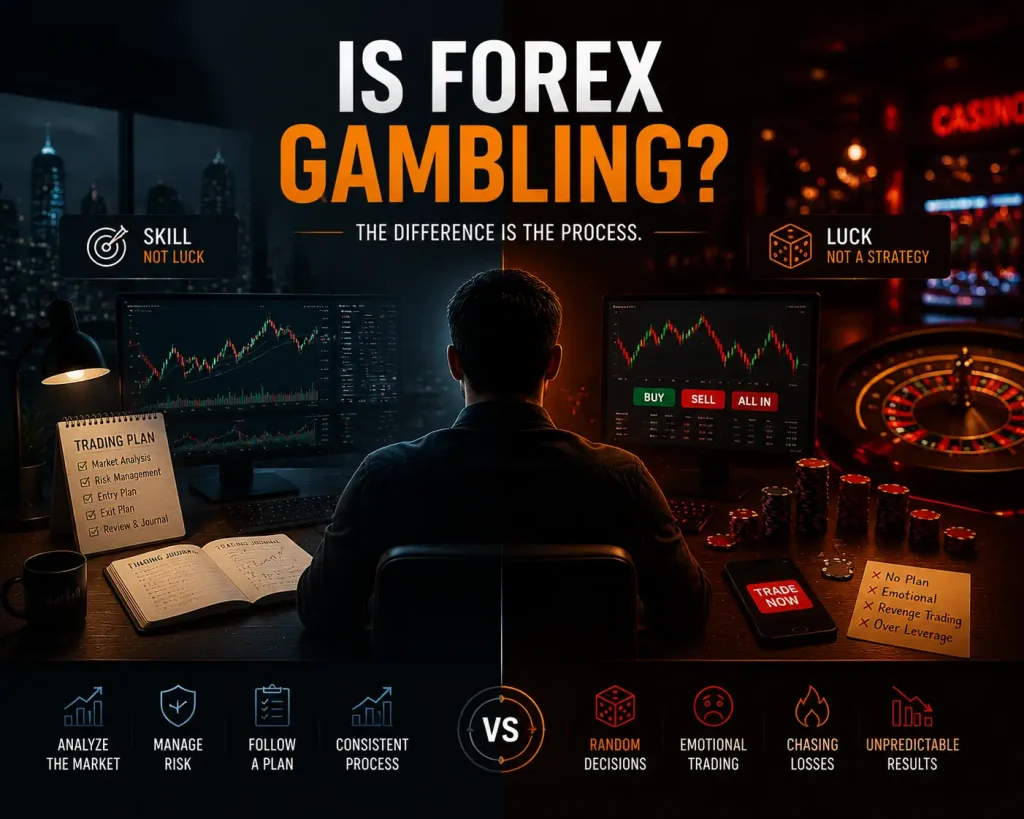
Forex trading is not automatically gambling, but it can become gambling-like when someone risks money without analysis, a written plan, position sizing, stop logic, risk limits, journaling, or discipline. The difference is not only the market. The difference is the behavior.

A structured trader starts with a reason, defines risk, accepts uncertainty, plans exits, records results, and reviews mistakes. A gambling-like trader guesses direction, increases size emotionally, chases losses, copies signals blindly, or believes the next trade must win.

Simple answer: Forex trading is currency speculation with risk. It becomes gambling-like when the trader treats it as a bet instead of a planned, risk-controlled decision process.

If you are new to the role, start with what a forex trader is responsible for before risking live funds.

Forex Trading vs Gambling

Forex trading and gambling both involve money, uncertainty, emotion, and possible loss. That is why the comparison appears often. The important difference is whether the person has a repeatable process or is simply wagering on an outcome.

QuestionGambling-Like BehaviorStructured Forex Trading Behavior
Why enter?Feeling, boredom, hype, or a tip.Defined setup, market context, and written reason.
How much to risk?Random lot size or emotional increase.Predefined position size and maximum loss.
What if the trade loses?Chase the loss or double down.Stop, record, review, and wait for a valid setup.
What does analysis mean?A reason to believe the trade must win.A way to form a probability-based decision, not certainty.
How are results reviewed?Mostly by wins, losses, and emotion.By process, risk, execution, and rule-following.

Analysis can support a decision, but it cannot make the outcome certain. That point matters. A trade can be researched and still lose.

When Forex Trading Becomes Gambling-Like

Forex trading becomes gambling-like when the trader’s behavior is driven by impulse, emotion, urgency, or the need to recover money quickly.

  • Guessing direction: Entering because price “looks like it should go up” or “must come down.”
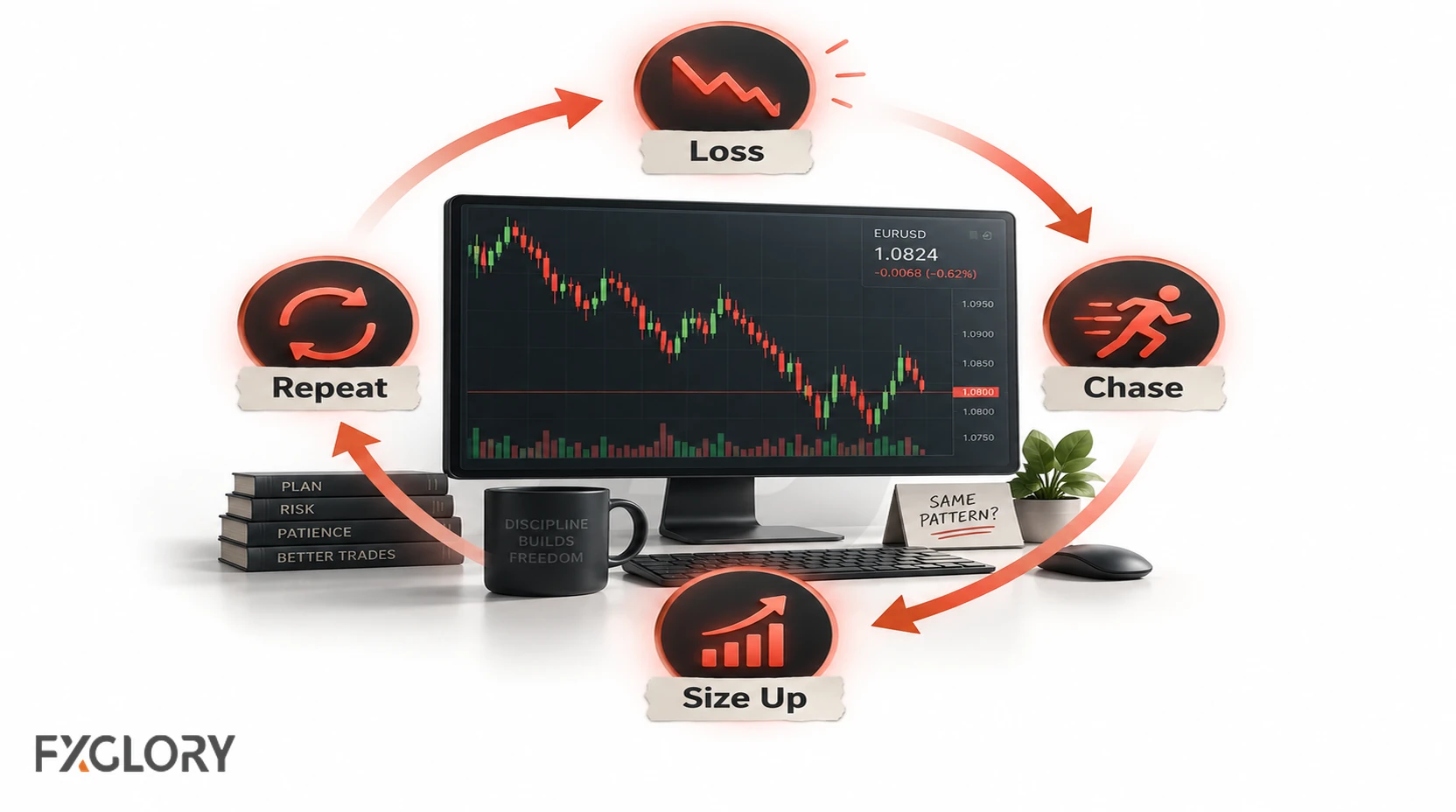
  • Chasing losses: Taking another trade mainly to recover a previous loss.
  • Increasing size emotionally: Using bigger lot sizes after a loss, win, or social-media signal.
  • Ignoring stop logic: Moving stops because accepting the loss feels uncomfortable.
  • Blind signal following: Copying entries without understanding risk, drawdown, or exit logic.
  • Trading from boredom: Entering because nothing else is happening.
  • Believing one trade will fix everything: Treating the next trade as a rescue event.
  • No review: Repeating the same mistake without journaling or changing rules.

These behaviors are closely connected with fear, greed, FOMO, revenge trading, overconfidence, hesitation, and tilt.

When Forex Trading Is More Structured

Forex trading is more structured when the trader treats each trade as a planned risk decision rather than an emotional wager.

  • Written plan: The trader knows which setups are allowed and which conditions mean no trade.
  • Defined risk: Position size and maximum loss are set before entry.
  • Clear invalidation: The trader knows what would prove the trade idea wrong.
  • Cost awareness: Spread, possible slippage, swap or rollover, and news risk are considered.
  • Journal review: Wins and losses are reviewed by process, not only by money outcome.
  • Emotional control: The trader stops after rule-breaking, exhaustion, anger, or repeated loss-chasing.

This does not make forex safe. It makes the behavior more disciplined. For a broader process, use the guide to trading more responsibly and consistently.

Forex Trading vs Sports Betting

Forex trading and sports betting both involve risking money on uncertain outcomes. That is why many beginners compare forex with football betting or match betting.

The difference is that a forex trader can study market conditions, choose not to trade, define risk before entry, set exit rules, record results, and review repeated mistakes. A sports bettor usually wagers on an external event they do not manage or exit in the same way.

Important difference: If a trader simply predicts “EUR/USD will rise” with no plan, no risk rule, and no review, the behavior can become very similar to betting.

The useful question is not only “Is forex the same as betting?” The better question is: “Am I making planned decisions or emotional bets?”

Forex Trading vs Roulette Or Casino Games

Forex trading is not the same as roulette. Roulette has fixed game rules and a casino structure. Forex prices move because of market participants, interest-rate expectations, economic data, liquidity, risk sentiment, political events, and other factors.

But forex can feel like a casino game if the trader treats every chart as a spin: random entry, oversized position, no plan, no stop logic, and immediate emotional reaction after every win or loss.

A trader should not confuse analysis with certainty. Market drivers can be studied, but no trader controls the next price move.

Speculation vs Investing vs Gambling

Forex trading is usually best understood as speculation, not traditional long-term investing and not automatically gambling.

ActivityMain IdeaMain Risk
InvestingLonger-term ownership or allocation, often based on assets, businesses, or portfolios.Business, market, interest-rate, inflation, and economic risk.
SpeculationTaking risk on price movement over a shorter or defined period.Uncertain price movement, timing, execution, and liquidity.
GamblingWagering on an uncertain outcome, often with entertainment, fixed odds, or emotional repetition.Chance, odds, impulse, and loss-chasing behavior.
Forex tradingCurrency speculation using pairs, leverage, margin, analysis, orders, and risk controls.Price movement, leverage, margin, execution, emotion, and counterparty or platform risk.

Calling forex “not gambling” does not make it safe. Calling it “gambling” does not explain every structured trading process. The practical focus should be behavior, risk, and suitability.

Why Leverage Makes Gambling-Like Behavior More Dangerous

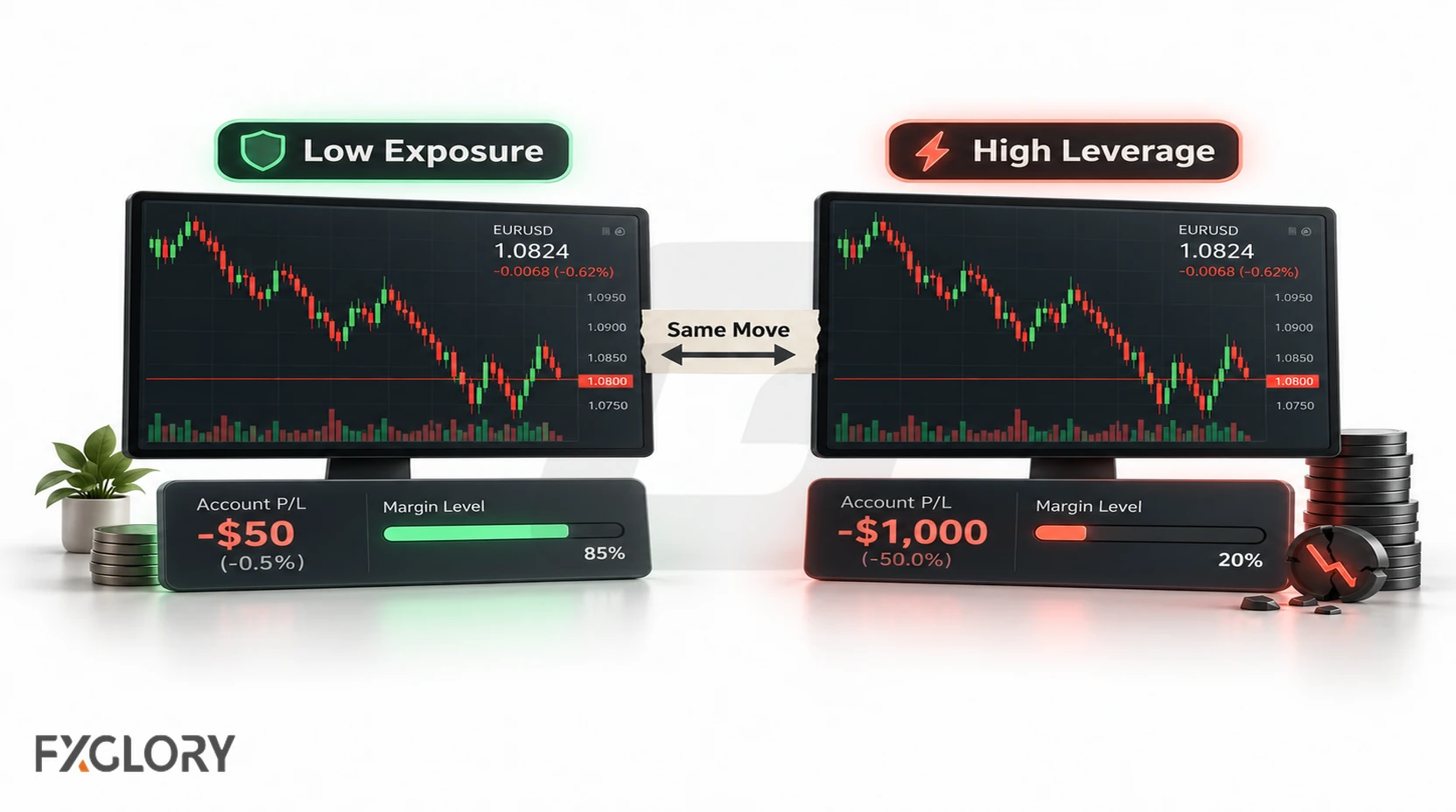
Leverage can make gambling-like behavior more dangerous because it allows larger market exposure than the account balance alone would normally support. This can magnify gains and losses.

When a trader is calm, leverage still needs strict risk control. When a trader is angry, desperate, overconfident, or chasing losses, leverage can accelerate account damage.

  • Small moves can matter more: A small price move can create a larger account impact when exposure is high.
  • Margin pressure can appear quickly: Poor position sizing can reduce free margin and force difficult decisions.
  • Emotional resizing is dangerous: Increasing lot size to recover losses can turn one bad trade into a larger problem.
  • Stops do not remove all risk: Fast markets, slippage, and gaps can affect intended exits.

Before using margin, review FXGlory leverage conditions and estimate exposure with the FXGlory margin calculator.

Are Forex Brokers Like Casinos?

A forex broker is not automatically a casino. However, retail forex traders should understand how trading conditions work, including execution, spreads, leverage, margin, account terms, deposits, withdrawals, and possible counterparty relationships depending on the broker model and jurisdiction.

The safer approach is to avoid assumptions. Read account conditions, understand spread and margin requirements, and be skeptical of anyone promising guaranteed profit, low-risk high returns, or a system that cannot lose.

Retail forex warning: Regulators have warned that retail off-exchange forex can be extremely risky and can also attract fraud. Treat guaranteed-profit claims, pressure tactics, and “easy money” messaging as warning signs.

For cost context, review FXGlory spread conditions before judging whether a short-term setup is realistic.

Signals, Copy Trading And Guaranteed-Profit Claims

Signals and copy trading can become gambling-like when a trader follows entries without understanding the risk, drawdown, position size, exit logic, or market conditions behind them.

  • A signal is not a guarantee: It can lose like any other trade idea.
  • Past performance is not certainty: A strong past result can reverse under new conditions.
  • Risk may not match your account: The signal provider’s lot size, leverage, or drawdown may be unsuitable.
  • Blind copying weakens review: If you do not know why the trade was taken, journaling and learning become harder.
  • Guaranteed-profit claims are a red flag: No forex system can honestly promise risk-free income.

A trader remains responsible for deciding whether a trade, signal, or strategy fits their own risk limits.

Warning Signs You Should Stop Trading

Some behavior patterns are warning signs that trading may be becoming harmful or gambling-like. This section is not a medical diagnosis, but it is a practical safety check.

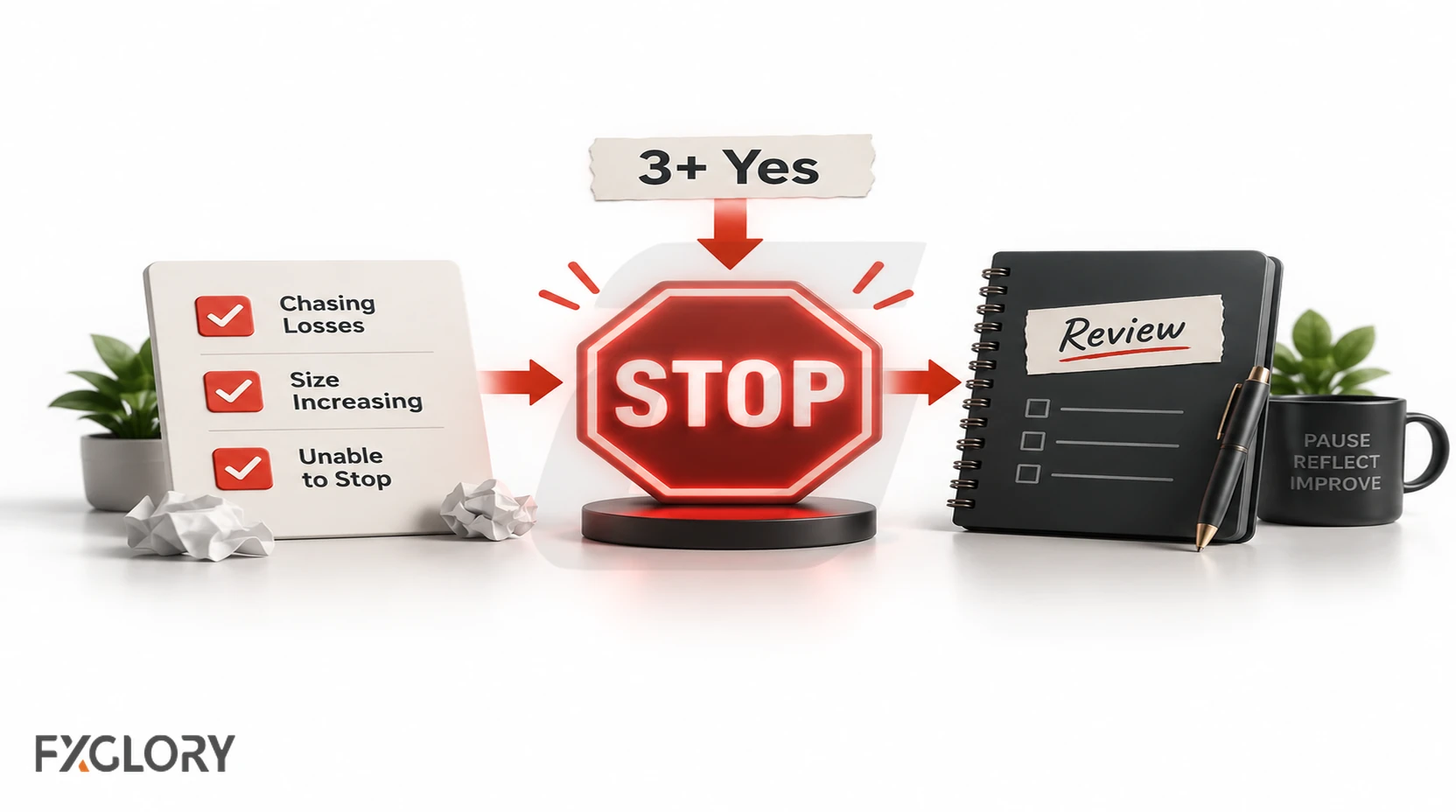
Stop-trading check: If you answer “yes” to 3 or more of these, stop trading and review before placing another trade.
  • Am I trying to recover a loss right now?
  • Am I increasing lot size because I feel angry, rushed, or desperate?
  • Am I hiding this loss or trade from someone?
  • Am I using money I need for bills, debt, rent, or family obligations?
  • Do I feel unable to stop even though I planned to stop?
  • Am I placing this trade without a written setup or invalidation point?
  • Do I believe this next trade has to fix everything?
Warning SignWhy It MattersSafer Response
Chasing lossesThe next trade is being used to recover emotionally, not because a valid setup appeared.Stop trading and review the journal.
Hiding lossesSecrecy can signal that trading is no longer being handled responsibly.Stop and seek qualified support if needed.
Borrowing money to tradeTrading with borrowed money can increase financial harm.Do not trade funds you cannot afford to lose.
Ignoring bills or responsibilitiesTrading is interfering with basic financial obligations.Stop live trading immediately.
Feeling unable to stopLoss of control is a serious warning sign.Remove trading access and seek qualified support.
Losing sleep over tradesStress may be exceeding healthy limits.Reduce exposure to zero and reassess suitability.
Believing one trade will fix everythingThis is rescue thinking, not risk management.Do not place the trade.

If trading causes serious financial distress, emotional distress, sleep problems, relationship problems, or a feeling that you cannot stop, stop trading and seek qualified support.

How To Make Forex Trading Less Gambling-Like

No checklist can make forex safe, but a structured process can reduce impulsive and gambling-like behavior.

  1. Use a written plan: Define allowed setups, invalidation, entry rules, exit rules, and no-trade conditions.
  2. Set risk before entry: Decide position size and maximum loss before placing the order.
  3. Use a journal: Record reason, risk, emotion, result, mistake tag, and lesson.
  4. Limit trading after losses: Use cooldowns after rule-breaking, anger, or repeated losses.
  5. Practice first: Demo practice can help build platform and journaling habits before live-fund pressure.
  6. Avoid guaranteed-profit sellers: Promises of risk-free forex income are not credible.
  7. Review weekly: Look for repeated mistakes instead of only checking profit and loss.
  8. Know when not to trade: Fatigue, anger, desperation, and distraction are valid no-trade conditions.

Use the forex trading journal guide or the forex trading journal template to record risk and behavior instead of relying on memory.

What A Trading Plan, Journal And Risk Rules Can And Cannot Do

A trading plan, journal, and risk rules are useful, but they have limits. They can reduce impulsive behavior. They cannot remove uncertainty.

ToolCan Help WithCannot Do
Trading planDefine setups, risk, exits, and no-trade conditions.Guarantee that a setup will work.
Trading journalReveal repeated mistakes, emotional triggers, and rule-breaking.Make a weak strategy profitable by itself.
Stop lossDefine an intended exit point.Remove slippage, gap, or repeated-loss risk.
Position sizingLimit exposure per trade when followed.Prevent losses from a poor strategy or poor discipline.
Demo accountPractice platform actions and process habits.Fully reproduce live-fund emotions or live conditions.

If you are still learning, review how to become a forex trader and practice with an FXGlory demo account before considering live risk.

Sources Used

The sources below were used to compare trading-versus-gambling explanations, behavioral warning signs, retail forex risk warnings, and user concerns around betting, brokers, and loss-chasing.

Frequently Asked Questions

Is forex gambling?

Forex trading is not automatically gambling, but it can become gambling-like when a trader risks money without analysis, a written plan, risk limits, position sizing, stop logic, journaling, or discipline. Even structured forex trading remains risky and can result in losses.

Is forex trading just gambling?

Forex trading is not just gambling when it is based on analysis, defined risk, planned entries and exits, and regular review. However, if someone simply guesses direction, increases lot size emotionally, chases losses, or follows hype, the behavior is very close to gambling.

Is forex trading the same as sports betting?

Both involve risking money on uncertain outcomes, but they are not the same activity. A forex trader can analyze market conditions, define risk, set exits, choose not to trade, and review performance. If a trader only predicts direction with no plan, the behavior can become similar to betting.

Is forex trading the same as roulette?

No. Roulette is a casino game with fixed rules and a house edge. Forex trading is currency speculation in a live market. Still, forex can feel like roulette if a trader enters randomly, ignores risk, and treats each trade as a lucky spin.

Why do people say forex trading is gambling?

People say forex trading is gambling because money is risked under uncertainty, outcomes are not guaranteed, leverage can magnify losses, and some traders chase wins or losses emotionally. The label often reflects how the person trades, not only the market itself.

When does forex trading become gambling?

Forex trading becomes gambling-like when entries are based on impulse, boredom, hype, or revenge; when lot size is random; when losses are chased; when there is no written plan; and when the trader ignores risk limits or believes the next trade must win.

Can forex trading be done without gambling-like behavior?

A trader can reduce gambling-like behavior by using a written plan, defined position size, stop logic, maximum loss limits, journal review, and emotional controls. These habits reduce impulsive decisions, but they do not remove market risk.

Is forex trading speculation or investing?

Forex trading is usually speculation because the trader is taking risk on currency price movement, often with leverage and shorter holding periods. It is not the same as long-term ownership-based investing, and it is not automatically the same as gambling.

Does technical analysis mean forex is not gambling?

No. Technical analysis can support a decision, but it does not make the result certain. Analysis only becomes useful when it is combined with risk limits, position sizing, stop logic, and review.

Can a stop loss make forex trading safe?

No. A stop loss can define an intended exit level, but it cannot guarantee safety. Slippage, gaps, fast news, poor position sizing, and repeated losses can still create account damage.

Is leverage what makes forex trading feel like gambling?

Leverage can make forex feel gambling-like because it can magnify the effect of small price movements. Leverage does not automatically make trading gambling, but emotional use of leverage can make losses larger and faster.

Are forex brokers like casinos?

A forex broker is not automatically a casino, but traders should understand execution, spreads, leverage, margin, account terms, and possible counterparty relationships. Retail forex can be risky and fraud-prone, so avoid any broker or seller promising guaranteed profit or low-risk high returns.

Is copy trading or signal trading gambling?

Copy trading or signal trading can become gambling-like when a trader follows entries blindly without understanding the risk, position size, drawdown, strategy, or exit logic. A signal does not remove responsibility for risk.

What are warning signs that I am gambling instead of trading?

Warning signs include chasing losses, hiding losses, borrowing money to trade, increasing lot size after losing, ignoring bills or responsibilities, feeling unable to stop, trading when angry, and believing one trade will fix everything.

What should I do if I keep chasing losses?

Stop trading, reduce exposure to zero, and review what happened before placing another trade. If you feel unable to stop or trading is causing financial, emotional, sleep, or relationship problems, seek qualified support.

Can a trading journal help reduce gambling-like behavior?

A trading journal can help because it records why a trade was taken, what risk was planned, whether rules were followed, and which emotional patterns repeated. It cannot guarantee better results, but it can make impulsive behavior easier to see.

Can forex trading guarantee income?

No. Forex trading cannot guarantee income. Any claim of guaranteed profit, low-risk high returns, or a sure-win system should be treated as a major warning sign.

Can forex trading become addictive or compulsive?

Forex trading can become harmful or compulsive for some people, especially when they chase losses, feel unable to stop, hide losses, borrow money, or continue despite financial, emotional, sleep, work, or relationship problems. This page is not a diagnosis. If trading feels out of control, stop trading and seek qualified support.

Is forex trading a business or gambling?

Forex trading can be treated like a structured risk activity when it uses a written plan, defined risk, records, review, and discipline. It becomes gambling-like when the trader relies on impulse, hype, loss-chasing, or emotional position sizing. Calling it a business does not make it safe or profitable.

Does having a strategy mean forex is not gambling?

Not by itself. A strategy can reduce random decision-making, but it does not remove uncertainty. If the trader ignores risk, keeps changing rules, increases size emotionally, or chases losses, the behavior can still be gambling-like.

Should beginners trade live forex?

Beginners should learn the basics, understand risk, practice with demo trading, build a plan, and know what they can afford to lose before considering live forex. Live trading is not suitable for everyone.

Related Contents

Forex TraderUnderstand what a forex trader is responsible for before entering the market.
How to Become a Forex TraderBuild the basics before risking live funds or judging whether trading fits you.
How to Be Successful in Forex TradingConnect responsible trading behavior with a broader process for preparation, risk, review, and discipline.
Forex Trading PsychologyRecognize fear, greed, FOMO, revenge trading, overconfidence, hesitation, and tilt.
Forex Trading JournalReview trades instead of chasing losses or relying on memory after wins and losses.
Forex Trading Journal TemplateUse a downloadable template to record risk, emotions, mistakes, lessons, and review notes.
Forex Trading Plan TemplateWrite rules before trading so decisions are not made only in the moment.
Forex Risk Management StrategySet risk limits before entering trades instead of adjusting size emotionally.
FXGlory Margin CalculatorEstimate margin before placing leveraged trades and recording exposure.
FXGlory Leverage ConditionsUnderstand leverage conditions before using margin in live trading.

Review Conditions Before You Risk Live Funds

Create an FXGlory account to review platform access, account features, spread conditions, leverage conditions, and margin requirements before deciding whether live trading fits your plan, journal, and risk limits.

Create an FXGlory Account