Forex Moving Average
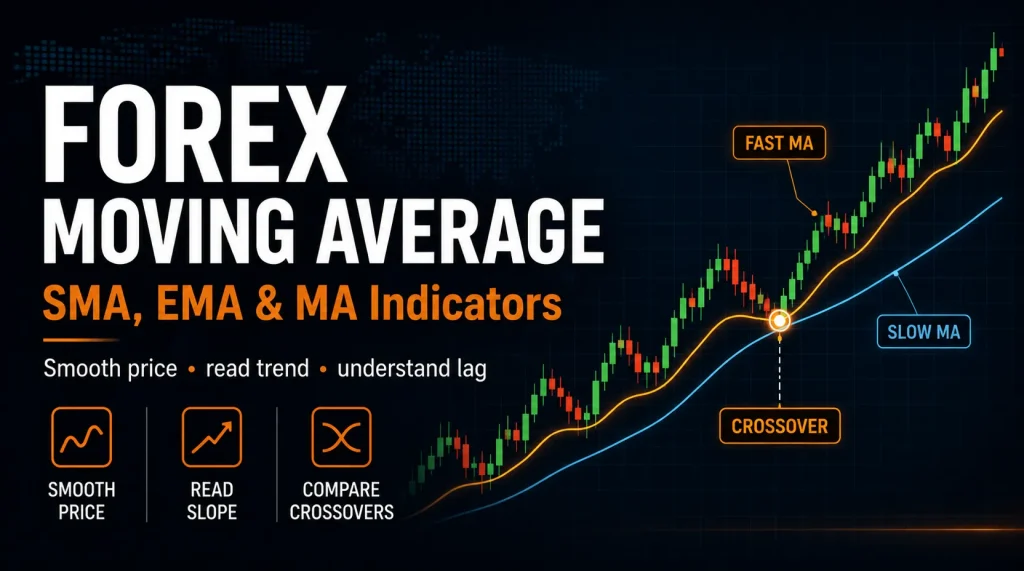
Understanding forex moving average is essential before placing your first trade in the foreign exchange market. This guide explains everything you need to know about moving average for forex in plain language, covering definitions, practical examples, and what it means for your trading decisions.
Topics Covered in This Section
This section of the FXGlory guide covers the following topics:
What Is a Moving Average in Forex?
A moving average in forex is a core concept in forex trading that every trader — beginner or experienced — needs to understand clearly. The definition and practical application of a moving average in forex directly affect how you size trades, manage risk, and interpret market conditions.
How a moving average works
Understanding a moving average works helps traders make more precise decisions. Applying this knowledge to your own a moving average in forex? process removes guesswork and gives you a repeatable approach you can rely on across different market conditions.
Why forex traders use moving averages
Forex traders use moving averages is a factor that every forex trader should understand before sizing positions. When you understand forex traders use moving averages, you can align your trading approach with how the market actually behaves and avoid common mistakes that stem from ignoring this principle.
Moving averages as chart overlays
Moving averages as chart overlays plays an important role in a moving average in forex? for forex traders. Understanding this aspect of forex moving average helps you interpret market conditions more accurately and make better-informed trading decisions every time you open or manage a position.
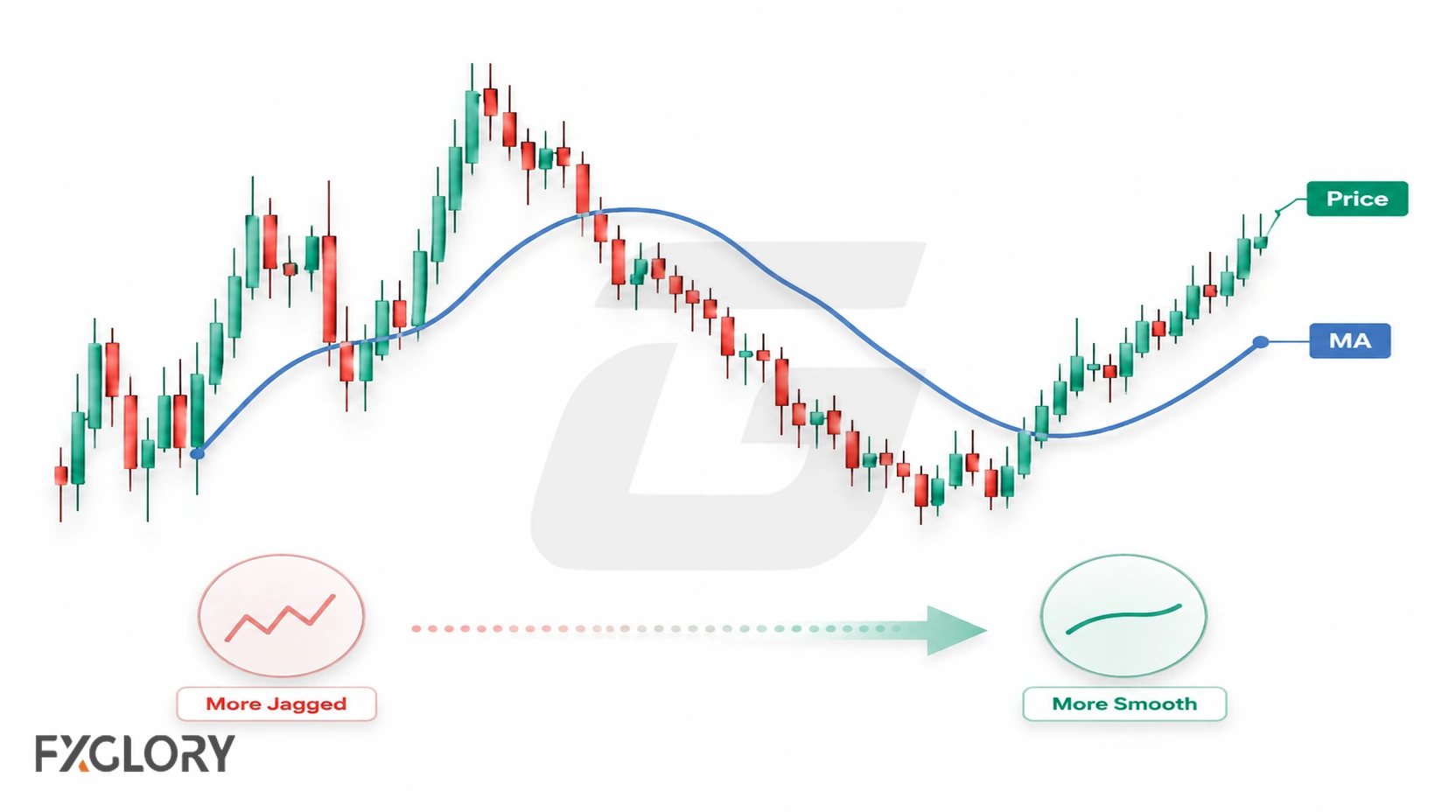
How moving averages smooth market noise
Understanding moving averages smooth market noise helps traders make more precise decisions. Applying this knowledge to your own a moving average in forex? process removes guesswork and gives you a repeatable approach you can rely on across different market conditions.
Why moving averages are lagging indicators
Moving averages are lagging indicators is a factor that every forex trader should understand before sizing positions. When you understand moving averages are lagging indicators, you can align your trading approach with how the market actually behaves and avoid common mistakes that stem from ignoring this principle.
How Moving Averages Are Calculated
This section explores how moving averages are calculated in the context of forex moving average. Understanding these details helps you apply the concept correctly in real trading situations and avoid the most common misunderstandings.
Average price over a selected number of periods
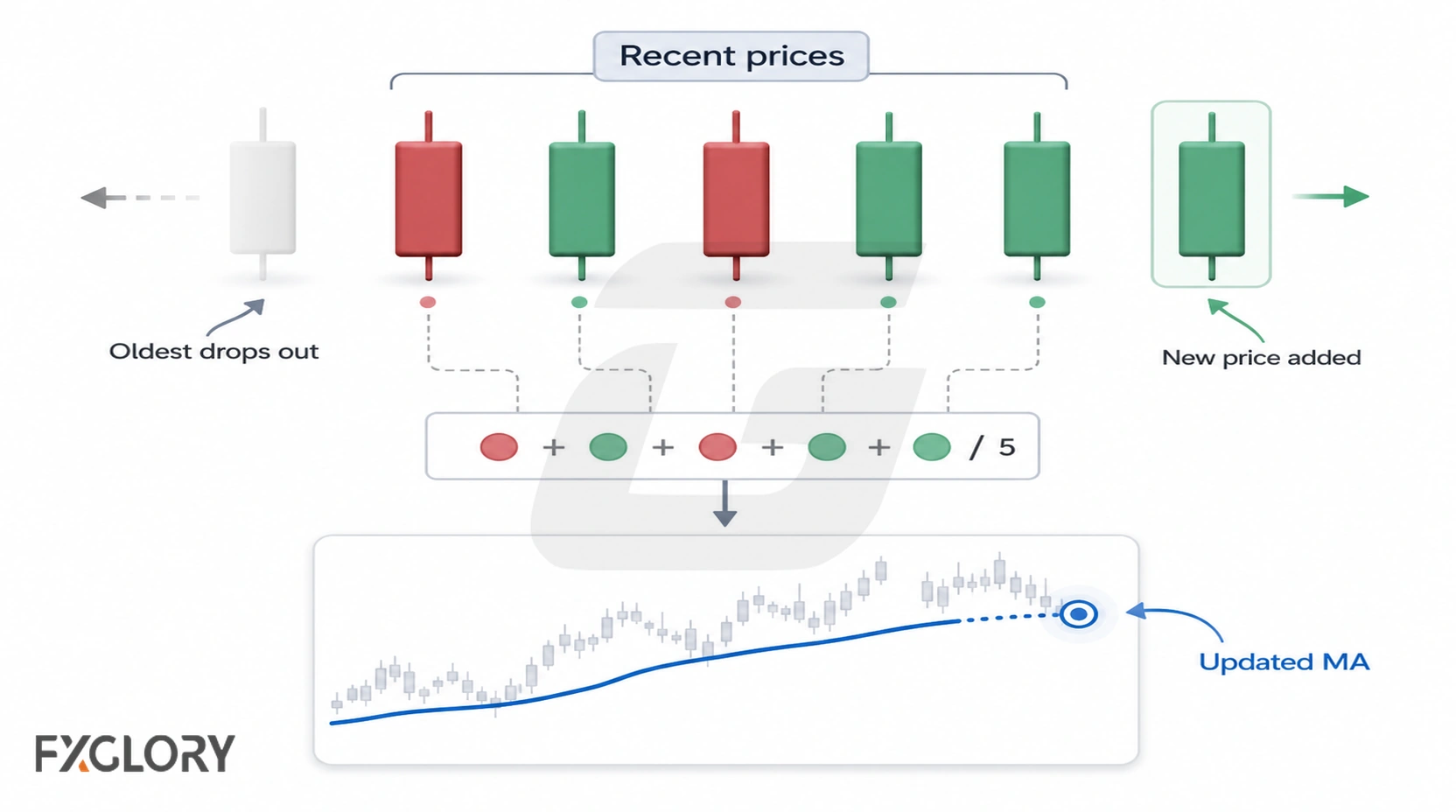
Average price over a selected number of periods plays an important role in how moving averages are calculated for forex traders. Understanding this aspect of forex moving average helps you interpret market conditions more accurately and make better-informed trading decisions every time you open or manage a position.
How each new candle updates the moving average
Understanding each new candle updates the moving average helps traders make more precise decisions. Applying this knowledge to your own how moving averages are calculated process removes guesswork and gives you a repeatable approach you can rely on across different market conditions.
Why the calculation changes as older prices drop out
The calculation changes as older prices drop out is a factor that every forex trader should understand before sizing positions. When you understand the calculation changes as older prices drop out, you can align your trading approach with how the market actually behaves and avoid common mistakes that stem from ignoring this principle.
Why the calculation depends on the moving average type
The calculation depends on the moving average type is a factor that every forex trader should understand before sizing positions. When you understand the calculation depends on the moving average type, you can align your trading approach with how the market actually behaves and avoid common mistakes that stem from ignoring this principle.
Price Sources Used for Moving Averages
This section explores price sources used for moving averages in the context of forex moving average. Understanding these details helps you apply the concept correctly in real trading situations and avoid the most common misunderstandings.
Close price
Close price plays an important role in price sources used for moving averages for forex traders. Understanding this aspect of forex moving average helps you interpret market conditions more accurately and make better-informed trading decisions every time you open or manage a position.
Open price
Open price plays an important role in price sources used for moving averages for forex traders. Understanding this aspect of forex moving average helps you interpret market conditions more accurately and make better-informed trading decisions every time you open or manage a position.
High and low prices
High and low prices plays an important role in price sources used for moving averages for forex traders. Understanding this aspect of forex moving average helps you interpret market conditions more accurately and make better-informed trading decisions every time you open or manage a position.
Typical price or median price
Typical price or median price plays an important role in price sources used for moving averages for forex traders. Understanding this aspect of forex moving average helps you interpret market conditions more accurately and make better-informed trading decisions every time you open or manage a position.
Why most traders start with close price
Most traders start with close price is a factor that every forex trader should understand before sizing positions. When you understand most traders start with close price, you can align your trading approach with how the market actually behaves and avoid common mistakes that stem from ignoring this principle.
How Moving Averages Help Read Forex Trends
This section explores how moving averages help read forex trends in the context of forex moving average. Understanding these details helps you apply the concept correctly in real trading situations and avoid the most common misunderstandings.
Identifying trend direction from the slope
Identifying trend direction from the slope plays an important role in how moving averages help read forex trends for forex traders. Understanding this aspect of forex moving average helps you interpret market conditions more accurately and make better-informed trading decisions every time you open or manage a position.
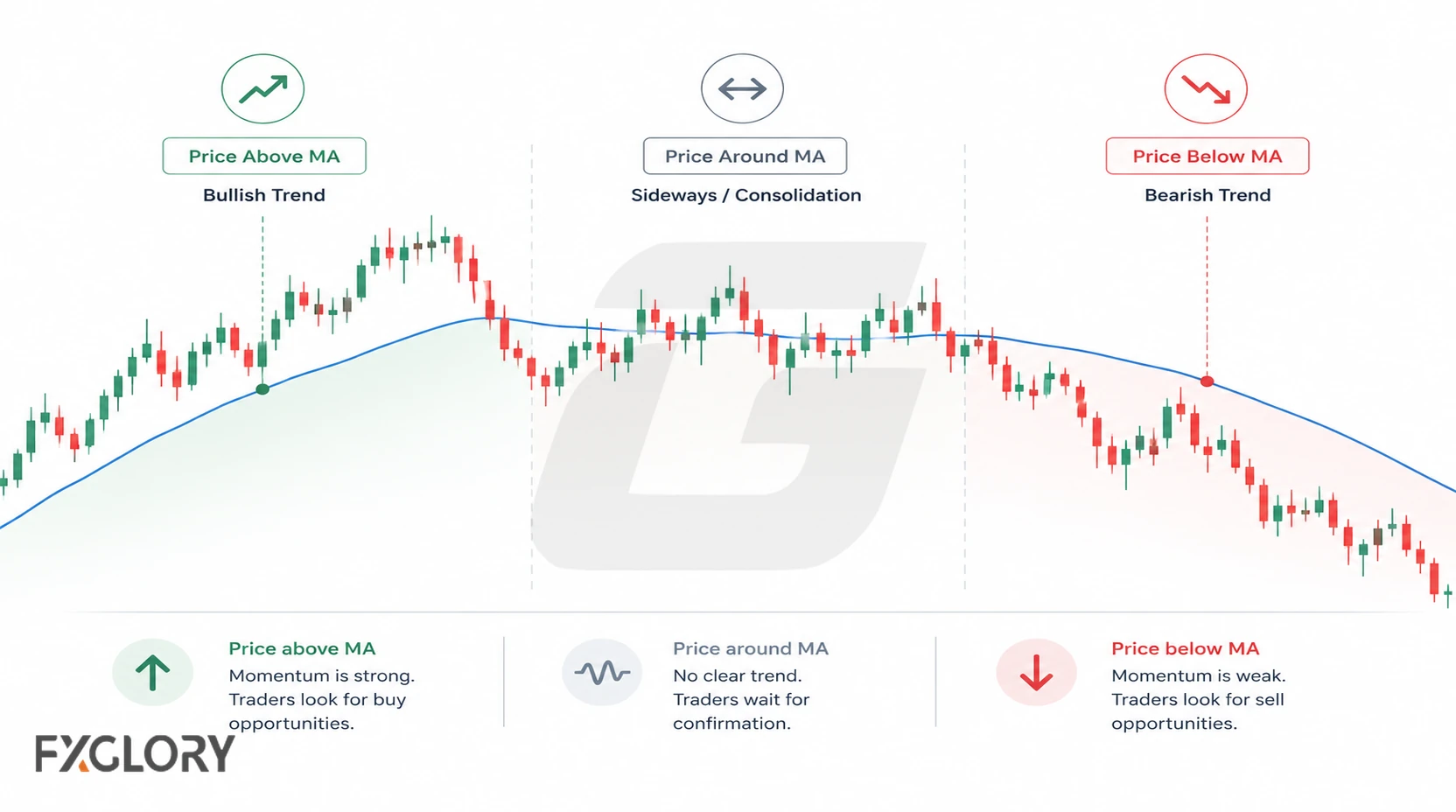
Price above or below the moving average
Price above or below the moving average plays an important role in how moving averages help read forex trends for forex traders. Understanding this aspect of forex moving average helps you interpret market conditions more accurately and make better-informed trading decisions every time you open or manage a position.
Spotting pullbacks and trend continuation
Spotting pullbacks and trend continuation plays an important role in how moving averages help read forex trends for forex traders. Understanding this aspect of forex moving average helps you interpret market conditions more accurately and make better-informed trading decisions every time you open or manage a position.
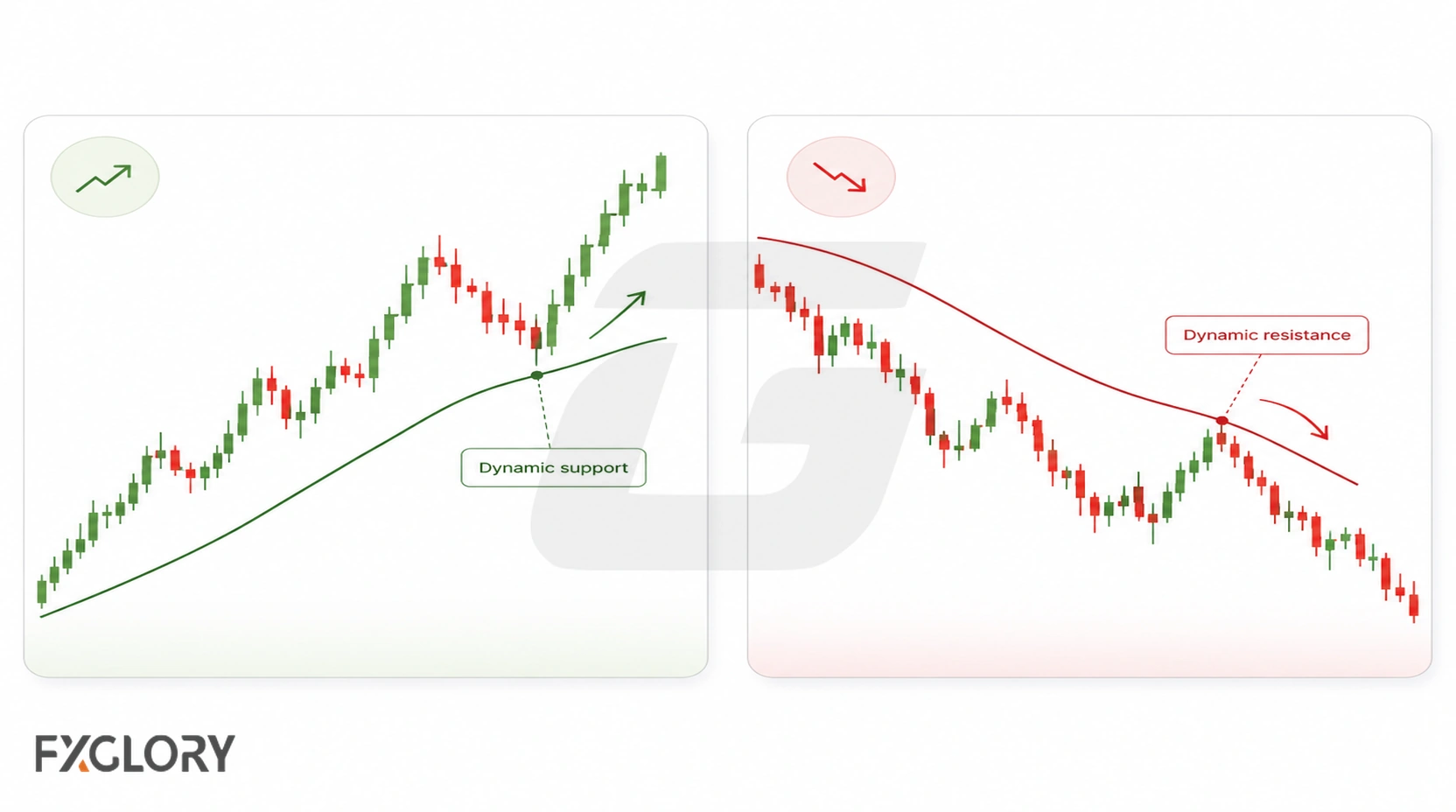
Using moving averages as dynamic support and resistance
Using moving averages as dynamic support and resistance plays an important role in how moving averages help read forex trends for forex traders. Understanding this aspect of forex moving average helps you interpret market conditions more accurately and make better-informed trading decisions every time you open or manage a position.
Mean reversion around a moving average
Mean reversion around a moving average plays an important role in how moving averages help read forex trends for forex traders. Understanding this aspect of forex moving average helps you interpret market conditions more accurately and make better-informed trading decisions every time you open or manage a position.
Types of Moving Averages in Forex Trading
This section explores types of moving averages in forex trading in the context of forex moving average. Understanding these details helps you apply the concept correctly in real trading situations and avoid the most common misunderstandings.
Simple moving average or SMA
Simple moving average or sma plays an important role in types of moving averages in forex trading for forex traders. Understanding this aspect of forex moving average helps you interpret market conditions more accurately and make better-informed trading decisions every time you open or manage a position.
Exponential moving average or EMA
Exponential moving average or ema plays an important role in types of moving averages in forex trading for forex traders. Understanding this aspect of forex moving average helps you interpret market conditions more accurately and make better-informed trading decisions every time you open or manage a position.
Weighted moving average or WMA
Weighted moving average or wma plays an important role in types of moving averages in forex trading for forex traders. Understanding this aspect of forex moving average helps you interpret market conditions more accurately and make better-informed trading decisions every time you open or manage a position.
Volume-weighted moving average or VWMA
Volume-weighted moving average or vwma plays an important role in types of moving averages in forex trading for forex traders. Understanding this aspect of forex moving average helps you interpret market conditions more accurately and make better-informed trading decisions every time you open or manage a position.
Smoothed moving average
Smoothed moving average plays an important role in types of moving averages in forex trading for forex traders. Understanding this aspect of forex moving average helps you interpret market conditions more accurately and make better-informed trading decisions every time you open or manage a position.
Hull and adaptive moving averages as advanced variants
Hull and adaptive moving averages as advanced variants plays an important role in types of moving averages in forex trading for forex traders. Understanding this aspect of forex moving average helps you interpret market conditions more accurately and make better-informed trading decisions every time you open or manage a position.
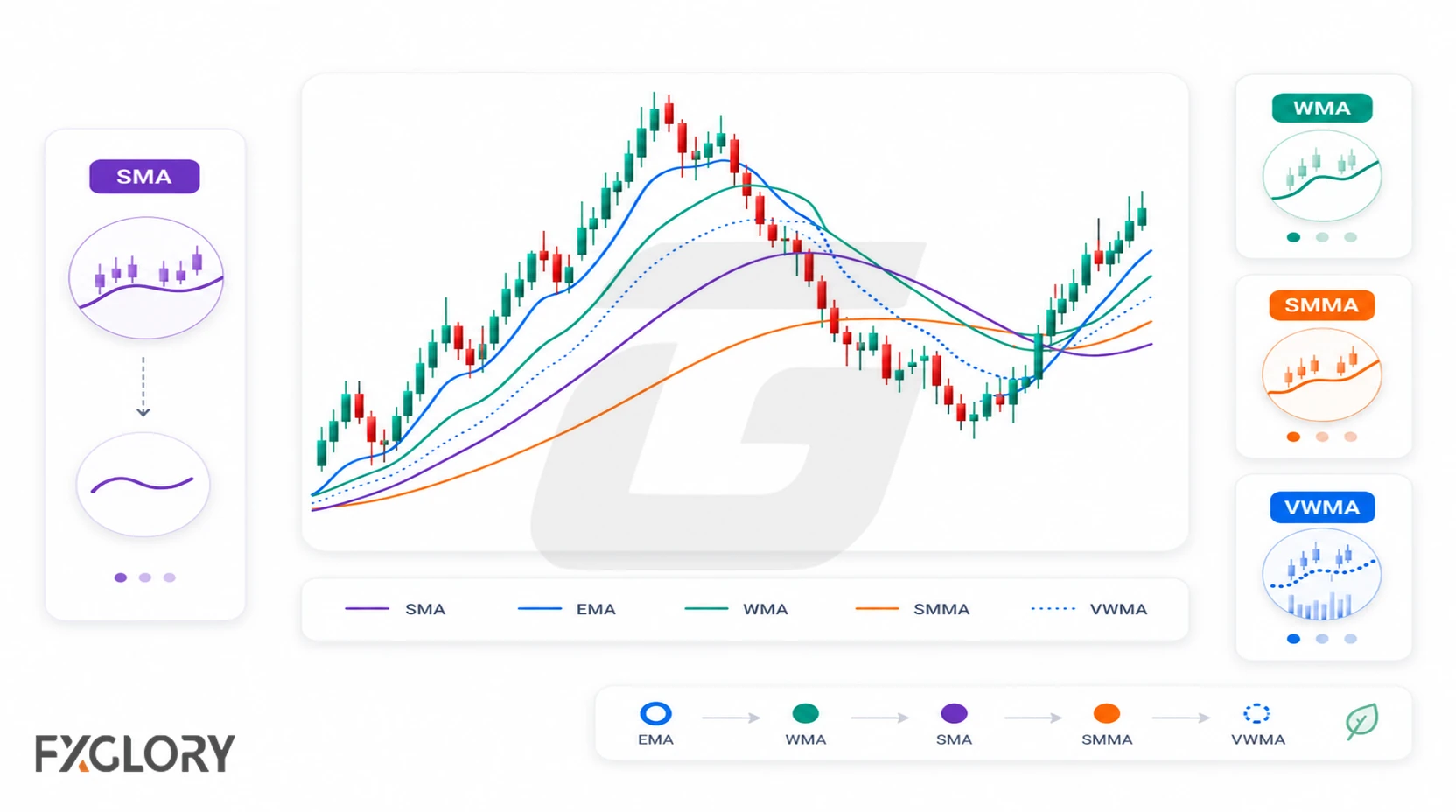
SMA vs EMA vs WMA vs VWMA
Comparing these two concepts is important because traders often confuse them or use the terms interchangeably. Understanding the actual difference helps you choose the right approach and interpret market information correctly.
How SMA treats each price equally
Understanding sma treats each price equally helps traders make more precise decisions. Applying this knowledge to your own sma vs ema vs wma vs vwma process removes guesswork and gives you a repeatable approach you can rely on across different market conditions.
How EMA gives more weight to recent prices
Understanding ema gives more weight to recent prices helps traders make more precise decisions. Applying this knowledge to your own sma vs ema vs wma vs vwma process removes guesswork and gives you a repeatable approach you can rely on across different market conditions.
How WMA weights recent prices more heavily
Understanding wma weights recent prices more heavily helps traders make more precise decisions. Applying this knowledge to your own sma vs ema vs wma vs vwma process removes guesswork and gives you a repeatable approach you can rely on across different market conditions.
How VWMA includes volume context where available
Understanding vwma includes volume context where available helps traders make more precise decisions. Applying this knowledge to your own sma vs ema vs wma vs vwma process removes guesswork and gives you a repeatable approach you can rely on across different market conditions.
Why forex volume data can vary by broker or platform
Forex volume data can vary by broker or platform is a factor that every forex trader should understand before sizing positions. When you understand forex volume data can vary by broker or platform, you can align your trading approach with how the market actually behaves and avoid common mistakes that stem from ignoring this principle.
Why no moving average type is best in every market
No moving average type is best in every market is a factor that every forex trader should understand before sizing positions. When you understand no moving average type is best in every market, you can align your trading approach with how the market actually behaves and avoid common mistakes that stem from ignoring this principle.
Moving Average Length and Settings in Forex
This section explores moving average length and settings in forex in the context of forex moving average. Understanding these details helps you apply the concept correctly in real trading situations and avoid the most common misunderstandings.
What the period length means
What the period length means is a term you will encounter regularly in the context of moving average length and settings in forex. Knowing exactly what what the period length means means — and how it differs from similar terms — helps you read market information accurately and apply it without confusion.
Short-term moving average settings
Short-term moving average settings plays an important role in moving average length and settings in forex for forex traders. Understanding this aspect of forex moving average helps you interpret market conditions more accurately and make better-informed trading decisions every time you open or manage a position.
Medium-term moving average settings
Medium-term moving average settings plays an important role in moving average length and settings in forex for forex traders. Understanding this aspect of forex moving average helps you interpret market conditions more accurately and make better-informed trading decisions every time you open or manage a position.
Long-term moving average settings
Long-term moving average settings plays an important role in moving average length and settings in forex for forex traders. Understanding this aspect of forex moving average helps you interpret market conditions more accurately and make better-informed trading decisions every time you open or manage a position.
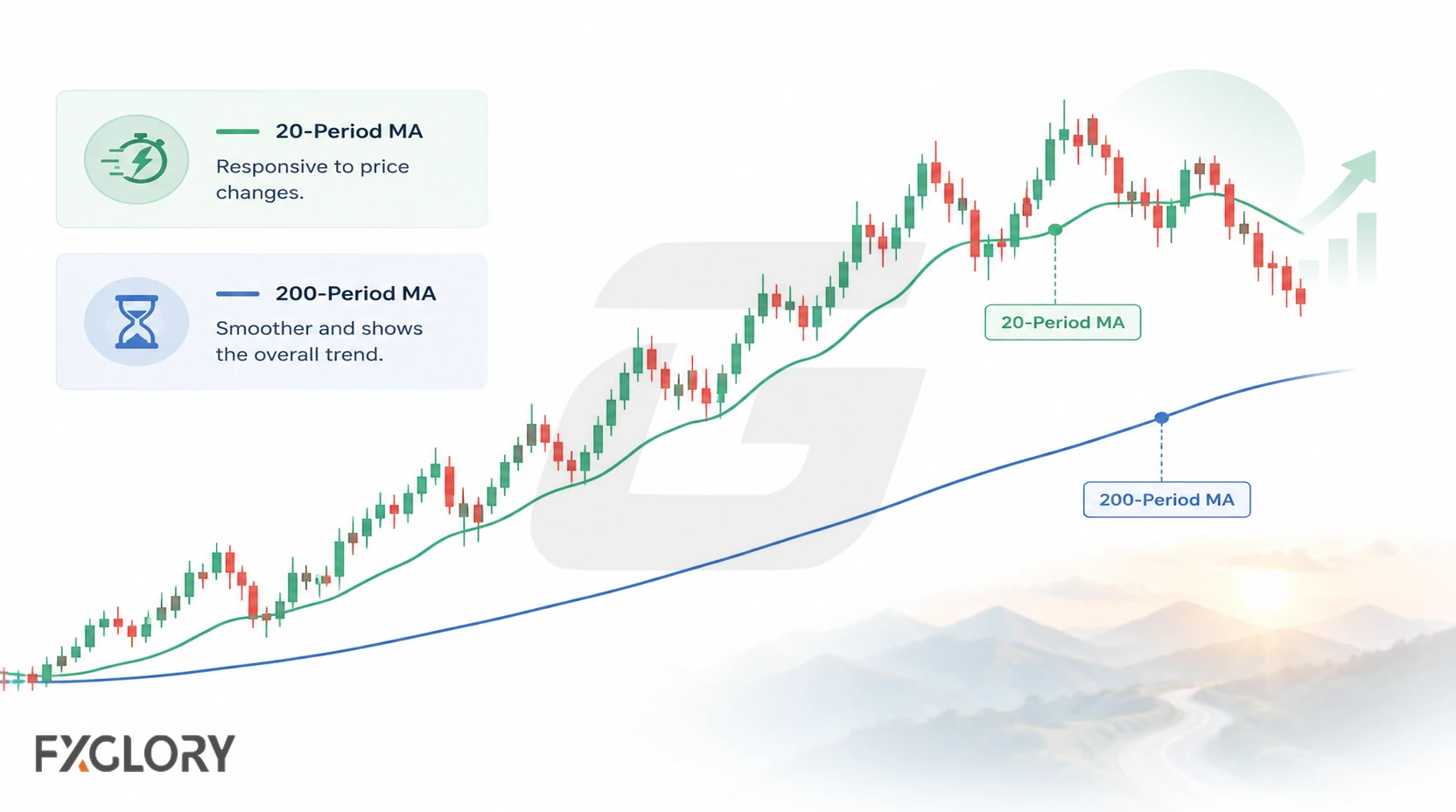
Lag vs responsiveness: how to choose the right setting
Lag vs responsiveness: how to choose the right setting plays an important role in moving average length and settings in forex for forex traders. Understanding this aspect of forex moving average helps you interpret market conditions more accurately and make better-informed trading decisions every time you open or manage a position.
Why settings should match the timeframe and trading style
Candlestick patterns carry different weight depending on the time frame they appear on. A reversal pattern on the daily chart is far more significant than the same pattern on a 5-minute chart. Many traders use multiple time frame analysis — confirming a signal on a higher time frame before drilling down to a lower frame for a precise entry.
Common Moving Average Periods in Forex
This section explores common moving average periods in forex in the context of forex moving average. Understanding these details helps you apply the concept correctly in real trading situations and avoid the most common misunderstandings.
9, 10, and 20-period moving averages for short-term context
9, 10, and 20-period moving averages for short-term context plays an important role in common moving average periods in forex for forex traders. Understanding this aspect of forex moving average helps you interpret market conditions more accurately and make better-informed trading decisions every time you open or manage a position.
50-period moving average for medium-term trend context
50-period moving average for medium-term trend context plays an important role in common moving average periods in forex for forex traders. Understanding this aspect of forex moving average helps you interpret market conditions more accurately and make better-informed trading decisions every time you open or manage a position.
100 and 200-period moving averages for longer-term trend context
100 and 200-period moving averages for longer-term trend context plays an important role in common moving average periods in forex for forex traders. Understanding this aspect of forex moving average helps you interpret market conditions more accurately and make better-informed trading decisions every time you open or manage a position.
Why 50 and 200 moving averages are widely watched
50 and 200 moving averages are widely watched is a factor that every forex trader should understand before sizing positions. When you understand 50 and 200 moving averages are widely watched, you can align your trading approach with how the market actually behaves and avoid common mistakes that stem from ignoring this principle.
Why popular settings should still be tested
Popular settings should still be tested is a factor that every forex trader should understand before sizing positions. When you understand popular settings should still be tested, you can align your trading approach with how the market actually behaves and avoid common mistakes that stem from ignoring this principle.
How to Read a Moving Average on a Forex Chart
Knowing how to read a moving average on a forex chart is a practical skill that separates informed traders from those who guess. This section breaks down the process clearly so you can apply it immediately to your own trading.
Rising moving average line
Rising moving average line plays an important role in read a moving average on a forex chart for forex traders. Understanding this aspect of forex moving average helps you interpret market conditions more accurately and make better-informed trading decisions every time you open or manage a position.
Falling moving average line
Falling moving average line plays an important role in read a moving average on a forex chart for forex traders. Understanding this aspect of forex moving average helps you interpret market conditions more accurately and make better-informed trading decisions every time you open or manage a position.
Flat moving average line
Flat moving average line plays an important role in read a moving average on a forex chart for forex traders. Understanding this aspect of forex moving average helps you interpret market conditions more accurately and make better-informed trading decisions every time you open or manage a position.
Price crossing above or below the moving average
Price crossing above or below the moving average plays an important role in read a moving average on a forex chart for forex traders. Understanding this aspect of forex moving average helps you interpret market conditions more accurately and make better-informed trading decisions every time you open or manage a position.
Moving averages crossing each other
Moving averages crossing each other plays an important role in read a moving average on a forex chart for forex traders. Understanding this aspect of forex moving average helps you interpret market conditions more accurately and make better-informed trading decisions every time you open or manage a position.
How Traders Use Moving Averages in Forex
This section explores how traders use moving averages in forex in the context of forex moving average. Understanding these details helps you apply the concept correctly in real trading situations and avoid the most common misunderstandings.
Using one moving average to follow the trend
Using one moving average to follow the trend plays an important role in how traders use moving averages in forex for forex traders. Understanding this aspect of forex moving average helps you interpret market conditions more accurately and make better-informed trading decisions every time you open or manage a position.
Using two moving averages together
Using two moving averages together plays an important role in how traders use moving averages in forex for forex traders. Understanding this aspect of forex moving average helps you interpret market conditions more accurately and make better-informed trading decisions every time you open or manage a position.
Using moving averages for possible entry and exit signals
Using moving averages for possible entry and exit signals plays an important role in how traders use moving averages in forex for forex traders. Understanding this aspect of forex moving average helps you interpret market conditions more accurately and make better-informed trading decisions every time you open or manage a position.
Using moving averages with price action
Using moving averages with price action plays an important role in how traders use moving averages in forex for forex traders. Understanding this aspect of forex moving average helps you interpret market conditions more accurately and make better-informed trading decisions every time you open or manage a position.
Combining moving averages with other indicators
Combining moving averages with other indicators plays an important role in how traders use moving averages in forex for forex traders. Understanding this aspect of forex moving average helps you interpret market conditions more accurately and make better-informed trading decisions every time you open or manage a position.
See the full moving average strategy forex guide
See the full moving average strategy forex guide plays an important role in how traders use moving averages in forex for forex traders. Understanding this aspect of forex moving average helps you interpret market conditions more accurately and make better-informed trading decisions every time you open or manage a position.
Moving Average Crossovers in Forex
This section explores moving average crossovers in forex in the context of forex moving average. Understanding these details helps you apply the concept correctly in real trading situations and avoid the most common misunderstandings.
What a moving average crossover means
What a moving average crossover means is a term you will encounter regularly in the context of moving average crossovers in forex. Knowing exactly what what a moving average crossover means means — and how it differs from similar terms — helps you read market information accurately and apply it without confusion.
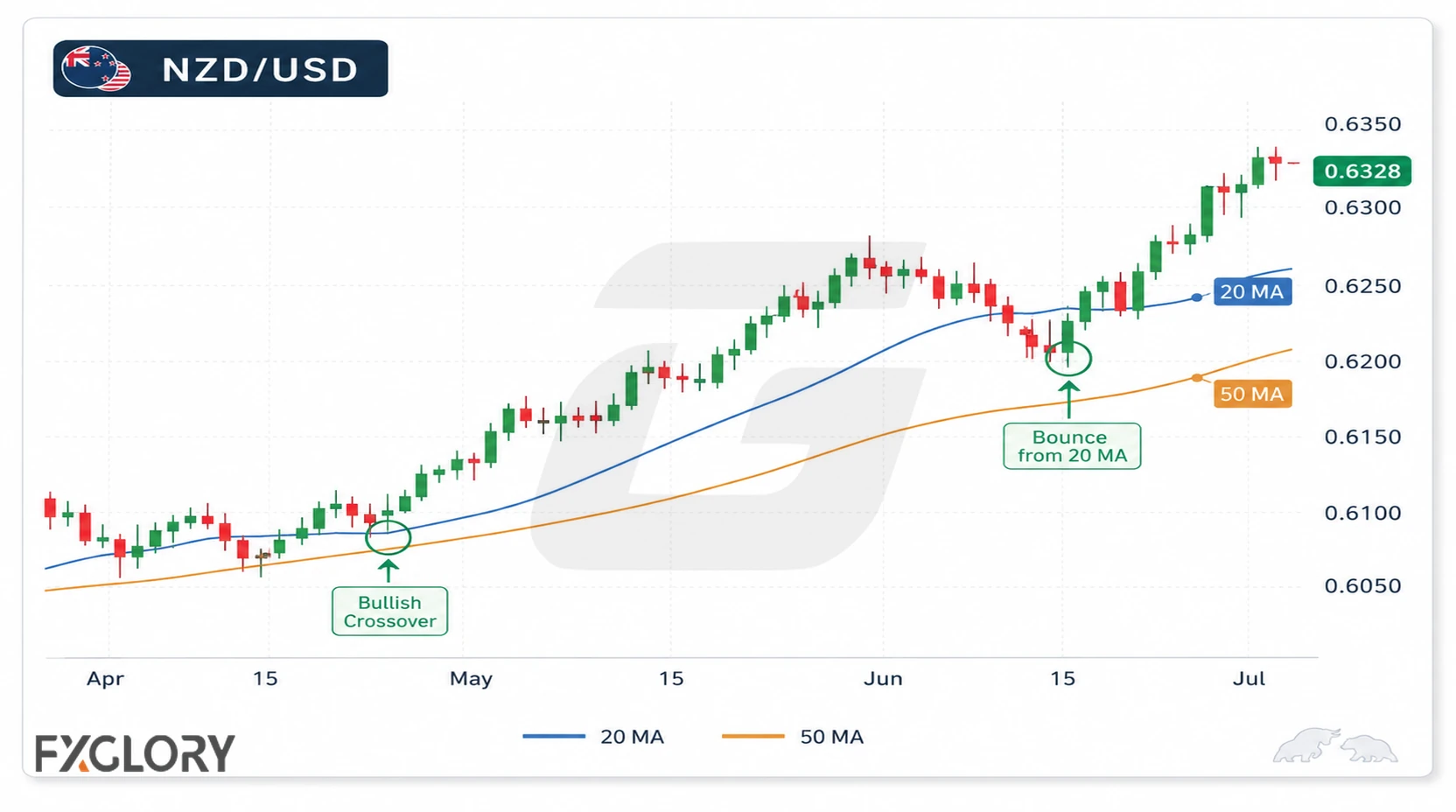
Fast moving average crossing above a slow moving average
Fast moving average crossing above a slow moving average plays an important role in moving average crossovers in forex for forex traders. Understanding this aspect of forex moving average helps you interpret market conditions more accurately and make better-informed trading decisions every time you open or manage a position.
Fast moving average crossing below a slow moving average
Fast moving average crossing below a slow moving average plays an important role in moving average crossovers in forex for forex traders. Understanding this aspect of forex moving average helps you interpret market conditions more accurately and make better-informed trading decisions every time you open or manage a position.
Golden cross and death cross as long-term crossover examples
A golden cross occurs when a shorter-period moving average (typically the 50-period) crosses above a longer-period moving average (the 200-period), signalling a potential shift to a bullish trend. A death cross is the opposite — the 50-period MA crosses below the 200-period MA — signalling a potential shift to bearish conditions. These signals are lagging by nature and work best as trend-confirmation tools rather than precise entry signals, particularly on the daily chart.
Why crossover signals can lag or fail in ranging markets
A sideways or ranging market occurs when price oscillates between defined support and resistance levels without making sustained directional progress. Range-bound markets require a different strategy than trending markets — traders buy near support, sell near resistance, and take profit before the opposing boundary. Range breakouts, when they occur, often produce sharp moves as trapped traders are forced to cover their positions.
See the full moving average strategy forex guide
See the full moving average strategy forex guide plays an important role in moving average crossovers in forex for forex traders. Understanding this aspect of forex moving average helps you interpret market conditions more accurately and make better-informed trading decisions every time you open or manage a position.
Moving Averages as Dynamic Support and Resistance
This section explores moving averages as dynamic support and resistance in the context of forex moving average. Understanding these details helps you apply the concept correctly in real trading situations and avoid the most common misunderstandings.
How a rising moving average can act as dynamic support
Understanding a rising moving average can act as dynamic support helps traders make more precise decisions. Applying this knowledge to your own moving averages as dynamic support and resistance process removes guesswork and gives you a repeatable approach you can rely on across different market conditions.
How a falling moving average can act as dynamic resistance
Understanding a falling moving average can act as dynamic resistance helps traders make more precise decisions. Applying this knowledge to your own moving averages as dynamic support and resistance process removes guesswork and gives you a repeatable approach you can rely on across different market conditions.
Why moving average support and resistance is not exact
Moving average support and resistance is not exact is a factor that every forex trader should understand before sizing positions. When you understand moving average support and resistance is not exact, you can align your trading approach with how the market actually behaves and avoid common mistakes that stem from ignoring this principle.
Why traders often combine it with market structure
Market structure refers to the pattern of highs and lows that defines the directional bias of the market on any given time frame. A break of structure occurs when price breaches a key swing high in a downtrend (bullish BOS) or breaks a swing low in an uptrend (bearish BOS). Structure breaks are used by price action traders to identify potential trend reversals early and position for the new direction.
Moving Averages and Market Conditions
This section explores moving averages and market conditions in the context of forex moving average. Understanding these details helps you apply the concept correctly in real trading situations and avoid the most common misunderstandings.
Trending markets
Trending markets plays an important role in moving averages and market conditions for forex traders. Understanding this aspect of forex moving average helps you interpret market conditions more accurately and make better-informed trading decisions every time you open or manage a position.
Ranging markets
A sideways or ranging market occurs when price oscillates between defined support and resistance levels without making sustained directional progress. Range-bound markets require a different strategy than trending markets — traders buy near support, sell near resistance, and take profit before the opposing boundary. Range breakouts, when they occur, often produce sharp moves as trapped traders are forced to cover their positions.
Volatile markets
Volatile markets plays an important role in moving averages and market conditions for forex traders. Understanding this aspect of forex moving average helps you interpret market conditions more accurately and make better-informed trading decisions every time you open or manage a position.
Why moving averages work better in clean trends
Moving averages work better in clean trends is a factor that every forex trader should understand before sizing positions. When you understand moving averages work better in clean trends, you can align your trading approach with how the market actually behaves and avoid common mistakes that stem from ignoring this principle.
Why sideways markets can create whipsaws
A sideways or ranging market occurs when price oscillates between defined support and resistance levels without making sustained directional progress. Range-bound markets require a different strategy than trending markets — traders buy near support, sell near resistance, and take profit before the opposing boundary. Range breakouts, when they occur, often produce sharp moves as trapped traders are forced to cover their positions.
Moving Averages vs Other Forex Indicators
Comparing these two concepts is important because traders often confuse them or use the terms interchangeably. Understanding the actual difference helps you choose the right approach and interpret market information correctly.
Moving averages vs RSI
Moving averages vs rsi plays an important role in moving averages vs other forex indicators for forex traders. Understanding this aspect of forex moving average helps you interpret market conditions more accurately and make better-informed trading decisions every time you open or manage a position.
Moving averages vs MACD
Moving averages vs macd plays an important role in moving averages vs other forex indicators for forex traders. Understanding this aspect of forex moving average helps you interpret market conditions more accurately and make better-informed trading decisions every time you open or manage a position.
Moving averages vs Bollinger Bands
Moving averages vs bollinger bands plays an important role in moving averages vs other forex indicators for forex traders. Understanding this aspect of forex moving average helps you interpret market conditions more accurately and make better-informed trading decisions every time you open or manage a position.
Moving averages vs ATR
Average True Range (ATR) is a technical indicator that measures market volatility over a specified period. A high ATR means prices are moving significantly; a low ATR indicates quieter conditions. Many traders use ATR to set appropriate stop-loss distances that account for the current market volatility.
Why traders often combine trend, momentum, and volatility tools
Traders often combine trend, momentum, and volatility tools is a factor that every forex trader should understand before sizing positions. When you understand traders often combine trend, momentum, and volatility tools, you can align your trading approach with how the market actually behaves and avoid common mistakes that stem from ignoring this principle.
How to Add a Moving Average to a Forex Trading Platform
Knowing how to add a moving average to a forex trading platform is a practical skill that separates informed traders from those who guess. This section breaks down the process clearly so you can apply it immediately to your own trading.
Applying a moving average on MT4 or MT5
Applying a moving average on mt4 or mt5 plays an important role in add a moving average to a forex trading platform for forex traders. Understanding this aspect of forex moving average helps you interpret market conditions more accurately and make better-informed trading decisions every time you open or manage a position.
Choosing the period
Choosing the period plays an important role in add a moving average to a forex trading platform for forex traders. Understanding this aspect of forex moving average helps you interpret market conditions more accurately and make better-informed trading decisions every time you open or manage a position.
Choosing the moving average method
Choosing the moving average method plays an important role in add a moving average to a forex trading platform for forex traders. Understanding this aspect of forex moving average helps you interpret market conditions more accurately and make better-informed trading decisions every time you open or manage a position.
Choosing the price source
Choosing the price source plays an important role in add a moving average to a forex trading platform for forex traders. Understanding this aspect of forex moving average helps you interpret market conditions more accurately and make better-informed trading decisions every time you open or manage a position.
Reading the line on the chart
Reading the line on the chart plays an important role in add a moving average to a forex trading platform for forex traders. Understanding this aspect of forex moving average helps you interpret market conditions more accurately and make better-informed trading decisions every time you open or manage a position.
Advantages of Moving Averages in Forex
There are several meaningful benefits to moving averages in forex that forex traders should be aware of. Understanding these advantages helps you evaluate whether this approach suits your trading goals and style.
Simple visual trend reading
Simple visual trend reading plays an important role in advantages of moving averages in forex for forex traders. Understanding this aspect of forex moving average helps you interpret market conditions more accurately and make better-informed trading decisions every time you open or manage a position.
Helps smooth noisy price movement
Helps smooth noisy price movement plays an important role in advantages of moving averages in forex for forex traders. Understanding this aspect of forex moving average helps you interpret market conditions more accurately and make better-informed trading decisions every time you open or manage a position.
Works across many timeframes
Candlestick patterns carry different weight depending on the time frame they appear on. A reversal pattern on the daily chart is far more significant than the same pattern on a 5-minute chart. Many traders use multiple time frame analysis — confirming a signal on a higher time frame before drilling down to a lower frame for a precise entry.
Can support trend, pullback, and crossover analysis
Can support trend, pullback, and crossover analysis plays an important role in advantages of moving averages in forex for forex traders. Understanding this aspect of forex moving average helps you interpret market conditions more accurately and make better-informed trading decisions every time you open or manage a position.
Easy to combine with other indicators
Easy to combine with other indicators plays an important role in advantages of moving averages in forex for forex traders. Understanding this aspect of forex moving average helps you interpret market conditions more accurately and make better-informed trading decisions every time you open or manage a position.
Limitations of Moving Averages in Forex
This section explores limitations of moving averages in forex in the context of forex moving average. Understanding these details helps you apply the concept correctly in real trading situations and avoid the most common misunderstandings.
Moving averages lag behind price
Moving averages lag behind price plays an important role in limitations of moving averages in forex for forex traders. Understanding this aspect of forex moving average helps you interpret market conditions more accurately and make better-informed trading decisions every time you open or manage a position.
Signals can appear late
Signals can appear late plays an important role in limitations of moving averages in forex for forex traders. Understanding this aspect of forex moving average helps you interpret market conditions more accurately and make better-informed trading decisions every time you open or manage a position.
False signals are common in ranging markets
A sideways or ranging market occurs when price oscillates between defined support and resistance levels without making sustained directional progress. Range-bound markets require a different strategy than trending markets — traders buy near support, sell near resistance, and take profit before the opposing boundary. Range breakouts, when they occur, often produce sharp moves as trapped traders are forced to cover their positions.
Moving averages do not predict future price direction
Moving averages do not predict future price direction plays an important role in limitations of moving averages in forex for forex traders. Understanding this aspect of forex moving average helps you interpret market conditions more accurately and make better-informed trading decisions every time you open or manage a position.
Moving averages should not replace risk management
Moving averages should not replace risk management plays an important role in limitations of moving averages in forex for forex traders. Understanding this aspect of forex moving average helps you interpret market conditions more accurately and make better-informed trading decisions every time you open or manage a position.
Common Mistakes When Using Moving Averages in Forex
This section explores common mistakes when using moving averages in forex in the context of forex moving average. Understanding these details helps you apply the concept correctly in real trading situations and avoid the most common misunderstandings.
Using the wrong period length
Using the wrong period length plays an important role in common mistakes when using moving averages in forex for forex traders. Understanding this aspect of forex moving average helps you interpret market conditions more accurately and make better-informed trading decisions every time you open or manage a position.
Relying only on crossovers
Relying only on crossovers plays an important role in common mistakes when using moving averages in forex for forex traders. Understanding this aspect of forex moving average helps you interpret market conditions more accurately and make better-informed trading decisions every time you open or manage a position.
Ignoring market conditions
Ignoring market conditions plays an important role in common mistakes when using moving averages in forex for forex traders. Understanding this aspect of forex moving average helps you interpret market conditions more accurately and make better-informed trading decisions every time you open or manage a position.
Overloading the chart with too many averages
Overloading the chart with too many averages plays an important role in common mistakes when using moving averages in forex for forex traders. Understanding this aspect of forex moving average helps you interpret market conditions more accurately and make better-informed trading decisions every time you open or manage a position.
Changing settings without testing
Changing settings without testing plays an important role in common mistakes when using moving averages in forex for forex traders. Understanding this aspect of forex moving average helps you interpret market conditions more accurately and make better-informed trading decisions every time you open or manage a position.
Treating a moving average as exact support or resistance
Treating a moving average as exact support or resistance plays an important role in common mistakes when using moving averages in forex for forex traders. Understanding this aspect of forex moving average helps you interpret market conditions more accurately and make better-informed trading decisions every time you open or manage a position.
Practice Using Moving Averages with FXGlory
FXGlory makes it straightforward to put what you have learned into practice. Whether you want to start with a demo account or are ready to open a live account, the platform gives you the tools, conditions, and support you need.
Add moving averages to a demo forex chart
Add moving averages to a demo forex chart plays an important role in practice using moving averages with fxglory for forex traders. Understanding this aspect of forex moving average helps you interpret market conditions more accurately and make better-informed trading decisions every time you open or manage a position.
Compare SMA, EMA, WMA, and VWMA
Compare sma, ema, wma, and vwma plays an important role in practice using moving averages with fxglory for forex traders. Understanding this aspect of forex moving average helps you interpret market conditions more accurately and make better-informed trading decisions every time you open or manage a position.
Test different periods and timeframes
Candlestick patterns carry different weight depending on the time frame they appear on. A reversal pattern on the daily chart is far more significant than the same pattern on a 5-minute chart. Many traders use multiple time frame analysis — confirming a signal on a higher time frame before drilling down to a lower frame for a precise entry.
Use moving averages with broader technical analysis
Use moving averages with broader technical analysis plays an important role in practice using moving averages with fxglory for forex traders. Understanding this aspect of forex moving average helps you interpret market conditions more accurately and make better-informed trading decisions every time you open or manage a position.
Forex Moving Average FAQs
Explore Related Topics
Explore these related guides to build a complete understanding:
This guide is part of the Forex Technical Indicators section of the FXGlory guide.
Also in this section: ADX Indicator in Forex | Alligator Forex Indicator | What Is the ATR Indicator in Forex?
Start Trading Forex with FXGlory
You now have the foundation you need to understand forex moving average in the context of forex trading. The next step is to put this knowledge into practice. FXGlory offers a free demo account where you can explore the platform, test strategies, and build confidence — all without risking real money.
When you are ready, opening a live account with FXGlory takes just a few minutes. You will get access to MT4 and MT5 platforms, swap-free trading conditions, and a range of account types to suit your style and experience level.
Open a Free Account with FXGlory
Put your technical analysis skills to work on a free FXGlory demo account. Test strategies on live charts, practise entries and exits, and build consistency — no risk to real funds.
Open a Free Demo Account