
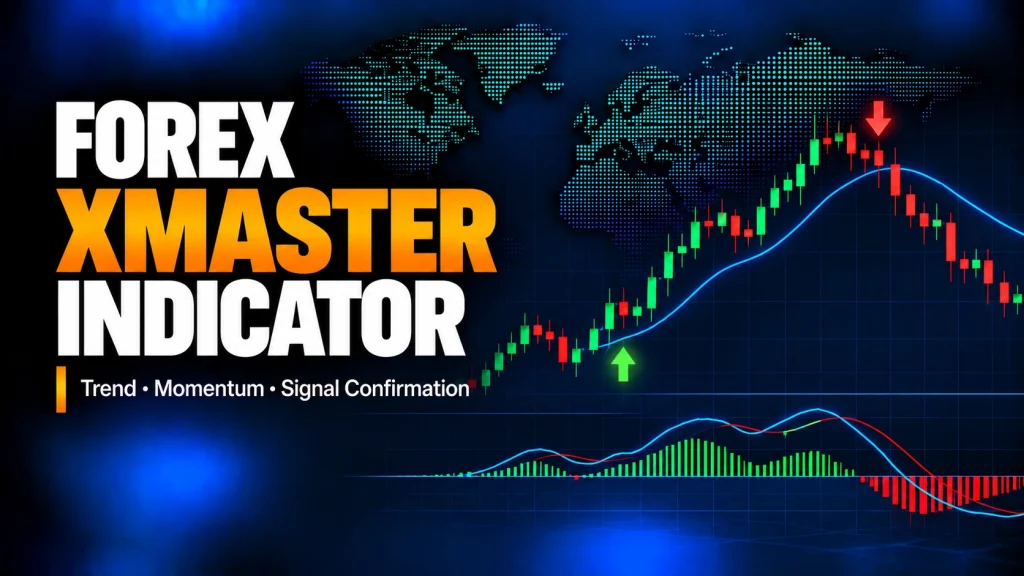
MT4 के लिए XHMaster Formula Indicator क्या है?
XHMaster Formula इंडिकेटर एक थर्ड-पार्टी कस्टम तकनीकी इंडिकेटर है जिसका उपयोग तीर (arrows), रंग परिवर्तन, लाइनों या सिग्नल ज़ोन जैसे सरलीकृत चार्ट सिग्नलों को प्रदर्शित करने के लिए किया जाता है। यह MetaTrader 4 में अंतर्निहित (built-in) कोई मानक इंडिकेटर नहीं है, और इसकी सटीक गणना अलग-अलग फाइलों और प्रकाशकों के बीच भिन्न हो सकती है।
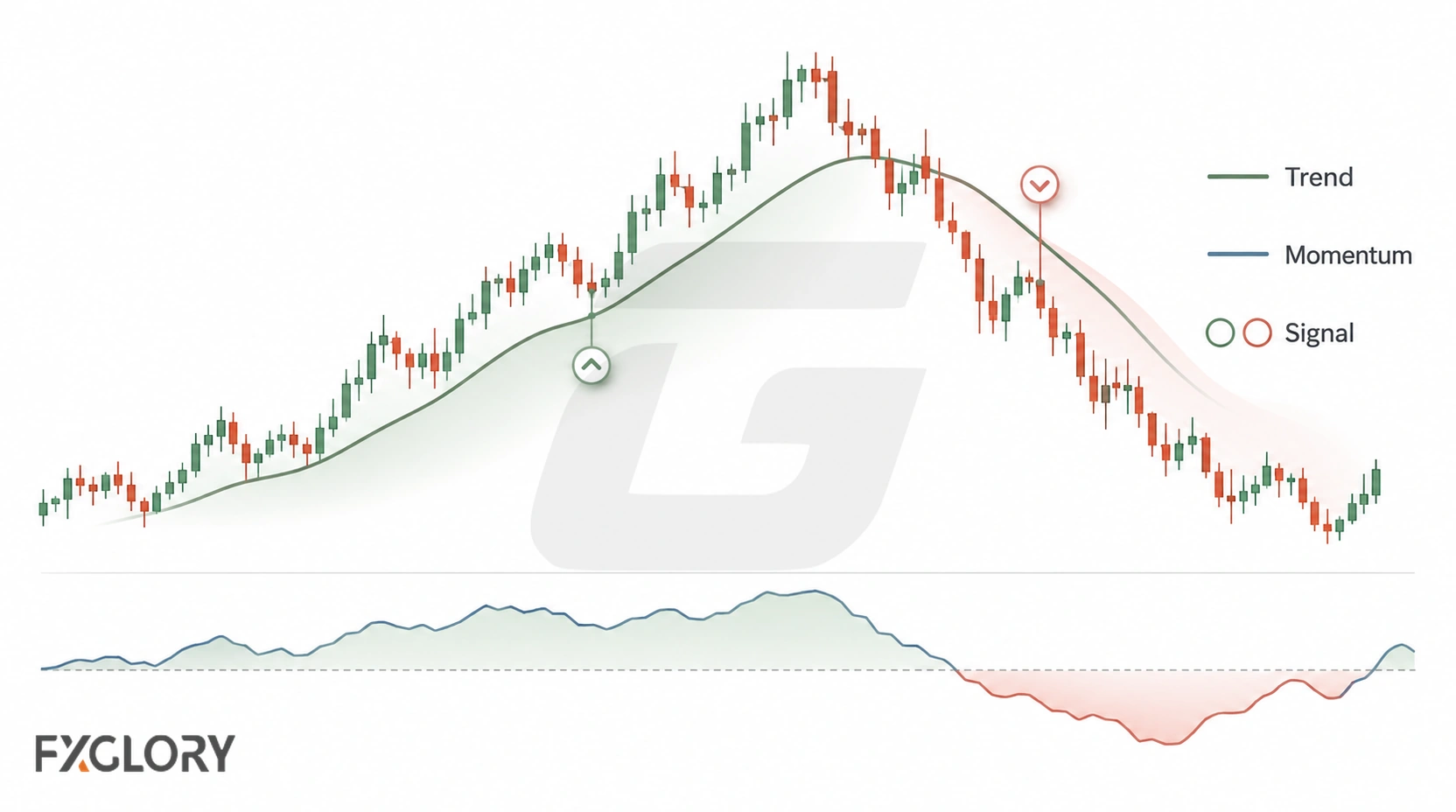
FXGlory कोई XHMaster या XMaster इंडिकेटर फाइल प्रदान या होस्ट नहीं करता है। यदि आप किसी थर्ड-पार्टी संस्करण का उपयोग करना चुनते हैं, तो वास्तविक फंड के साथ इसका उपयोग करने से पहले यह सत्यापित करें कि यह कहाँ से आया है, क्या यह आपके प्लेटफॉर्म के साथ संगत (compatible) है, इसके लिए किन अनुमतियों की आवश्यकता है, और इसके सिग्नल कैसा व्यवहार करते हैं।
अधिक व्यापक संदर्भ के लिए, forex technical indicators and how different indicator types are used देखें।
XMaster बनाम XHMaster: संस्करण क्यों मायने रखता है
XMaster Formula नाम संबंधित थर्ड-पार्टी इंडिकेटरों और स्क्रिप्टों पर भी दिखाई देता है। समान नामकरण यह साबित नहीं करता है कि दो फाइलें समान कोड, सेटिंग्स, थ्रेशोल्ड, अलर्ट या सिग्नल टाइमिंग का उपयोग करती हैं।
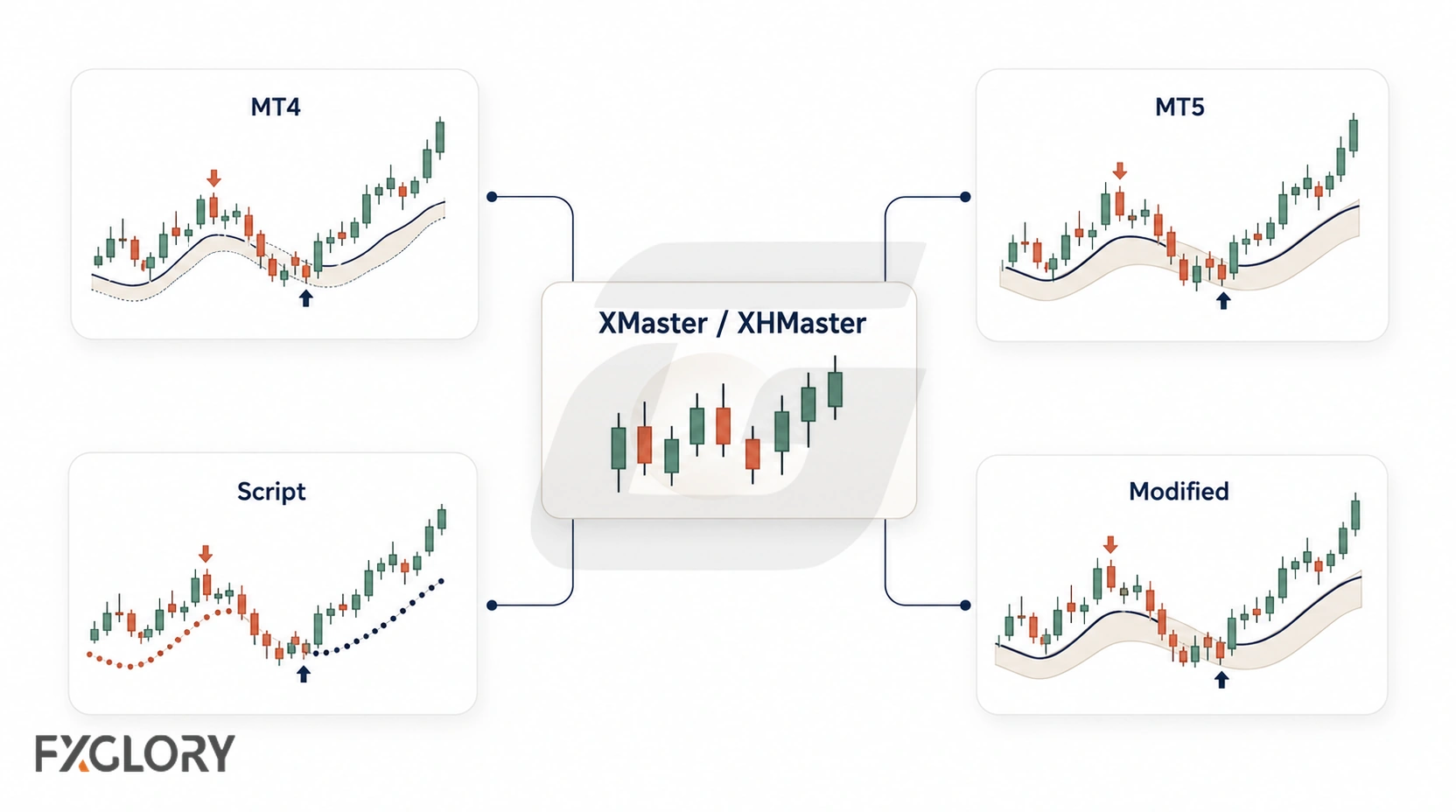
- फाइल की जाँच करें: पुष्टि करें कि क्या यह संस्करण MT4, MT5, TradingView, या किसी अन्य वातावरण के लिए बनाया गया था।
- प्रकाशक की जाँच करें: समान नाम वाले दो टूल अलग-अलग डेवलपर्स के हो सकते हैं।
- सेटिंग्स की जाँच करें: संवेदनशीलता (sensitivity), स्मूथिंग, थ्रेशोल्ड और अलर्ट टाइमिंग परिणामों को बदल सकते हैं।
- सिग्नल टाइमिंग की जाँच करें: वर्तमान-कैंडल और बंद-कैंडल सिग्नलों को एक समान नहीं माना जाना चाहिए।
XHMaster Formula Indicator कैसे काम करता है
ऐसी कोई एकल गणना नहीं है जिसे हर संस्करण के लिए सुरक्षित रूप से माना जा सके। कुछ थर्ड-पार्टी कार्यान्वयन ट्रेंड और मोमेंटम इनपुट को संयोजित करते हैं और फिर उन स्थितियों को विज़ुअल सिग्नलों में परिवर्तित करते हैं।
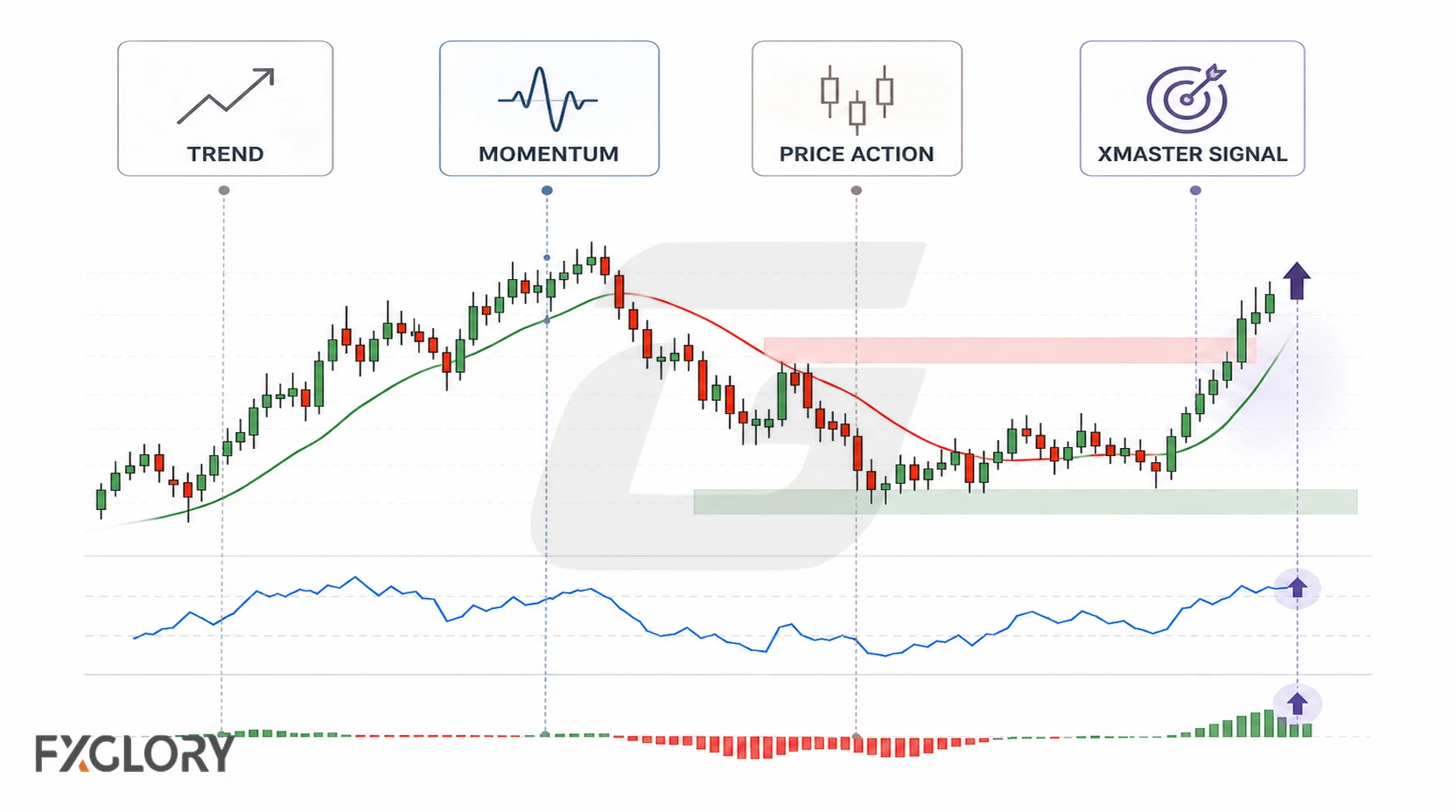
उदाहरण के लिए, एक थर्ड-पार्टी TradingView कार्यान्वयन EMA, MACD, RSI, स्टोकेस्टिक और Parabolic SAR-शैली के इनपुट के उपयोग का विवरण देता है। यह उस विशेष स्क्रिप्ट के लिए एक बाहरी संदर्भ के रूप में उपयोगी है, लेकिन इसे इस बात का प्रमाण नहीं माना जाना चाहिए कि कोई असंबंधित MT4 या MT5 फाइल उसी फॉर्मूले का उपयोग करती है। TradingView पर Xmaster Formula script listing देखें।
जब गणना पारदर्शी न हो, तो फॉर्मूले के अंदर क्या है यह अनुमान लगाने के बजाय दिखने वाले व्यवहार और प्रलेखित सेटिंग्स द्वारा संस्करण का मूल्यांकन करें।
यदि कोई संस्करण ट्रेंड या मोमेंटम लॉजिक का उपयोग करता है, तो आप इसके आउटपुट की तुलना moving averages, RSI, या MACD जैसे परिचित टूल्स से कर सकते हैं ताकि यह समझा जा सके कि क्या सिग्नल व्यापक चार्ट संदर्भ से मेल खाता है।
- ट्रेंड इनपुट: एक संस्करण दिशात्मक स्थितियों को वर्गीकृत करने का प्रयास कर सकता है।
- मोमेंटम इनपुट: एक संस्करण हालिया मूल्य आंदोलन की ताकत या गति की तुलना कर सकता है।
- सिग्नल डिस्प्ले: स्थितियों को तीरों, रंगों, लाइनों या ज़ोन के माध्यम से संक्षेपित किया जा सकता है।
- संस्करण जोखिम: एक अलग स्क्रिप्ट या संकलित (compiled) फाइल उसी चार्ट पर अलग परिणाम दे सकती है।
तीर और रंग परिवर्तन का क्या अर्थ है
XHMaster-शैली के इंडिकेटर आमतौर पर उन स्थितियों को चिह्नित करने के लिए विज़ुअल परिवर्तनों का उपयोग करते हैं जिन्हें विशिष्ट संस्करण बुलिश या बेयरिश के रूप में व्याख्या करता है। सटीक अर्थ फाइल और उसकी सेटिंग्स पर निर्भर करता है।
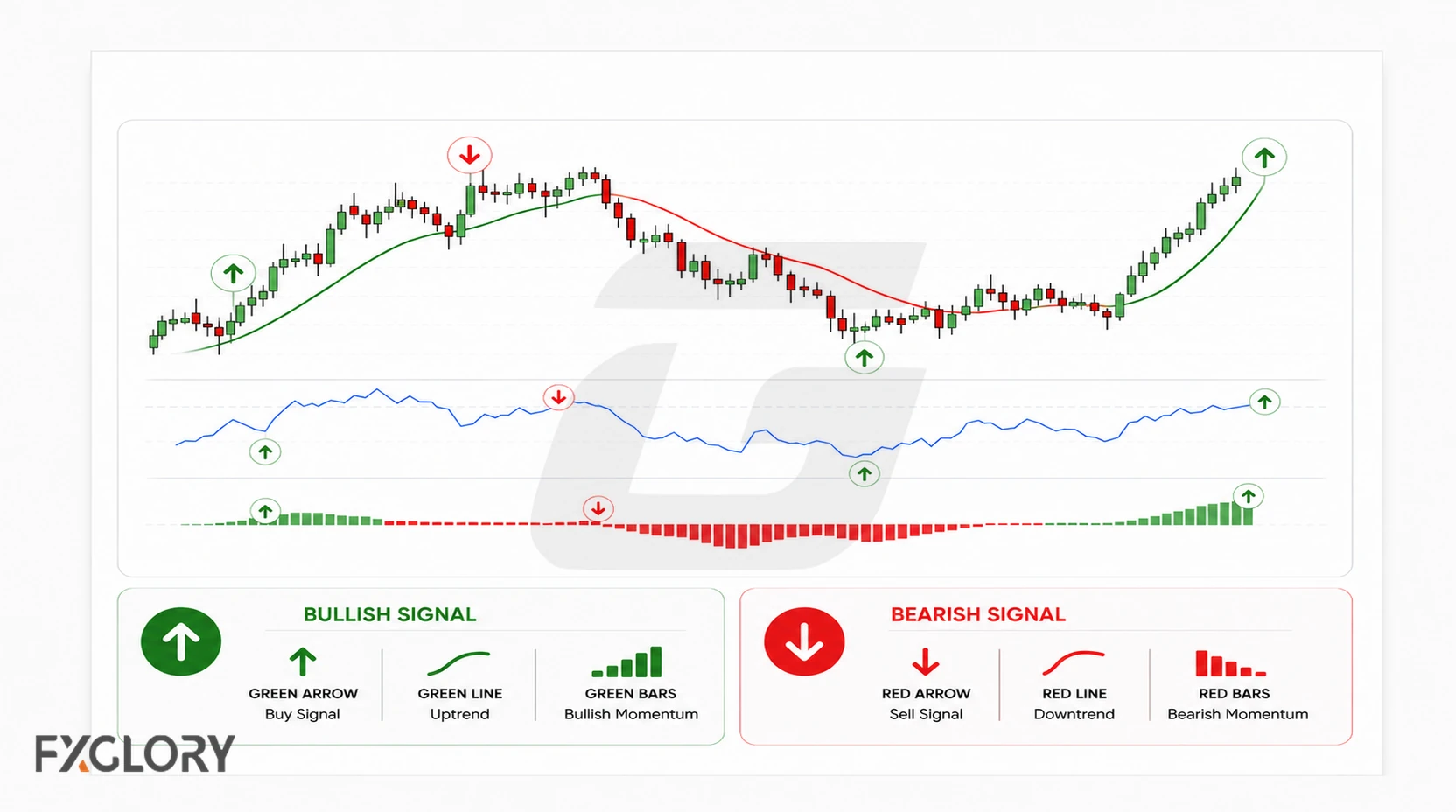
यदि कोई संस्करण वर्तमान कैंडल के बनते समय सिग्नलों को अपडेट करता है, तो कैंडल बंद होने की प्रतीक्षा करने से एक अधूरे सिग्नल को पुष्टि किए गए सिग्नल से अलग करना आसान हो सकता है।
- बुलिश तीर: उस संस्करण द्वारा बुलिश के रूप में वर्गीकृत स्थितियों को चिह्नित कर सकता है।
- बेयरिश तीर: उस संस्करण द्वारा बेयरिश के रूप में वर्गीकृत स्थितियों को चिह्नित कर सकता है।
- रंग परिवर्तन: ट्रेंड या मोमेंटम स्थितियों में बदलाव का प्रतिनिधित्व कर सकता है।
- सिग्नल ज़ोन: एक सटीक प्रवेश मूल्य के बजाय आगे की चार्ट समीक्षा के लिए एक क्षेत्र को हाइलाइट कर सकता है।
क्या XHMaster Formula Indicator दोबारा पेंट (Repaint) होता है?
रीपेंटिंग का परीक्षण सटीक संस्करण पर किया जाना चाहिए। महत्वपूर्ण अंतर वर्तमान कैंडल के खुले रहने के दौरान सिग्नल बदलने और कैंडल बंद होने के बाद पुष्टि किए गए सिग्नल के बाद में बदलने के बीच का है।
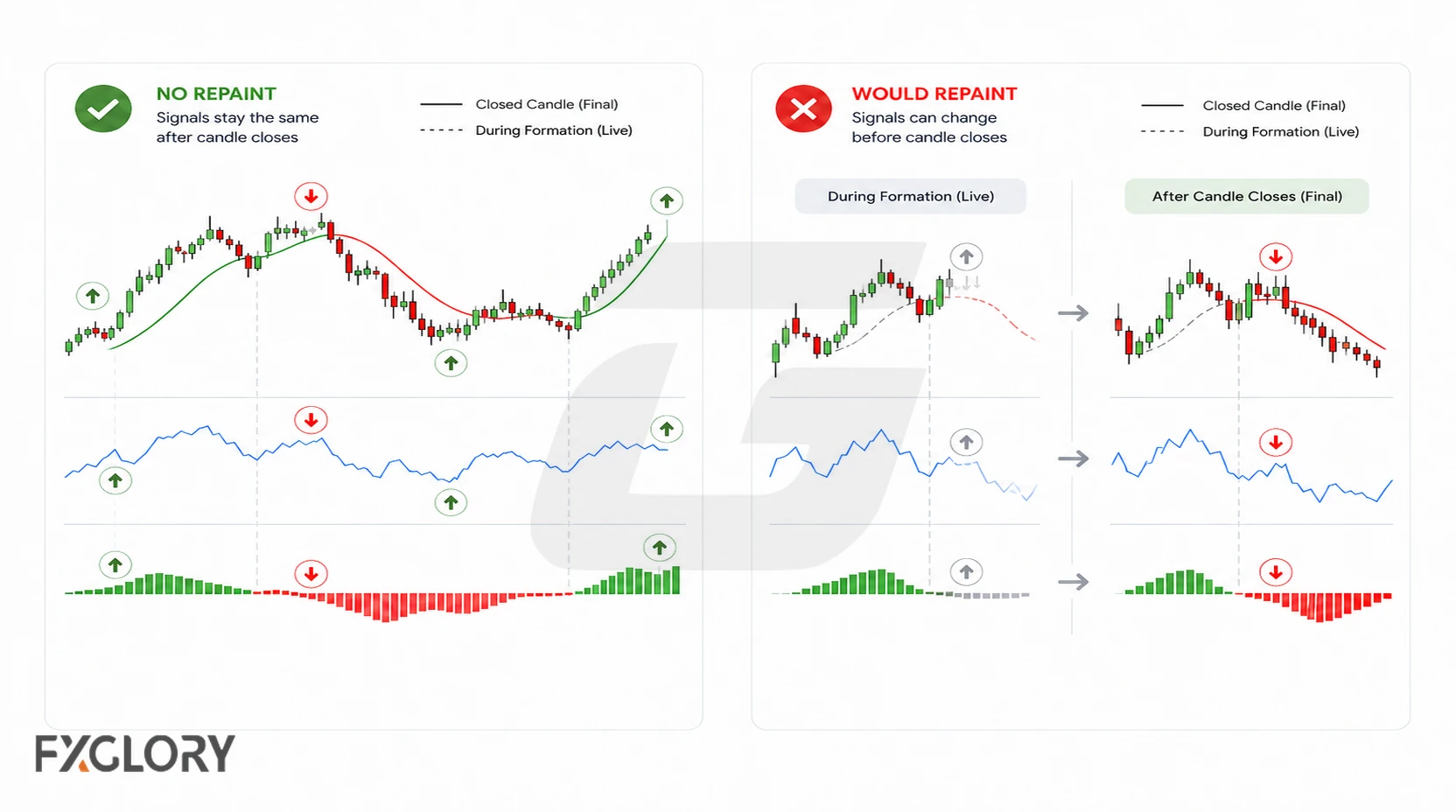
नो-रीपेंट दावे का परीक्षण करने के लिए, रिकॉर्ड करें कि कैंडल बंद होने पर इंडिकेटर क्या दिखाता है और जाँचें कि क्या वह ऐतिहासिक सिग्नल बाद में चलता है, गायब होता है, या दिशा बदलता है। विशिष्ट संस्करण को समझने के लिए पर्याप्त लाइव या रीप्ले किए गए अवलोकनों पर परीक्षण दोहराएं।
व्यापक अवधारणा के लिए, समीक्षा करें how to test non-repainting forex indicators.
- वर्तमान-कैंडल अपडेट: बार अधूरा होने पर सिग्नल का बदलना स्वाभाविक हो सकता है।
- बंद-कैंडल परिवर्तन: पुष्टि किए गए ऐतिहासिक सिग्नल का बाद में बदलना ही वह व्यवहार है जो रीपेंट परीक्षण के लिए प्रासंगिक है।
- संस्करण पर निर्भरता: एक स्क्रिप्ट के लिए किया गया दावा किसी अन्य फाइल के व्यवहार को स्थापित नहीं करता है।
- बैकटेस्ट सावधानी: ऐतिहासिक चार्टों की तुलना फॉरवर्ड या रीप्ले अवलोकनों से की जानी चाहिए, न कि उन्हें सीधे तौर पर मान लिया जाना चाहिए।
XHMaster Formula Indicator: MT4 सेटअप, MT5, और TradingView
थर्ड-पार्टी संस्करण MT4, MT5, TradingView, या अन्य प्लेटफॉर्मों के लिए बनाए जा सकते हैं। प्लेटफॉर्म अनुकूलता मायने रखती है क्योंकि किसी MT4 फाइल को सीधे तौर पर MT5 में काम करने वाला या TradingView स्क्रिप्ट से मेल खाने वाला नहीं माना जा सकता।
- MT4: कस्टम इंडिकेटर आमतौर पर MT4-संगत फाइलों जैसे .ex4 या .mq4 का उपयोग करते हैं।
- MT5: आम तौर पर एक अलग MT5-संगत संस्करण की आवश्यकता होती है।
- TradingView: स्क्रिप्ट Pine Script का उपयोग करती हैं और उन लॉजिक या सुविधाओं का विवरण दे सकती हैं जो MetaTrader संस्करणों में मौजूद नहीं हैं।
- थर्ड-पार्टी स्रोत: FXGlory XHMaster या XMaster फाइल प्रदान नहीं करता है; स्रोत सत्यापन ट्रेडर की जिम्मेदारी है।
MT4 में थर्ड-पार्टी XHMaster फाइल जोड़ना: चरण अवलोकन
- पहले स्रोत को सत्यापित करें: अपने भरोसेमंद स्वतंत्र स्रोत से MT4-संगत .ex4 या .mq4 फाइल प्राप्त करें।
- MT4 डेटा फ़ोल्डर खोलें: MT4 में, File चुनें, फिर Open Data Folder, और MQL4 > Indicators खोलें।
- फाइल कॉपी करें: इंडिकेटर फाइल को Indicators फ़ोल्डर में रखें।
- MT4 को रीफ्रेश या रीस्टार्ट करें: यदि फाइल संगत है, तो इंडिकेटर Navigator पैनल में उपलब्ध होना चाहिए।
- इसे चार्ट में जोड़ें: सेटिंग्स स्वीकार करने से पहले उपलब्ध इनपुट की समीक्षा करें।
- लाइव उपयोग से पहले परीक्षण करें: डेमो चार्ट पर बंद-कैंडल व्यवहार, अलर्ट और सिग्नल टाइमिंग का अवलोकन करें।
सामान्य MetaTrader चरणों के लिए, देखें how to add indicators to MT4 charts। ये प्लेटफ़ॉर्म निर्देश हैं, किसी विशिष्ट थर्ड-पार्टी इंडिकेटर का डाउनलोड या समर्थन नहीं।
एक बाहरी संदर्भ के रूप में, TradingView थर्ड-पार्टी Xmaster Formula स्क्रिप्ट होस्ट करता है। TradingView स्क्रिप्ट आपको यह देखने में मदद कर सकती है कि एक प्रकाशक अवधारणा को कैसे लागू करता है, लेकिन इसके लॉजिक और परिणामों को अलग से प्राप्त MT4 या MT5 फाइल से मेल खाने वाला नहीं माना जाना चाहिए।
सेटिंग्स, मोड और संस्करण अंतर
कस्टम-इंडिकेटर सेटिंग्स काफी भिन्न हो सकती हैं। संस्करण के आधार पर, इनपुट में संवेदनशीलता, स्मूथिंग, थ्रेशोल्ड, अलर्ट टाइमिंग, डिस्प्ले विकल्प, या मल्टी-टाइमफ्रेम व्यवहार शामिल हो सकते हैं।
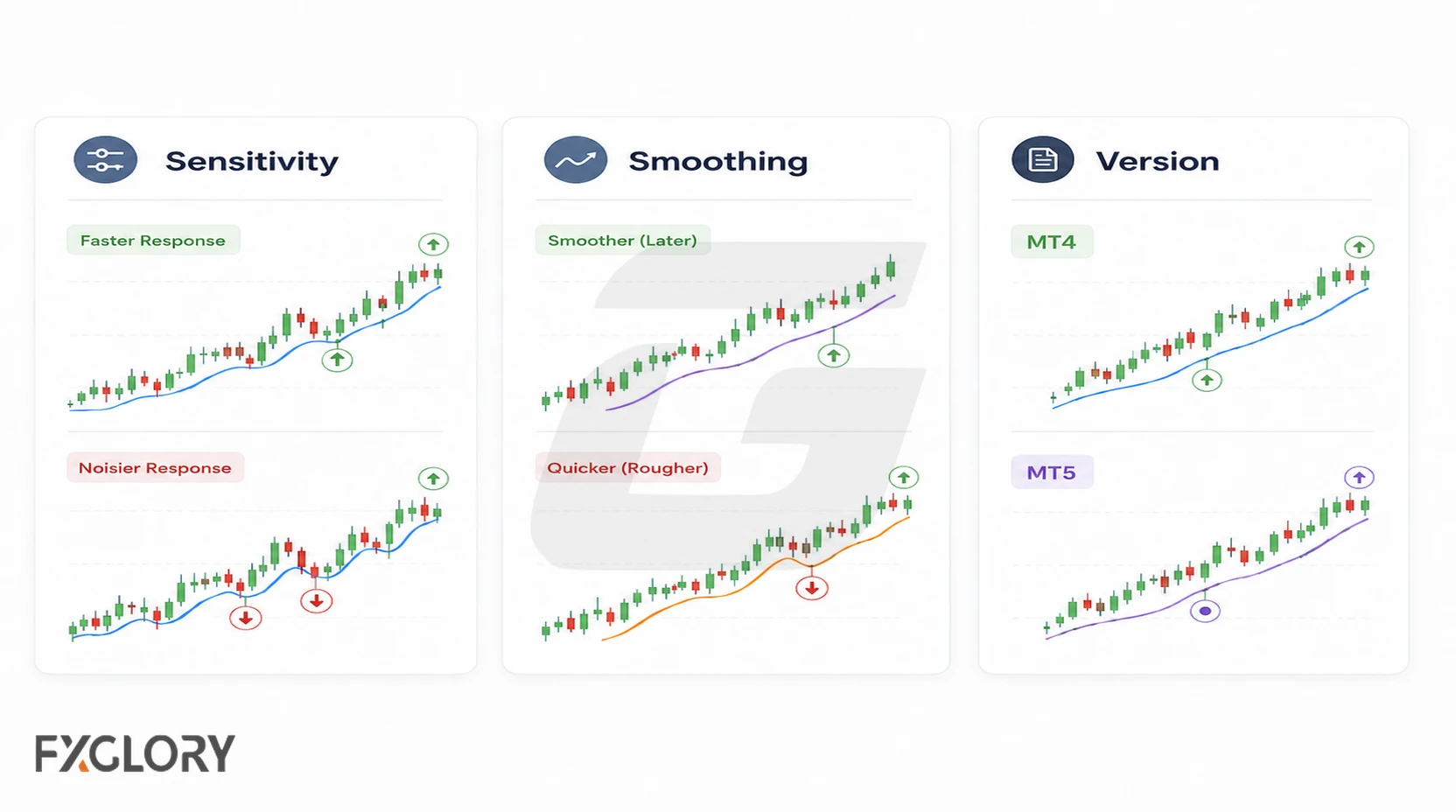
- संवेदनशीलता: अधिक प्रतिक्रियाशील सेटिंग सिग्नल आवृत्ति और शोर (noise) को बढ़ा सकती है।
- स्मूथिंग: अधिक स्मूथिंग लैग जोड़ते हुए अल्पकालिक उतार-चढ़ाव को कम कर सकती है।
- थ्रेशोल्ड: विभिन्न ट्रिगर स्तर बदल सकते हैं कि सिग्नल कब दिखाई देता है।
- अलर्ट टाइमिंग: वर्तमान कैंडल के दौरान एक अलर्ट कैंडल बंद होने के बाद उत्पन्न अलर्ट से भिन्न व्यवहार कर सकता है।
- मल्टी-टाइमफ्रेम इनपुट: उच्च-समयसीमा मान तब तक अपडेट होते रह सकते हैं जब तक कि वह उच्च-समयसीमा कैंडल बंद न हो जाए।
ट्रेडिंग रणनीति के अंदर XHMaster सिग्नलों का उपयोग करना
एक इंडिकेटर सिग्नल और ट्रेडिंग रणनीति एक जैसी नहीं होती हैं। एक रणनीति को बाजार संदर्भ, प्रवेश, अमान्यीकरण (invalidation), निकास, पोजीशन साइजिंग, जोखिम सीमा और उन स्थितियों के लिए नियमों की आवश्यकता होती है जिनमें कोई ट्रेड नहीं लिया जाना चाहिए।
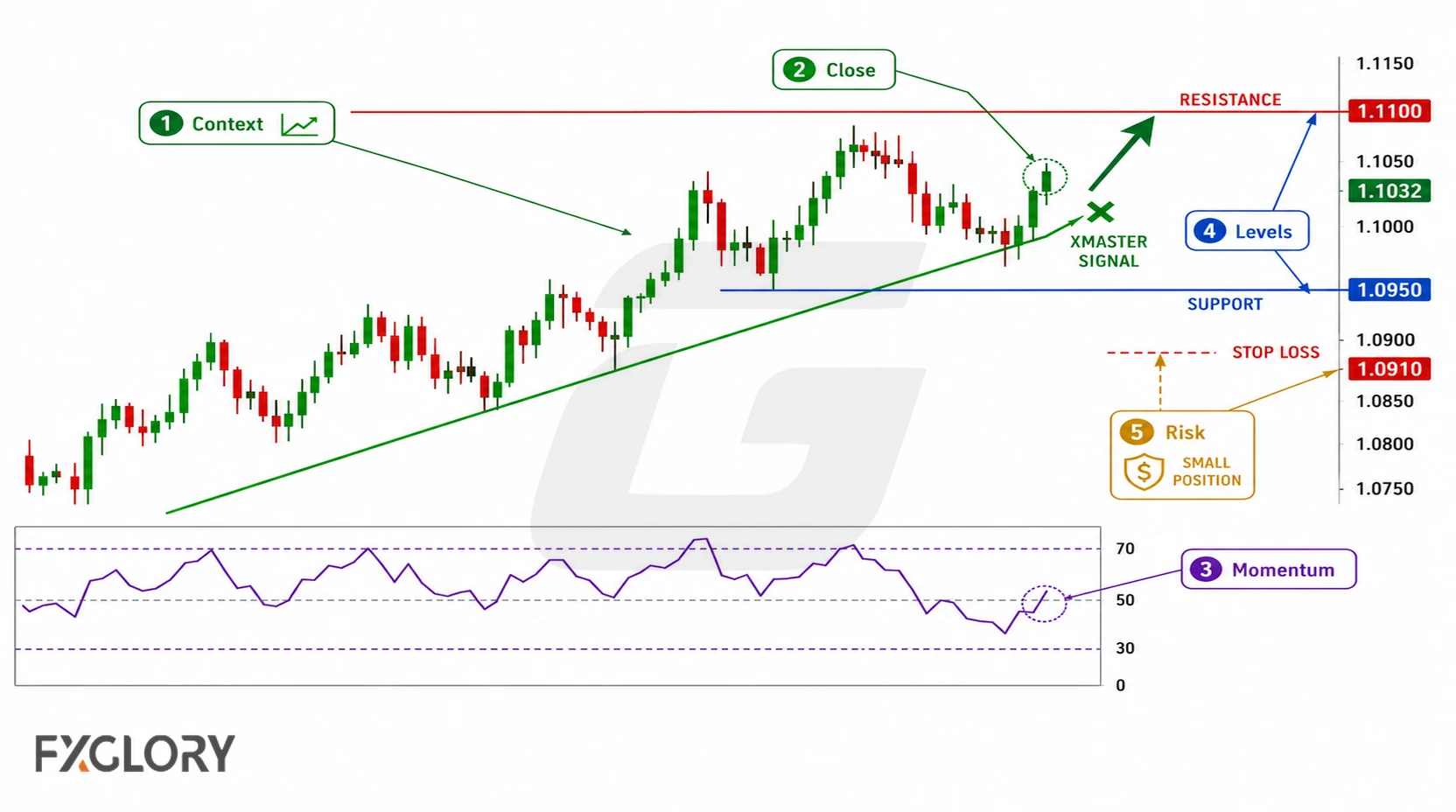
सिग्नल टूल का मूल्यांकन करने का एक व्यावहारिक तरीका चार्ट संदर्भ से शुरू करना और इंडिकेटर का उपयोग केवल एक इनपुट के रूप में करना है। एक रेंज में, बार-बार आने वाले तीरों का शायद ही कोई फॉलो-थ्रू हो। एक ट्रेंड में, समान दिशा वाले सिग्नलों की व्याख्या करना आसान हो सकता है, लेकिन उन्हें फिर भी परिभाषित अमान्यीकरण और जोखिम की आवश्यकता होती है।
- बाजार संदर्भ को परिभाषित करें: पहचानें कि कीमत ट्रेंड कर रही है, रेंज में है, या किसी महत्वपूर्ण स्तर के पास प्रतिक्रिया कर रही है।
- सिग्नल टाइमिंग निर्दिष्ट करें: तय करें कि आपके नियम वर्तमान-कैंडल या बंद-कैंडल सिग्नलों का उपयोग करते हैं।
- स्वतंत्र संदर्भ की जाँच करें: सिग्नल की तुलना मूल्य संरचना, मोमेंटम, या किसी अन्य टूल से केवल तभी करें जब आपकी विधि की आवश्यकता हो।
- अमान्यीकरण परिभाषित करें: बताएं कि किस प्रकार का मूल्य व्यवहार ट्रेड के विचार को गलत साबित करेगा।
- निकास की योजना बनाएं: प्रवेश से पहले तय करें कि लाभ लेना या ट्रेड प्रबंधन कैसे काम करेगा।
- पोजीशन का आकार तय करें: इंडिकेटर तीर के बजाय स्टॉप दूरी और खाता नियमों से जोखिम निर्धारित करें।
XHMaster सिग्नल पर कार्य करने से पहले क्या पुष्टि करें
विज़ुअल सिग्नल पर कार्य करने से पहले, पहचानें कि कौन सी स्वतंत्र चार्ट जानकारी इसका समर्थन या खंडन करती है। लक्ष्य अधिक से अधिक इंडिकेटरों को जोड़ना नहीं है, बल्कि यह समझना है कि क्या सिग्नल वर्तमान बाजार स्थितियों के अनुकूल है।
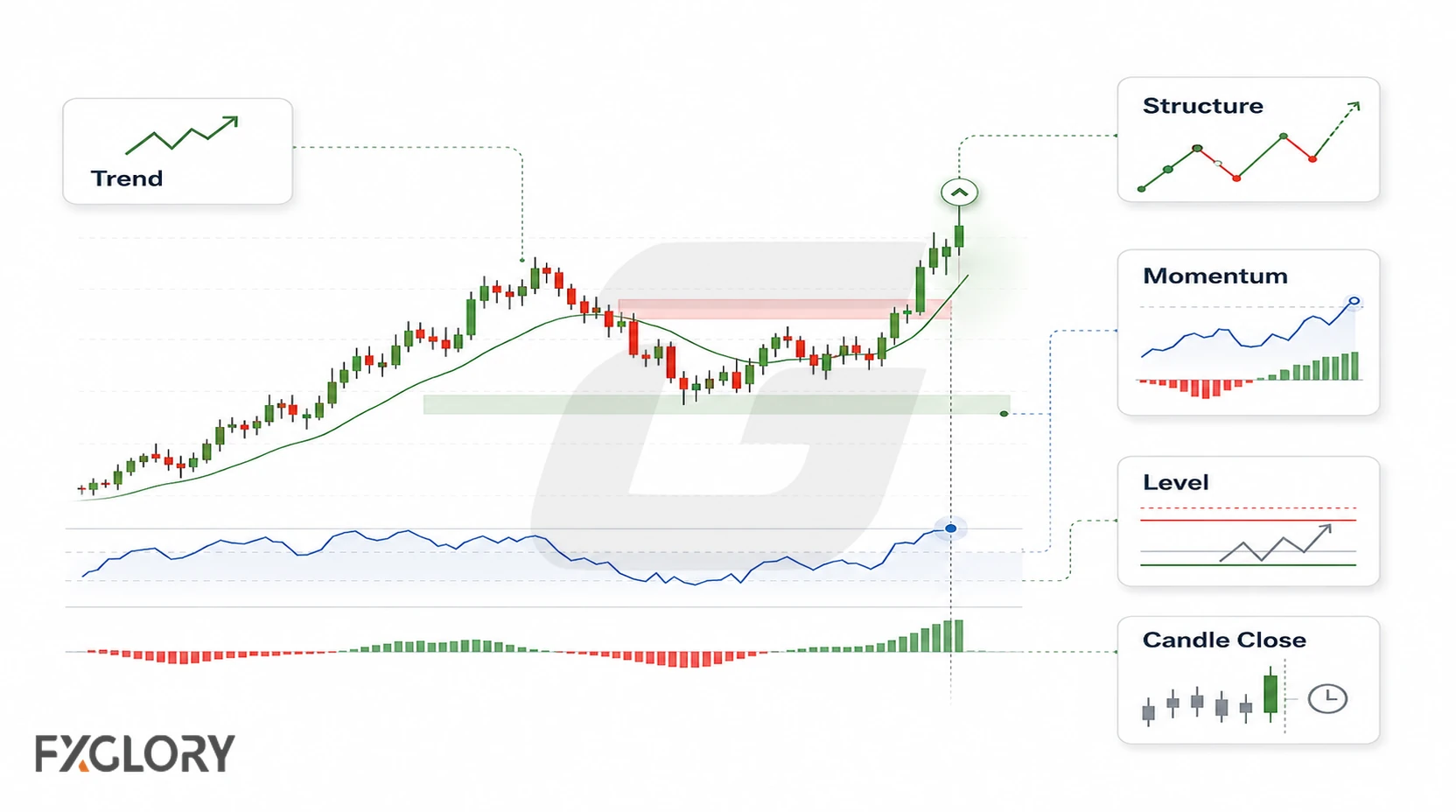
- ट्रेंड: क्या सिग्नल व्यापक दिशा के साथ संरेखित है या काउंटरट्रेंड चाल का प्रयास कर रहा है?
- मोमेंटम: क्या मूल्य आंदोलन मजबूत हो रहा है, फीका पड़ रहा है, या मिलाजुला है?
- संरचना: क्या स्विंग हाई और लो एक ट्रेंड, रेंज या संभावित बदलाव दिखा रहे हैं?
- अस्थिरता (Volatility): क्या गतिविधि असामान्य रूप से शांत है या असामान्य रूप से तेज़ है?
- मूल्य स्थान: क्या सिग्नल सीधे नजदीकी सपोर्ट, रेजिस्टेंस या हाल के स्विंग पर दिखाई दे रहा है?
- कैंडल स्थिति: क्या सिग्नल अभी भी बन रहा है, या कैंडल बंद हो गई है?
सामान्य XHMaster इंडिकेटर गलतियाँ और जोखिम
मुख्य जोखिम एक सरलीकृत विज़ुअल आउटपुट को इस तरह से मानना है जैसे कि इसमें एक संपूर्ण निर्णय प्रक्रिया शामिल हो। कस्टम इंडिकेटर गणना, समय और बाजार स्थितियों के बारे में महत्वपूर्ण मान्यताओं को छिपाते हुए भी चार्ट को स्कैन करना आसान बना सकते हैं।
- यह मान लेना कि फॉर्मूला ज्ञात है: यदि सटीक कोड या कार्यप्रणाली अनुपलब्ध है, तो अनुमानों को तथ्यों के रूप में प्रस्तुत करने से बचें।
- यह मान लेना कि समान नाम का अर्थ समान टूल है: विभिन्न फाइलें और स्क्रिप्ट अलग-अलग व्यवहार कर सकती हैं।
- निश्चित सटीकता के दावों को स्वीकार करना: प्रदर्शन सटीक नियमों, बाजार, समयसीमा, लागत और परीक्षण पद्धति पर निर्भर करता है।
- रेंज को नज़रअंदाज़ करना: दिशात्मक सिग्नल टूल्स अस्थिर (choppy) स्थितियों में बार-बार उलटफेर उत्पन्न कर सकते हैं।
- अधूरे सिग्नलों पर ट्रेडिंग करना: बार बंद होने से पहले वर्तमान-कैंडल आउटपुट बदल सकता है।
- मूल्य स्थान को नज़रअंदाज़ करना: एक सिग्नल सपोर्ट, रेजिस्टेंस या किसी अन्य स्तर के पास दिखाई दे सकता है जो ट्रेड संदर्भ को बदल देता है।
- स्रोत जाँच छोड़ना: स्रोत और संगतता की समीक्षा के बाद ही थर्ड-पार्टी फाइलों को प्राप्त और इंस्टॉल किया जाना चाहिए।
- पुष्टि का अत्यधिक भार: बहुत सारे ओवरलैपिंग इंडिकेटर स्वतंत्र जानकारी जोड़े बिना जटिलता बढ़ा सकते हैं।
XHMaster कब कम उपयोगी होता है
एक कस्टम सिग्नल इंडिकेटर तब कम उपयोगी हो सकता है जब बाजार की स्थितियां अस्थिर (choppy) हों, लिक्विडिटी कम हो, उच्च प्रभाव वाले समाचार अचानक मूल्य परिवर्तनों को प्रेरित कर रहे हों, संस्करण का स्रोत अस्पष्ट हो, या आप यह नहीं बता सकते कि सिग्नल आपके ट्रेडिंग नियमों में कैसे फिट बैठता है।
- XHMaster को स्टैंडअलोन ट्रेडिंग सिस्टम न समझें।
- नो-रीपेंट दावे को सटीकता या लाभप्रदता के बराबर न समझें।
- यह न मानें कि FXGlory किसी थर्ड-पार्टी XHMaster या XMaster फाइल को प्रदान या मान्य करता है।
- सिग्नलों का मूल्यांकन करते समय स्प्रेड, अस्थिरता, निष्पादन (execution) या खाता जोखिम को नज़रअंदाज़ न करें।
XHMaster Formula Indicator पर अंतिम विचार
XHMaster Formula इंडिकेटर को एक थर्ड-पार्टी कस्टम सिग्नल टूल के रूप में सबसे अच्छी तरह समझा जाता है जिसका व्यवहार सटीक कार्यान्वयन पर निर्भर करता है। MetaTrader और TradingView में समान नाम दिखाई दे सकते हैं, लेकिन यह अंतर्निहित कोड को समान नहीं बनाता है।
अपने सामने मौजूद वास्तविक संस्करण का मूल्यांकन करें: स्रोत को सत्यापित करें, सेटिंग्स का दस्तावेजीकरण करें, बंद कैंडल पर सिग्नल टाइमिंग का परीक्षण करें, और तय करें कि आउटपुट स्पष्ट अमान्यीकरण, निकास, पोजीशन साइजिंग और जोखिम सीमाओं के साथ एक संपूर्ण रणनीति में कैसे फिट बैठता है।
FXGlory इंडिकेटर फाइल प्रदान नहीं करता है। प्लेटफॉर्म और शैक्षिक सामग्री का उपयोग कस्टम-इंडिकेटर परीक्षण को समझने के लिए किया जा सकता है, जबकि थर्ड-पार्टी फाइल को चुनने और सत्यापित करने की जिम्मेदारी ट्रेडर की होती है।